This article focuses on how visual search applies specifically in fashion eCommerce. If you'd like to start with the foundational overview, read our complete guide first: Visual Search: What It Is, How It Works, Why It Matters.
Fashion visual search works by analyzing a product image and breaking it down into a structured set of visual attributes, things like neckline, sleeve length, silhouette, color, pattern, fit, and more. That attribute data becomes the common language between what shoppers are looking for and what's in a retailer's catalog.
Whether a shopper uploads a photo or types a description, the system converts that input into the same thing: a visual attribute profile. Then it scans the catalog and returns products that match that profile.
In fashion, this matters because shoppers don’t always know the right terminology. Fashion visual search bypasses that vocabulary barrier entirely because it works in the language of visual attributes, not keywords. That's what lets shoppers search in whatever way feels natural to them.
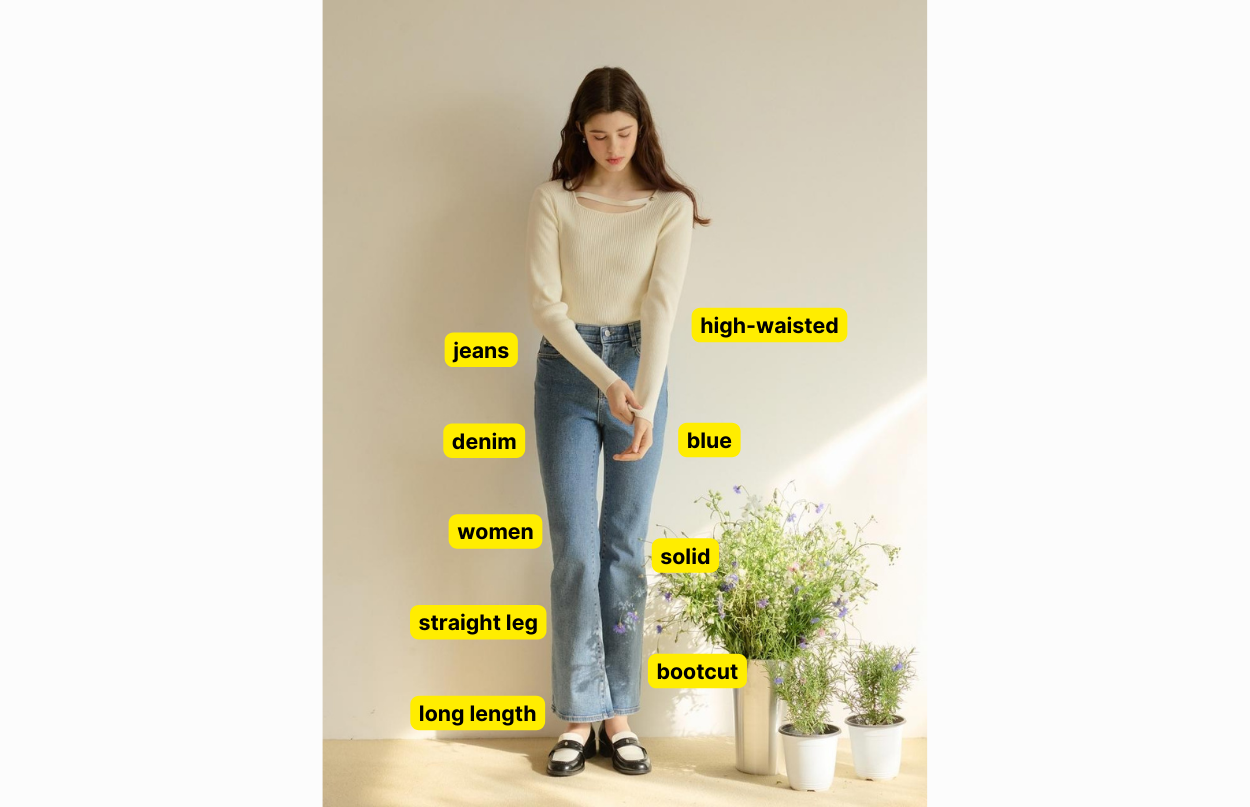
Fashion visual search is driven by artificial intelligence (AI), and the technology aims to understand both the content (what shoppers are searching for) and the context (shoppers’ motivation behind a search query and related styles they are interested in).
It has evolved through three distinct approaches. The sections below quickly explain the differences between camera search, visual-interface search, and text-to-visual search.
Camera Search
Camera search was the norm in the earlier days of visual search. Shoppers use their phone camera to take a photo or upload a screenshot they spotted on TikTok to find a similar product.
The limitation of this approach is that it does not take into account fashion nuances. Camera search can identify what's in an image. However, it struggles to understand what a shopper actually wants from it.
For example, a shopper uploads a screenshot of a pink maxi dress with a round neck. But what if she actually wants a V-neck? She has no reliable way to communicate that. Often, there are no options to refine the results, leaving her at a dead end.
Visual-Interface Search
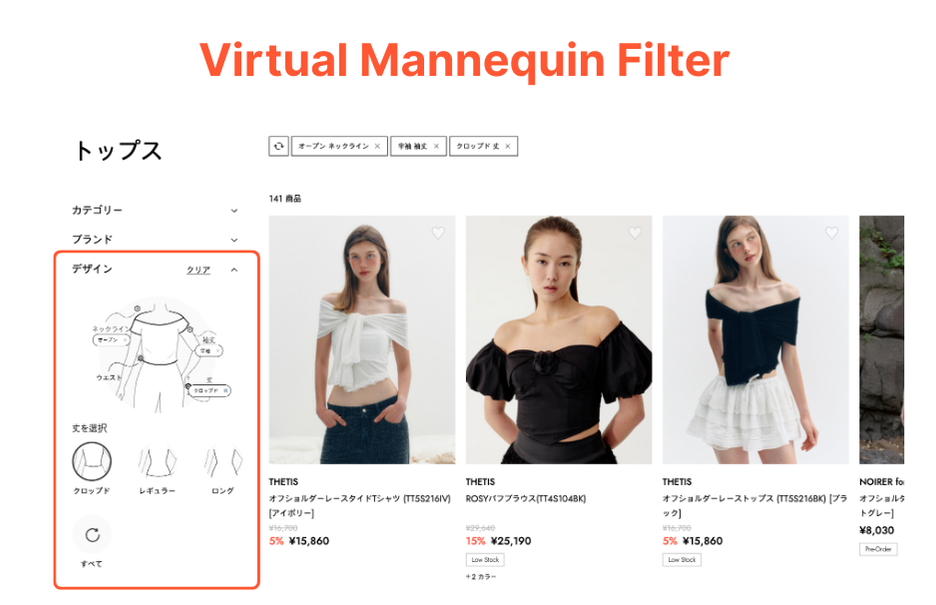
Visual-interface search solves the camera search problem by letting shoppers specify exactly what they want. Instead of being limited by a photo, shoppers interact with a visual UI to select the precise attributes they're looking for.
The YesPlz AI Virtual Mannequin Filter is a strong example of fashion visual search. Rather than uploading a photo, shoppers find the product they have in mind by selecting attributes directly on a mannequin. AI then retrieves catalog matches based on that attribute profile, giving shoppers both precision and control over their search. You can try the live demo of the Virtual Mannequin Filter yourself.
Text-to-Visual Search
Shoppers don't need to know the correct fashion terminology. They also don't need a reference image. They simply describe what they have in mind, and AI handles the translation. That’s how text-to-visual search works.
The YesPlz AI Stylist is built on this approach. Shoppers describe an occasion or a style preference, let’s say, ‘business casual tops for a video call?’ AI understands the set of key visual attributes for that event, then returns matching products. You can try the live demo of the AI stylist here.
The way shoppers discover fashion has changed. They prefer intuitive visual-interface search and describe styles in their own language. However, the search experience on most fashion stores hasn't caught up yet.
Shoppers are visual first, but eCommerce search bars weren't built for that
Fashion is one of the most visual categories in all of retail. When a shopper spots an outfit on the street, saves a screenshot from Instagram, or has a style in her head she can't quite name, her first instinct isn't to reach for a keyboard. Text search asks her to do something unnatural: translate a visual idea into the exact keyword a retailer happens to use.
Research shows that over 85% of respondents put more importance on visual information than text information. Visual search meets shoppers where their instincts already are, removing the vocabulary barrier that causes so many searches to end in frustration or abandonment.
Fashion visual search creates a shopping experience worth coming back to
Returns, hesitation, and cart abandonment often come down to one thing: shoppers aren't confident they've found the right product. Visual search reduces that uncertainty. When a shopper can build exactly what she has in mind, or describe it in her own words and get back results that visually match her intent, she trusts the experience.
That trust translates into higher conversion and, over time, stronger brand loyalty. Retailers that invest in visual search aren't just solving a discovery problem. They're creating a shopping experience that feels more like browsing a store than querying a database.
Fashion visual search gets shoppers exploring the retailer’s whole catalog
Most text searches are transactional. A shopper types something specific, scans the first page of results, and either buys or leaves. Visual search changes that dynamic because it's built around fashion attributes (rather than exact keywords). So, results feel contextually connected rather than keyword-matched. Shoppers, therefore, naturally keep browsing.
This matters for fashion retailers because so much inventory lives in the long tail. New arrivals, niche styles, and cross-category pieces that rarely appear in keyword searches now become discoverable. Visual search helps shoppers find things they didn't know they were looking for.
The Fashion Visual Search Vendor Checklist
The diligence framework that separates real fashion visual search from the rest — 8 non-negotiables, 11 nice-to-haves, before you sign.
Fashion visual search has come a long way from the early days of camera search. Today, retailers can offer shoppers three distinct ways to discover products visually, each one removing a different barrier that text search leaves in place.
Want to learn more about how visual search works across eCommerce? Check out our article, eCommerce Visual Search: Explained in 15 Questions, where we break down the technology, use cases, and common questions in more detail.
Try the YesPlz AI live demo to experience visual search firsthand. Or talk to our team about bringing it to your store.