eCommerce Visual Search: Explained in 15 Questions
Everything you need to know about visual search in eCommerce, answered in 15 questions. From how it works to implementation costs, get the full picture fast.

by YesPlz.AIDecember 15, 2022

Everything you need to know about visual search in eCommerce, answered in 15 questions. From how it works to implementation costs, get the full picture fast.
by YesPlz.AIDecember 15, 2022
Question 1 and 2: What is Visual Search in eCommerce? How Does it Work?
Question 3: Is it Faster than Text Search?
Question 4: Will it Replace Text Search?
Question 5: Why Do Younger Shoppers Prefer to Visual Search?
Question 6: How Accurate is it?
Question 7: How Will AI Improve eCommerce Visual Search?
Question 8: Are there Free Visual Search Tools?
Question 9: Is it Worth Investing in?
Question 10: What are the Key Use Cases?
Question 11: What Industries Benefit Most from?
Question 12: Which Visual Search Tool is Best for Fashion eCommerce?
Question 13: How Do I Add Visual Search to My eCommerce Website?
Question 14: Will Visual Search Work with the Product Images I Already Have?
Shoppers don't always know what to type. Yet, they know what they want when they see it. That gap between visual inspiration and keyword search is where most eCommerce stores lose customers. Visual search closes it.
But for many retailers, visual search in eCommerce still raises more questions than answers. How does it actually work? Is it accurate? Is it worth the investment? How to get started?
This article answers 15 of the most common questions about eCommerce visual search — from the basics of how the technology works to the practicalities of implementation, cost, and which industries benefit most. Whether you're just getting curious or ready to act, you'll find what you need here.
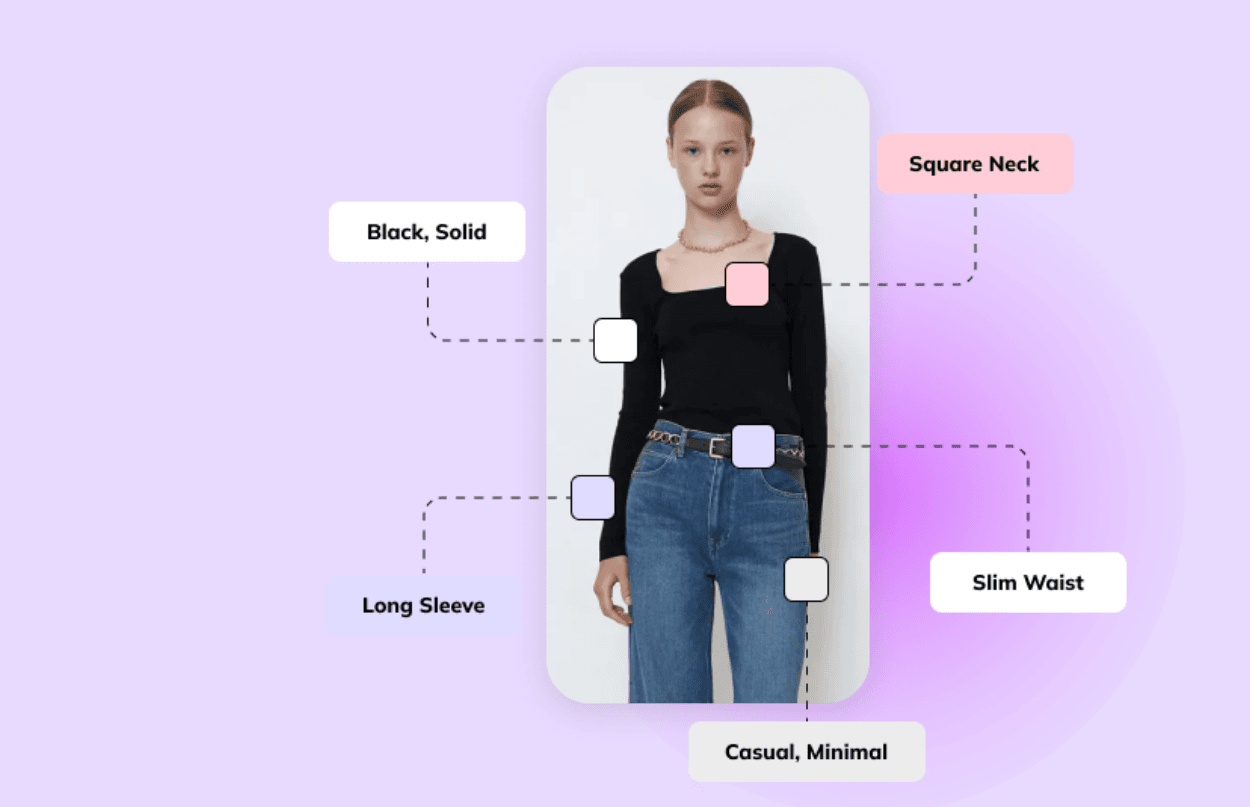
In short, eCommerce visual search is the task of detecting a target product based on various image elements. It leverages computer vision to recognize not just what an item is, but its specific attributes. If the human eye can detect a product attribute, so can the machine.
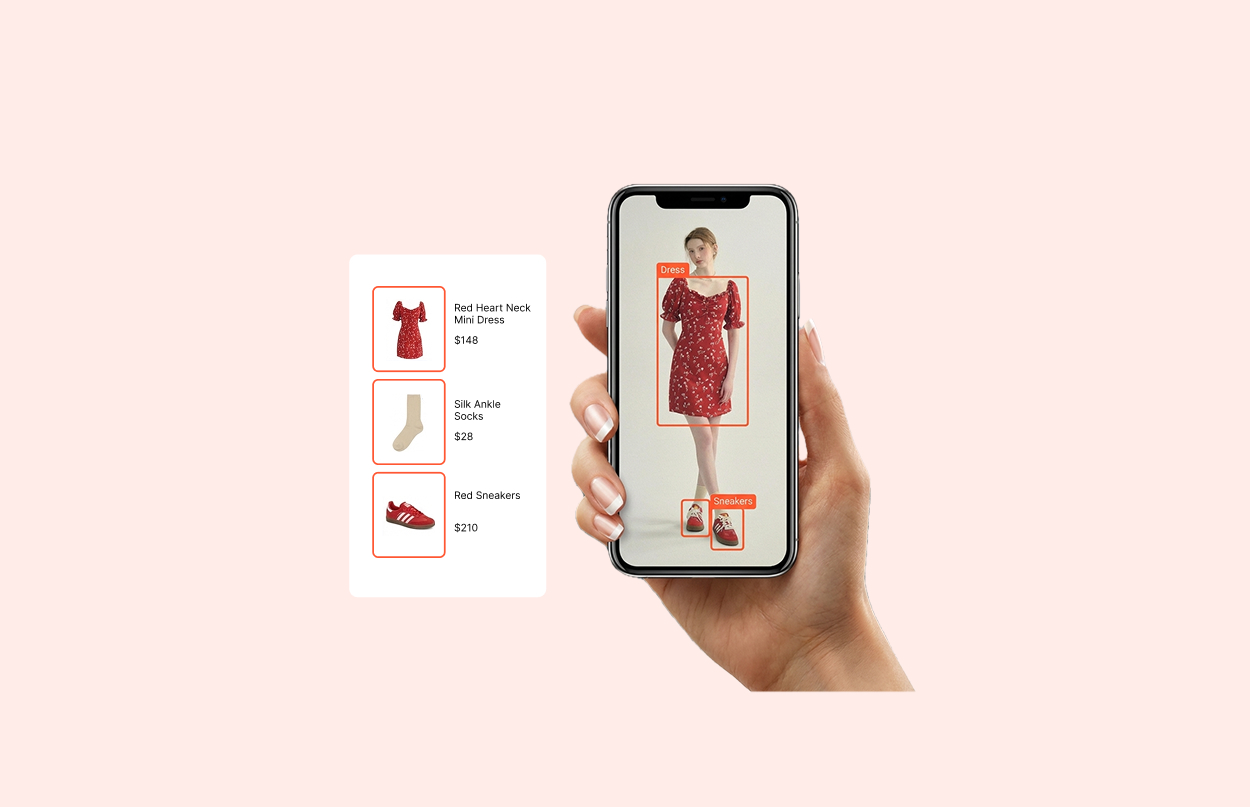 In our complete guide about visual search, you can find a full breakdown of what it is and how it works.
Yes — especially when shoppers don't know exactly what they're looking for or can't find the right words to describe it.
With text search, shoppers have to come up with a keyword, type it out, sift through results, and refine their query if the results are off. That process can take several attempts.
With visual search, no precise vocabulary is needed. The underlying AI automatically captures the key attributes that matter and returns matching results within seconds. Shoppers can upload a screenshot, snap a photo with their camera, or type whatever comes to mind.
This is especially valuable in fashion, home décor, and accessories, where style, color, pattern, and silhouette are what matter, since none of which are easy to describe. Shoppers don’t have to spend minutes experimenting with search terms that may never surface the right product.
Unlikely — text search has its place for straightforward, well-defined queries, such as black Nike running shoes size 10. The two approaches are complementary, not a straight swap.
Most modern eCommerce visual search systems are moving toward multimodal search, in which visual and text search merge into something more powerful than either alone.
Think about how we communicate as humans: we don't rely on words alone, we also use facial expressions and body language. Multimodal AI works the same way, processing both text and images.
In practice, this means shoppers can type whatever comes to mind, let’s say, flowy summer dress, not too short. The multimodal AI understands the search intent and matches it against both the text data and visual data in your product catalog.
No perfectly chosen keywords required. Even when retailers forget to update product attributes like material or length, the AI can extract that information directly from product images, filling the gaps automatically.
Traditional keyword-based search engines are unimodal. They only process text, which is why a query for dress shirts can mistakenly surface dresses instead of formal men's shirts.
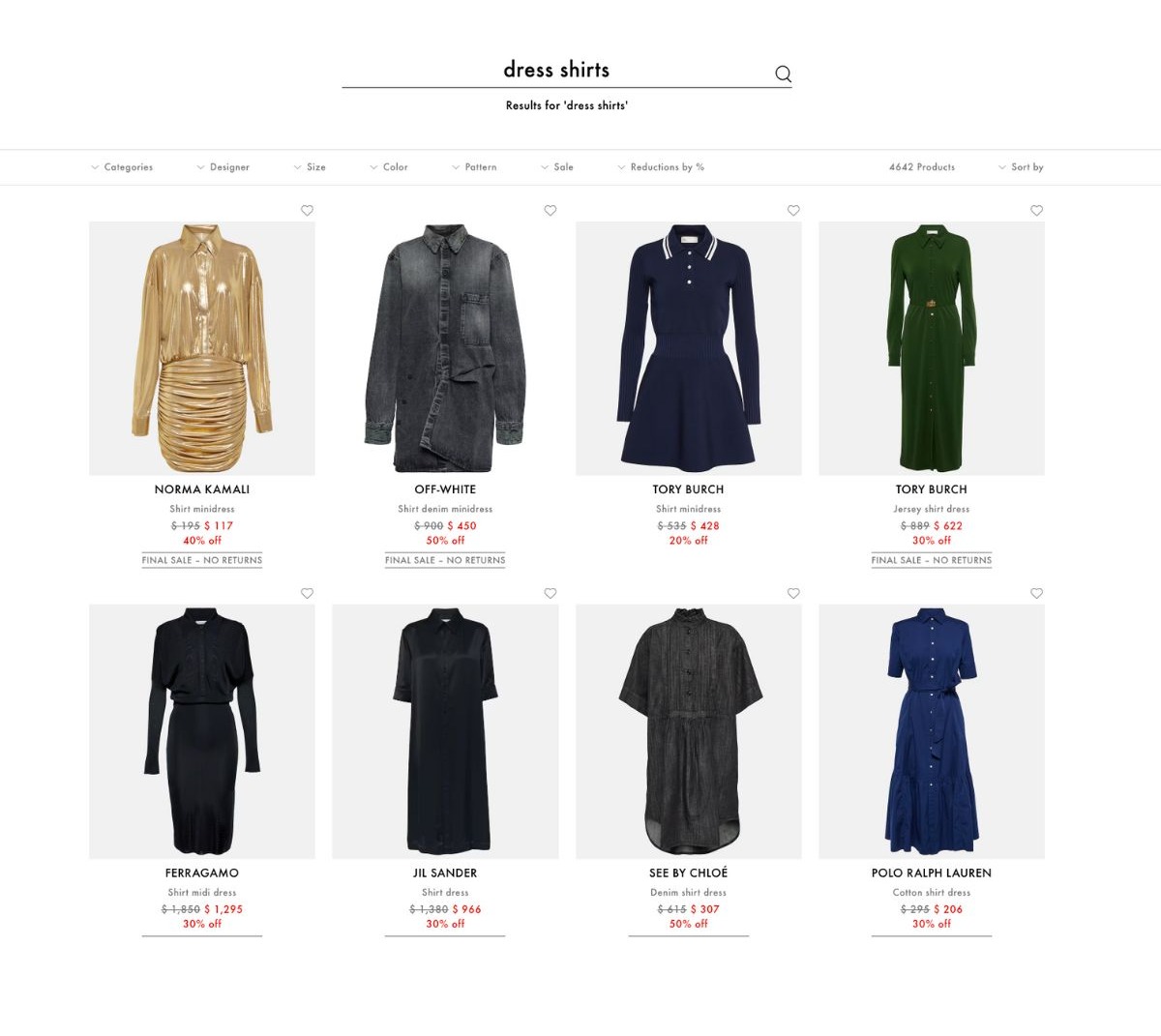 Multimodal AI eliminates that kind of mismatch by understanding context, not just keywords. Text search isn't going away, but on its own, it's no longer enough. The future of eCommerce search is multimodal.
Gen Z and younger Millennials grew up on Instagram, TikTok, and Pinterest. And these platforms are built entirely around visual content. When they discover something they want to buy, it's almost always through a photo or video, not a search bar. Asking them to translate that visual inspiration into a text query adds friction that feels unnatural.
62% of Gen Z and Millennials prefer visual search over any other technology when it's available, largely because it's faster and more accurate for complex or hard-to-describe items. About 22% of 16–34-year-olds use visual search to discover or buy items, compared to just 5% of those over 55.
There's also a trust element. 85% of shoppers trust product images over descriptions when purchasing items like clothing or furniture, which makes visual search a natural fit for a generation that relies on what they can see.
Accuracy depends heavily on the quality of an AI model. This is where industry-specificity matters enormously.
A general-purpose image recognition model is trained to identify broad visual categories. It can detect a sofa, a jacket, a lipstick, a plant species, or a car part.
But detecting what something is and matching it to what a shopper actually wants to buy are two very different things. That’s the gap between a camera and a truly visual search.
Consider fashion. A general model might correctly identify an item as a skirt. But that tells a shopper almost nothing useful. What they actually care about is whether it's a midi or a maxi, whether the color is white or cream.
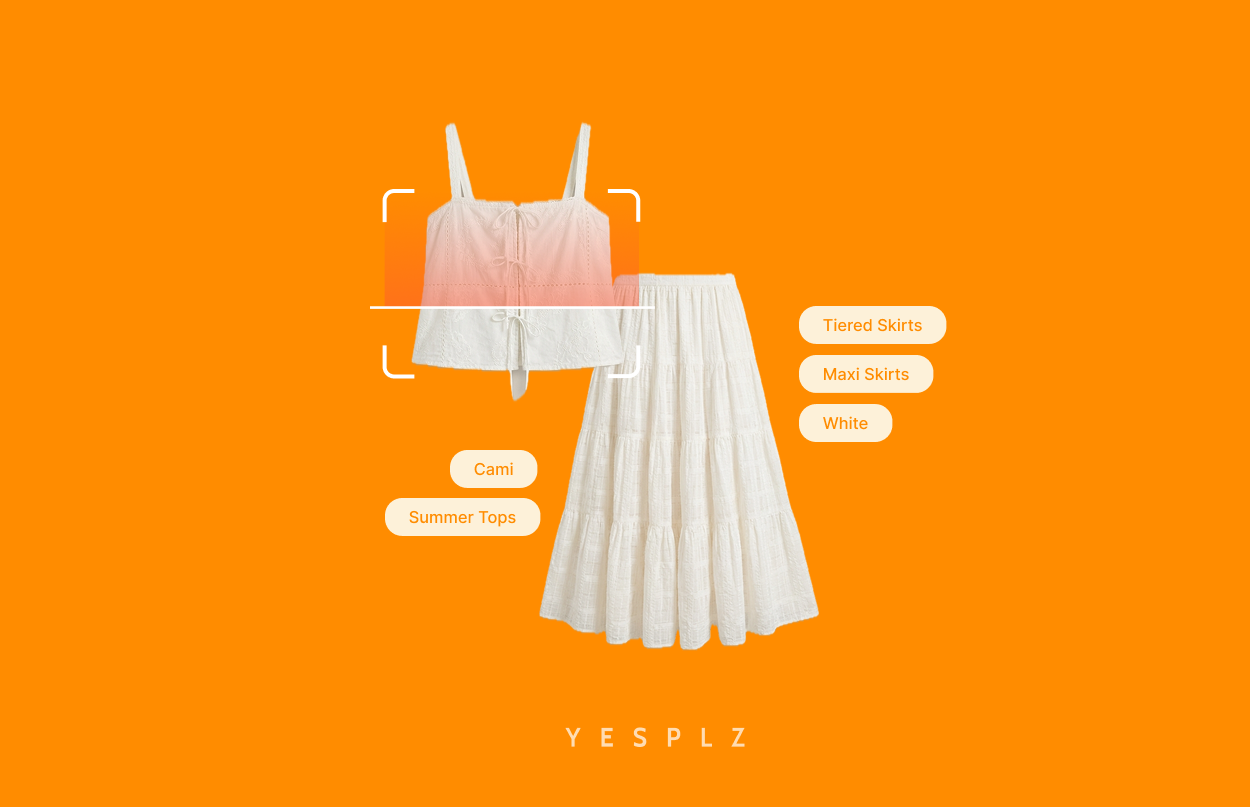
A fashion-specific visual search model is trained on millions of labeled fashion images to recognize exactly these distinctions. It was built to understand the nuances that actually drive fashion purchase decisions, not just the way a camera does.
Many searches fail due to missing product attributes and ambiguous categories. According to Baymard Institute, 41% of eCommerce sites fail to support the key search query types shoppers actually use.
And most of those failures come down to a model that wasn't built for the industry it's serving. The more specific the AI, the more accurate the match, and the more likely a shopper is to find exactly what they came for.
AI is already reshaping visual search in several ways:
Multimodal Search: The biggest leap is the move from unimodal to multimodal AI. Traditional search engines are unimodal. They only process text, matching a shopper's query against product keywords. Multimodal AI solves this by processing both text data and image data. This makes search feel genuinely conversational rather than mechanical.
Contextual and Emotional Recognition: AI is moving toward understanding context beyond the object itself. It recognizes occasion, style vibe, or even seasonal appropriateness. Take ‘going out top and jeans kind of night’ query. AI can understand context and parse exactly what that means: the occasion (casual social dinner), the aesthetic (effortless, relaxed), and the outfit formula (top and jeans), then surface results that match all three at once.
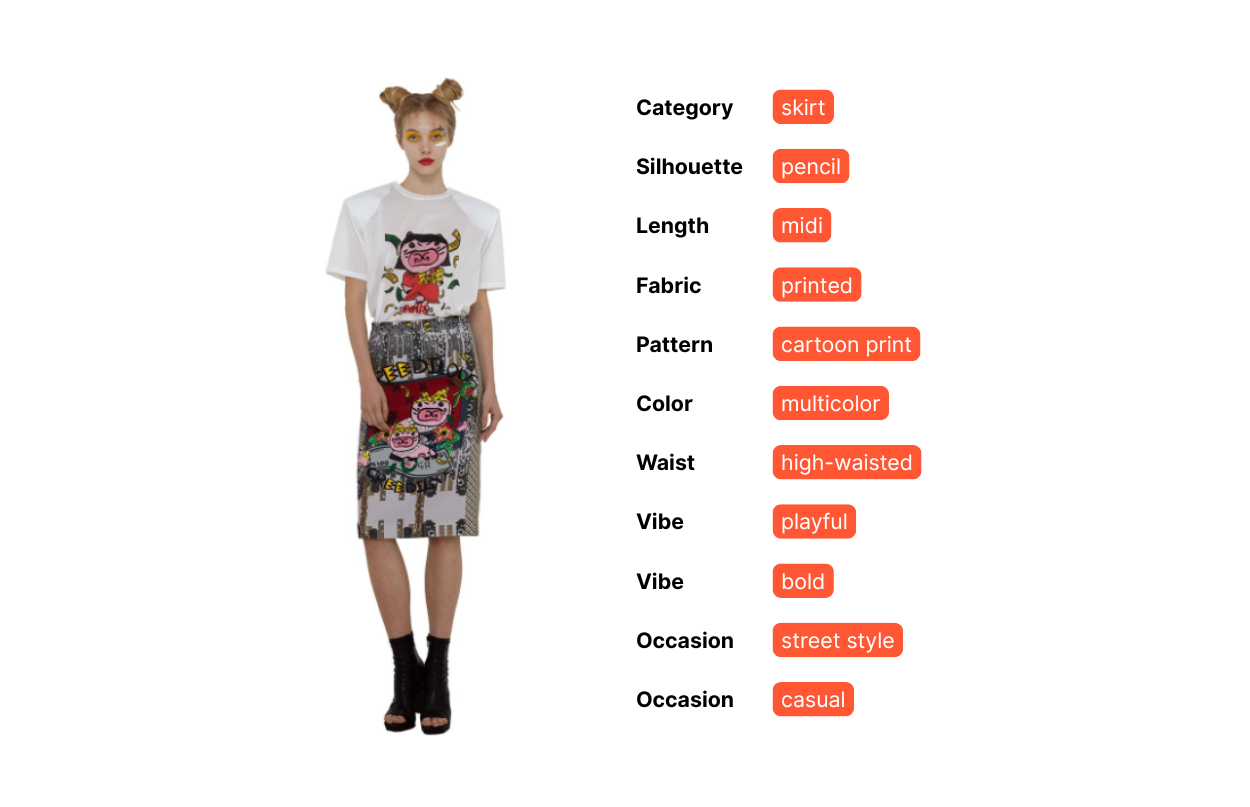
Automatic Catalog Enrichment: Product images are the largest and most overlooked data source in eCommerce. AI leverages this to tag products. So it automatically enriches the product catalog. The result is a richer, more consistent product catalog that improves search accuracy, enables smarter filters, and powers more relevant recommendations, without anyone on the team having to do it manually.
 Question 8: Are there Free Visual Search Tools?
Yes — and chances are, you're already using some of them without realizing they're powered by visual search.
Google Lens: Built into every Android camera and the Google app on iOS. It lets you point your phone at anything and instantly find visually similar products, identify objects, or pull up shopping results.
Pinterest Lens: Built into the Pinterest app, focused on fashion, home décor, and lifestyle products. It works the same way with Google Lens.
Google Images: Has a search by image feature that most people use casually without thinking of it as a visual search.
Amazon's Photo Search: Let shoppers search Amazon's catalog by snapping a photo.
Bing Visual Search: Microsoft's image-based search, integrated into its search engine
These tools are free for users and handle billions of queries every day. But they search across the open web or specific platforms rather than a retailer's own product catalog.
For eCommerce businesses looking to offer on-site visual search within their own store — so shoppers can search the product catalog specifically — third-party tools and APIs are typically required.
These range from open-source libraries with limited features to specialized AI-powered platforms. We cover the best options for fashion eCommerce in Question 12 below.
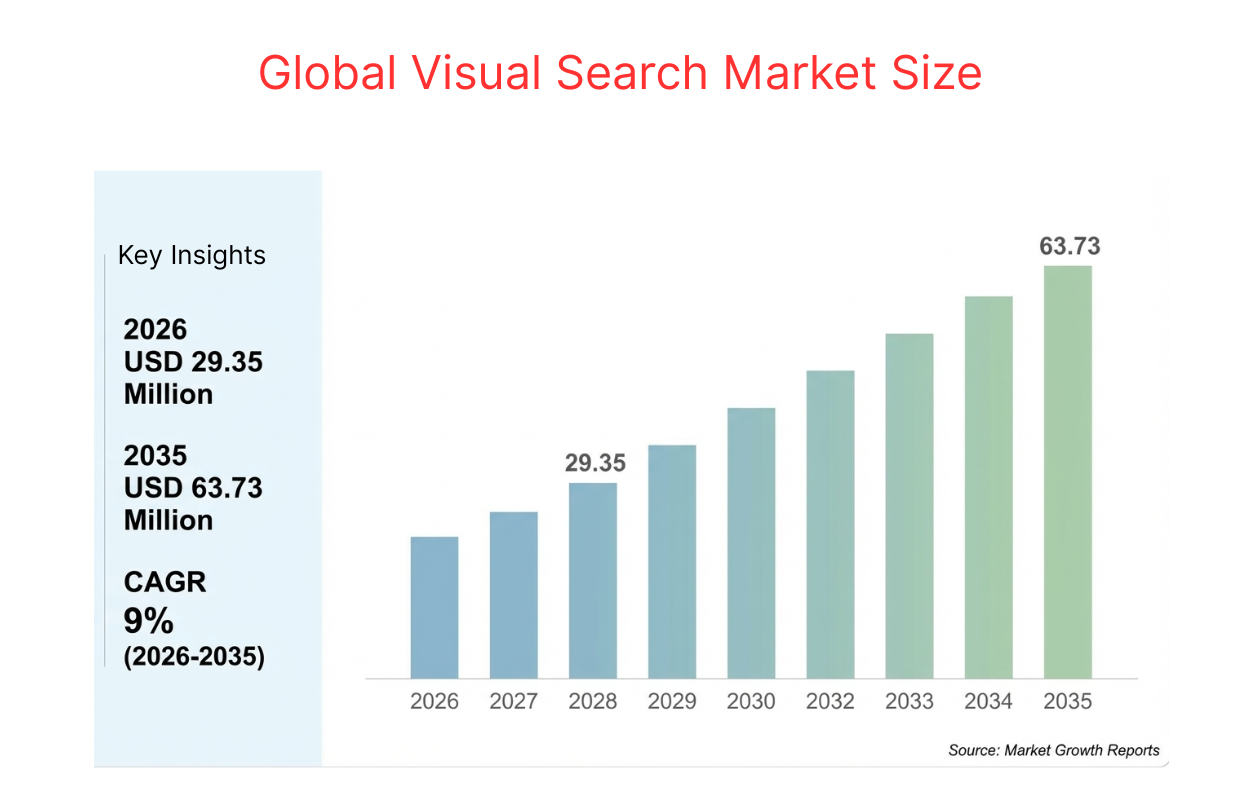
According to Market Growth Reports, the global visual search market is projected to grow from $29.35 million in 2026 to $63.73 million by 2035, at a 9% CAGR. But market size alone doesn't answer the question. What matters for retailers is what visual search actually does to the numbers that matter.
 In eCommerce, 58% of shoppers prefer visual over text-based search, especially for home décor and apparel. The impact on business performance is measurable.
Retailers deploying visual search saw a 16% lift in engagement rate and a 9% increase in basket size per transaction. Those using visual recognition algorithms achieved 94.5% accuracy and reduced return rates by 23% on average.
Retailers that adopt visual search early are better positioned to meet rising consumer expectations — before their competitors catch up.
Visual search shows up across the shopping journey in more ways than most retailers realize — and it starts with the catalog.
Catalog enrichment is the foundation. Visual search AI reads product images and automatically extracts attributes, filling in missing data and keeping the catalog consistent at scale. This matters because everything else downstream depends on it. A richer, more consistent catalog means every other part of the shopping experience gets smarter.
Search is the most visible use case. When a shopper uploads a screenshot, snaps a photo with their camera, or types whatever comes to mind, the AI matches that input against the enriched catalog and returns visually relevant results — without requiring precise keywords or perfect product data from the retailer's team.
Filtering becomes more intuitive. Instead of dropdown menus with generic options, shoppers can refine by the visual attributes that actually matter to them because the catalog has already been tagged with that level of detail.
Recommendations get more relevant. Product recommendations are based on similarly visual attributes rather than purchase history alone, surfacing options that feel genuinely connected — not just statistically correlated.
Visual search is most powerful in categories where appearance drives the buying decision — where what a product looks like matters more than what it's called.
Fashion and Apparel is the clearest fit. Style, color, fit, and silhouette are inherently visual, and shoppers frequently discover items they want but can't describe in words.
Home Décor and Furniture are a close second. Shoppers often spot a lamp, rug, or sofa in a photo and want to find something similar for their own space. Visual search makes this possible without requiring them to articulate style terms they may not know.
Beauty and Cosmetics benefits from shade-matching and product identification. A shopper can photograph a lipstick or eyeshadow palette and find exact or similar alternatives.
Electronics and Automotive Parts are emerging use cases where visual search helps shoppers identify specific components or models from photos.
Fashion is where visual search shines brightest — and where a general-purpose tool simply isn't enough. Fashion shoppers don't always know what to type, but they know what they want when they see it. The right tool needs to speak the language of fashion attributes, not just image recognition.
YesPlz AI is built specifically for this. Unlike general-purpose visual search tools, YesPlz understands the nuances that actually drive fashion purchase decisions — silhouette, neckline, sleeve length, pattern, occasion, and fit. Its suite covers the full discovery journey:
Hybrid Search: Combine three search technologies, including smart text matching, semantic understanding, and fashion-trained image recognition. When a shopper types a search query, the AI reads across all three signals simultaneously — matching on color, silhouette, occasion, and style cues that text alone would never catch. This also means products with thin descriptions don't get buried. Even if a product page has minimal copy, the image embedding model reads the visual directly and pulls it into results where it belongs.
Fashion Tagging AI: Automatically enriching your product catalog by extracting fashion-specific attributes from product images at scale.
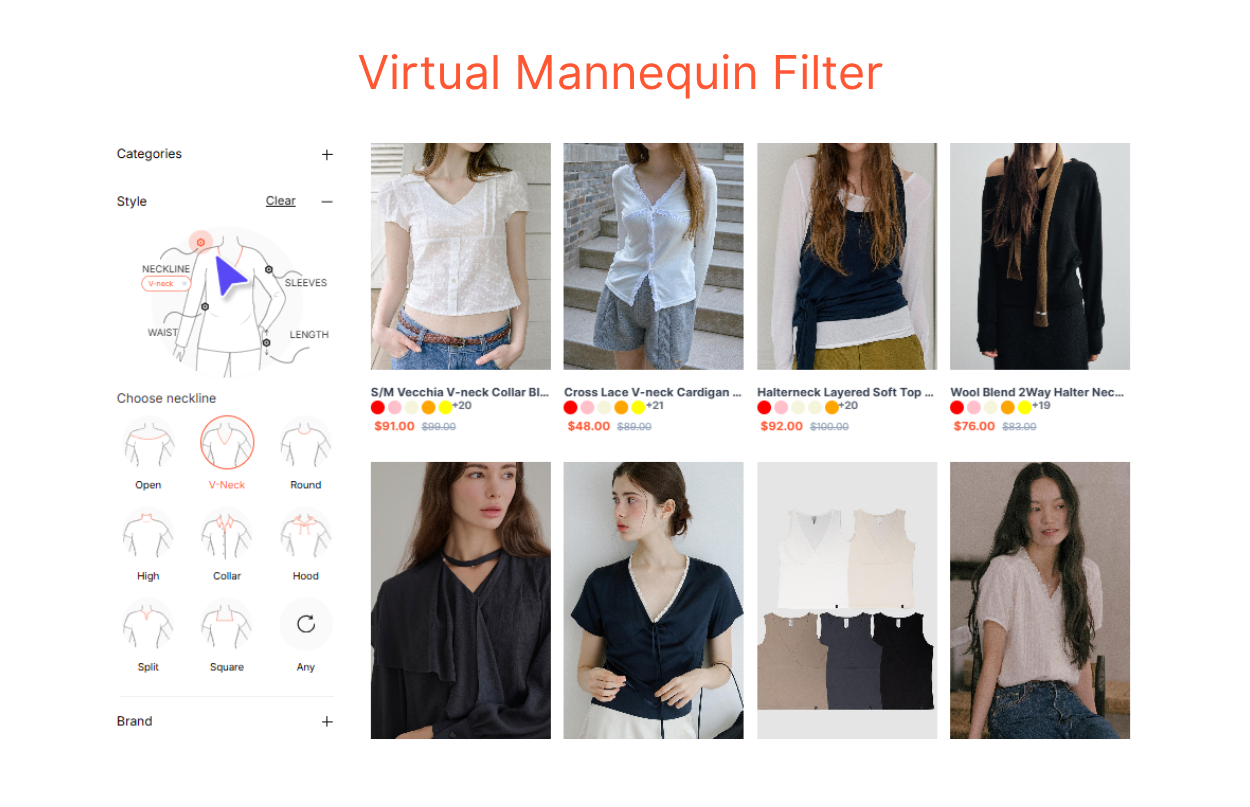
Virtual Mannequin Filter: Shoppers select the exact attributes they're looking for directly on a visual UI, and AI retrieves catalog matches based on that precise profile.
AI Stylist: Shoppers describe what they have in mind in their own words and AI translates that into matching products.
 Learn more about what fashion visual search is here.
There are two main paths, depending on your resources and technical setup:
Use a Dedicated Visual Search Platform: Tools like YesPlz AI integrate directly with your eCommerce platform. This is the fastest route to a production-ready visual search experience without building anything from scratch.
Build In-House: Large enterprises sometimes build proprietary visual search systems. This gives maximum control but requires significant investment in ML engineering, infrastructure, and ongoing model training.
Definitely. AI is trained on millions of image data points, which means it can recognize and extract visual attributes accurately even from imperfect photos.
For most retailers, the main requirement is simply providing the image data. The AI handles the rest — reading each product image, extracting visual attributes, and building a structured profile that powers accurate search results. No studio-perfect photography required.
That said, the richer your image data, the better the results. Multiple angles, variant-level images for different colors and materials, and consistent product shots all give the AI more to work with — and more to match against when a shopper searches. But these are improvements, not prerequisites. If you have product images, you have enough to get started.
It depends on the vendor and how you implement it. SaaS platforms typically offer two pricing structures: monthly subscriptions that bundle everything — AI infrastructure, updates, and support — or usage-based pricing where you pay per query, per item tagged, or per API call. Some vendors offer a hybrid of both.
API-only solutions usually lean towards usage-based. Custom in-house builds carry no licensing fees but the highest total cost: a dedicated AI team, infrastructure, and ongoing maintenance.
The right model depends on your traffic patterns, catalog size, and how predictable your costs need to be. A high-traffic site with steady volume often does better on a flat subscription, while a smaller or seasonal retailer may prefer pay-as-you-go. Worth asking each vendor what pricing structures they offer and which one fits your business — flexibility on this varies widely.
You've just read 15 answers. But the best way to understand visual search isn't to read about it, it's to see what happens when your shoppers actually use it. Want to see it in live action? Book a demo with YesPlz AI.
If you're still evaluating solutions, our related guide, Tips for Choosing Fashion Visual Search, breaks down the key features and capabilities to look for before implementing visual search on your eCommerce site.

Written by YesPlz.AI
We build the next gen visual search & recommendation for online fashion retailers
