3 eCommerce Tech Trends Emerged from NRF Paris 2026
What do the next eCommerce tech trends look like? We found the answer at NRF Paris 2026. Here’s how 6 retail tech companies will reshape the way people shop.

by YesPlz.AISeptember 26, 2026


What do the next eCommerce tech trends look like? We found the answer at NRF Paris 2026. Here’s how 6 retail tech companies will reshape the way people shop.
by YesPlz.AISeptember 26, 2026
Paris has long been a city where style meets innovation. At NRF Retail's Big Show Europe 2026, we came across a group of companies shaping today's eCommerce tech trends. This event brought together some of the sharpest minds in retail innovation.
The conversations on the floor kept circling back to the same themes: personalization, AI, and closing the gap between what shoppers want and what they find. These six companies stood out, each tackling a different piece of the retail experience but all pointing in the same direction.
Online shopping has always had one fundamental problem. You cannot touch, feel, or try on what you are buying. For years, online shoppers relied on size charts, product photos, and customer reviews to make their best guess. This issue often leads to high return rates and low confidence at the point of purchase.
Virtual try-on (VTO) technology is changing that. It works across categories, channels, and even ad formats. The technology is getting faster, more accurate, and easier to deploy. These two retail tech companies are pushing VTO into territory that was not possible even two years ago.
What if instead of watching a model wear the jacket, you saw yourself in it, inside the ad itself? That's the premise behind Gennoctua, a visual personalization plugin. It lets shoppers virtually try on products across an entire catalog and appear as the subject of personalized product videos.
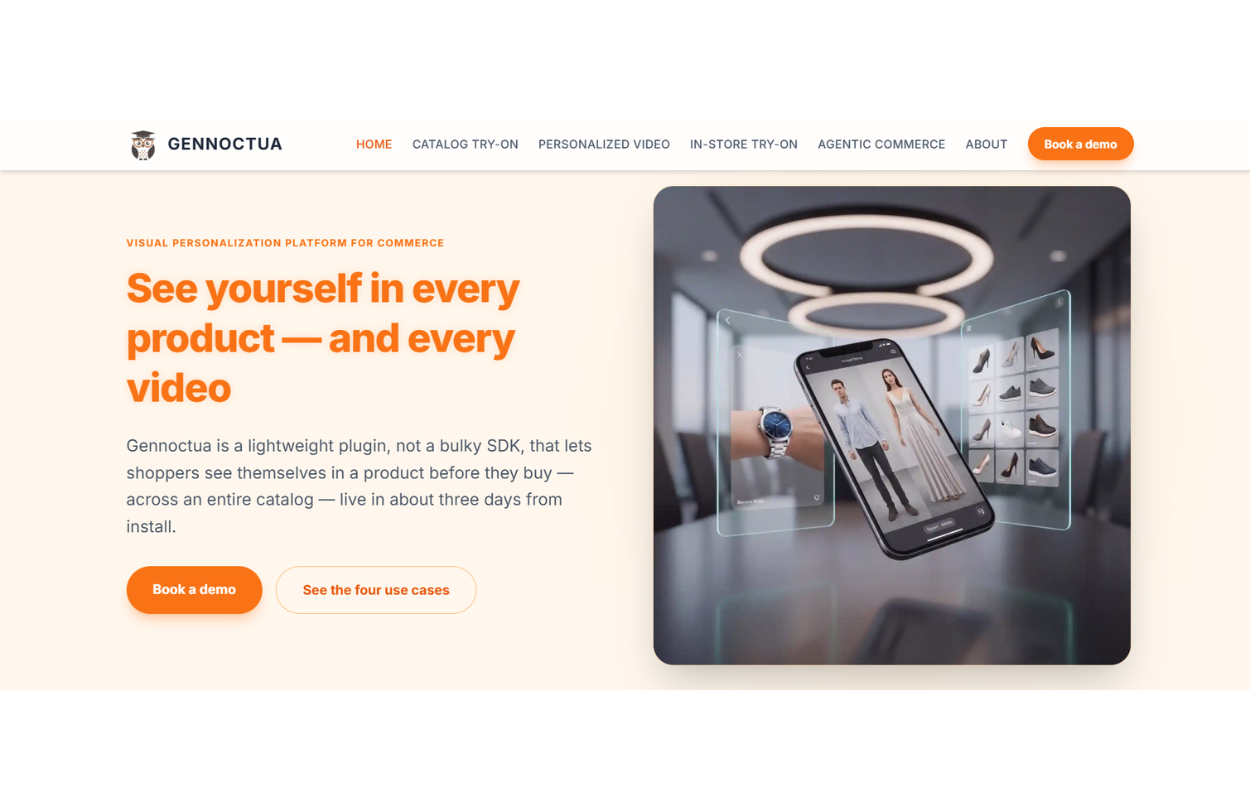 Deployable in roughly three days, the platform also generates what it calls Style, Fit & Match signals. This structured data tells both human shoppers and AI shopping agents whether a product works for that specific person.
As agentic commerce moves from concept to reality, Gennoctua is building the visual layer that AI shopping agents will need to make truly personalized recommendations.
Returns are one of the most expensive problems in online fashion retail. Wearfits, a retail tech company, tackles this with VTO, specifically built for apparel. It lets shoppers see how a fashion item looks on their own before clicking "add to cart."
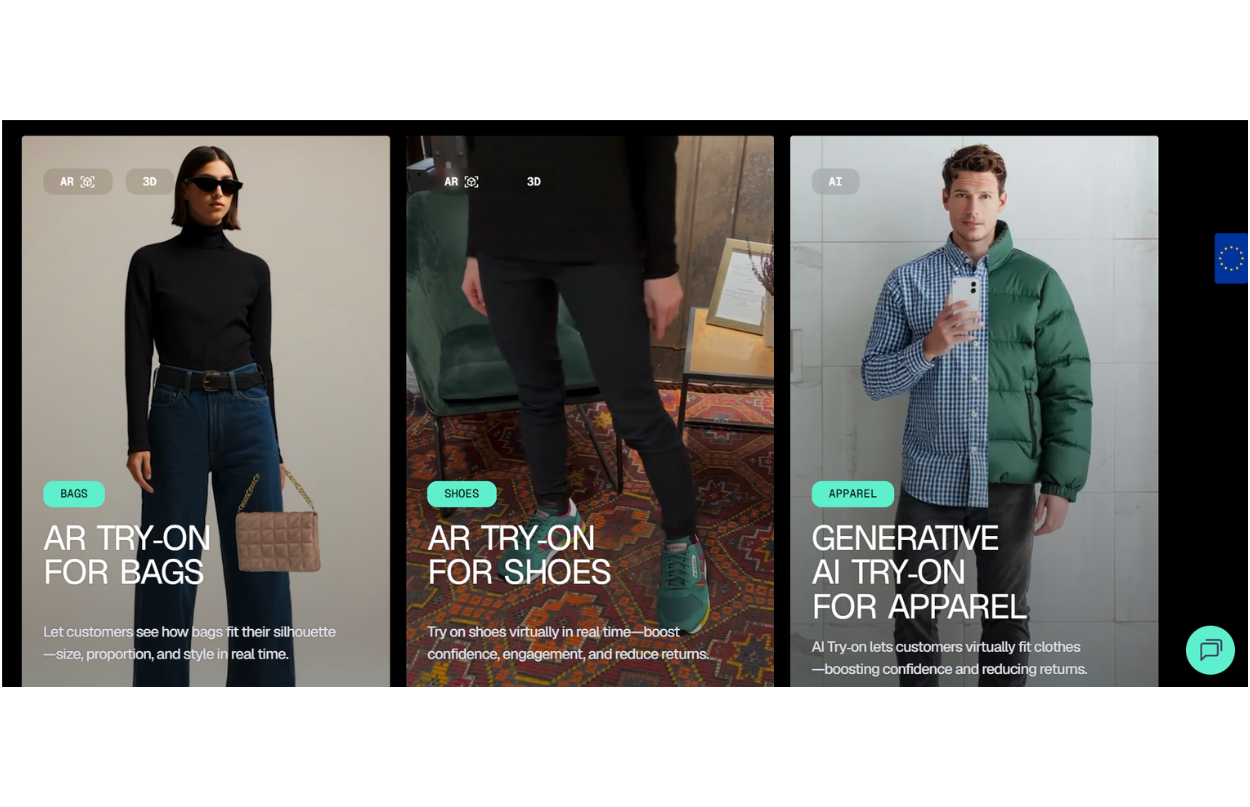 The technology covers shoes, bags, and clothing, all powered by augmented reality (AR) and generative AI, from a single product photo. It also works in physical stores through a Digital Mirror mode, bringing the same try-on experience to brick-and-mortar screens.
In a space where fit, proportion, and personal style matter most, reducing guesswork at the point of decision is a straightforward way to lift conversion and cut return rates.
Grocery retail has a decision problem. Customers do not always know what they want until they are in the store or already hungry. For many, the weekly shop is one of the most repetitive, low-joy tasks in everyday life. Yet it is also one of the highest-frequency touchpoints a retailer has with its customers.
AI is turning that touchpoint into an opportunity. Instead of waiting for customers to search, these tools meet them at the moment of intent: a recipe idea, a nutrition goal, a budget limit. They convert that intent into a personalized, ready-to-buy basket in seconds. These two companies are making grocery decisions smarter, faster, and more personal. This is one of the most practical eCommerce tech trends we saw in Paris.
CartConnect helps answer the question, "What's for dinner?" This recipe-commerce infrastructure converts that moment of inspiration into a personalized, shoppable basket, inside a retailer's own app and checkout.
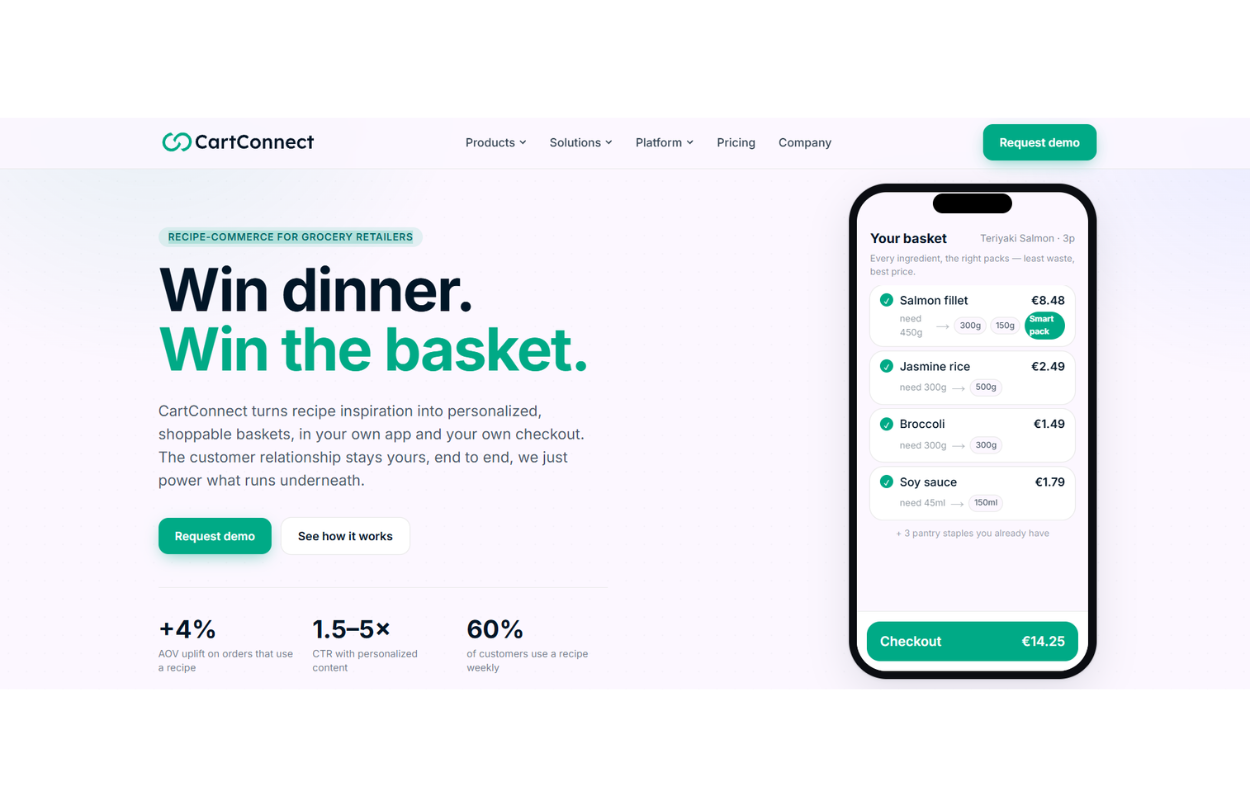 Among retail tech companies serving the grocery segment, CartConnect stands out for how deeply it embeds into the retailer's existing ecosystem. Customers never leave the grocer's app, and all data stays with the retailer.
It factors in price, stock, dietary needs, pack sizes, purchase history, and promotions. It also supports AI-powered meal planning and intent-aware recipe search, turning a single dinner question into a complete weekly shopping experience.
Shoptimus turns a simple idea into a personalization and loyalty engine for grocery retailers. This white-label SaaS platform automatically generates personalized lists for supermarket customers based on their preferences, nutritional goals, and budget. It also supports product comparison, surfaces relevant promotions, and works across both online and physical store contexts.
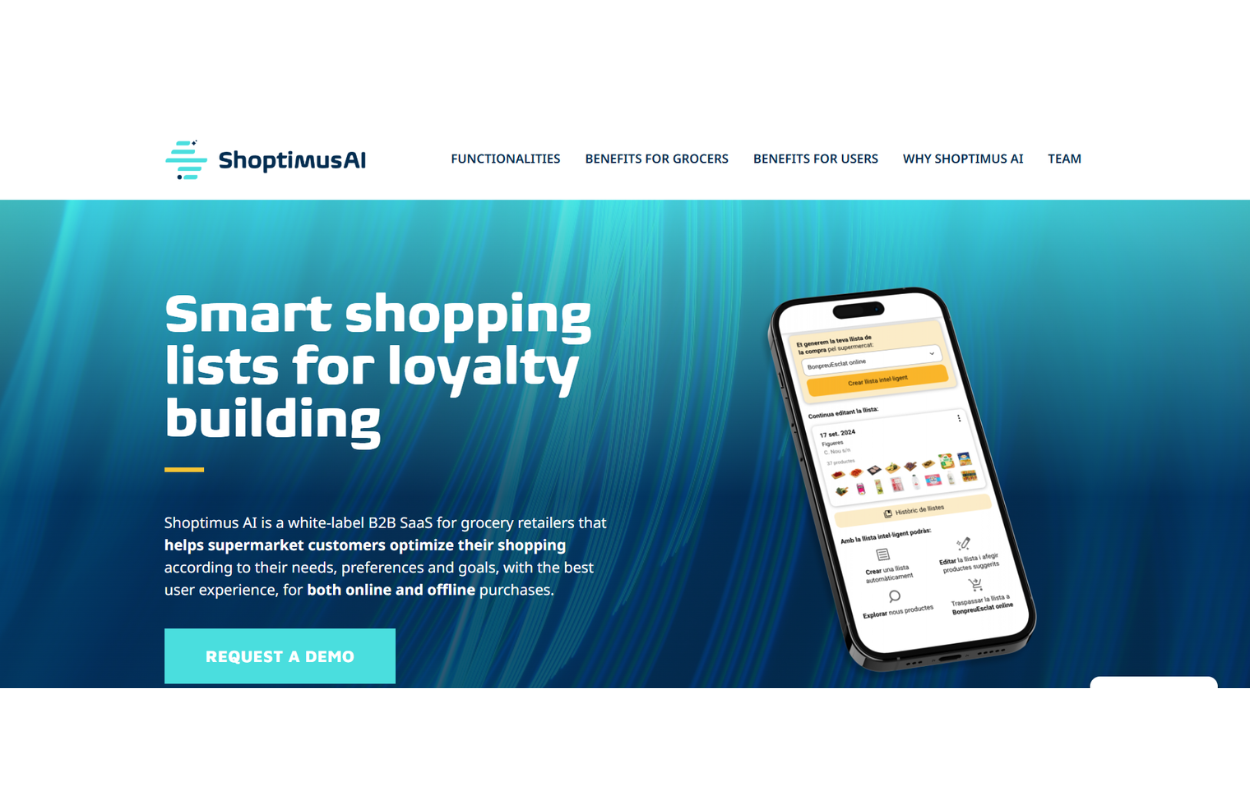 It solves a problem customers already have — the weekly shop — rather than inventing a new behavior. With higher basket sizes, better digital engagement, and omnichannel activation, Shoptimus positions the humble list as one of the highest-ROI surfaces in grocery tech.
For years, retailers built their tech stack one function at a time. A search tool. A recommendations tool. A personalization tool. Each solved its own problem in isolation. As a result, a search engine and a recommendation engine could have very different ways of understanding the same product.
The shift we saw in Paris is from point solutions to vertical AI suites. Instead of building a separate tool for every task, these retail tech companies are building a model that understands their industry first, then applying that intelligence across multiple functions. Search, recommendations, merchandising, and more, all from the same underlying model.
For retailers, that means less complexity, more consistency, and a shopping experience that finally feels joined up. These two companies represent that shift.
Nairos calls itself an Adaptive OS. This is a unified platform where human staff and AI agents work side by side on the same interface, spanning contact center operations, CRM, storage, and analytics.
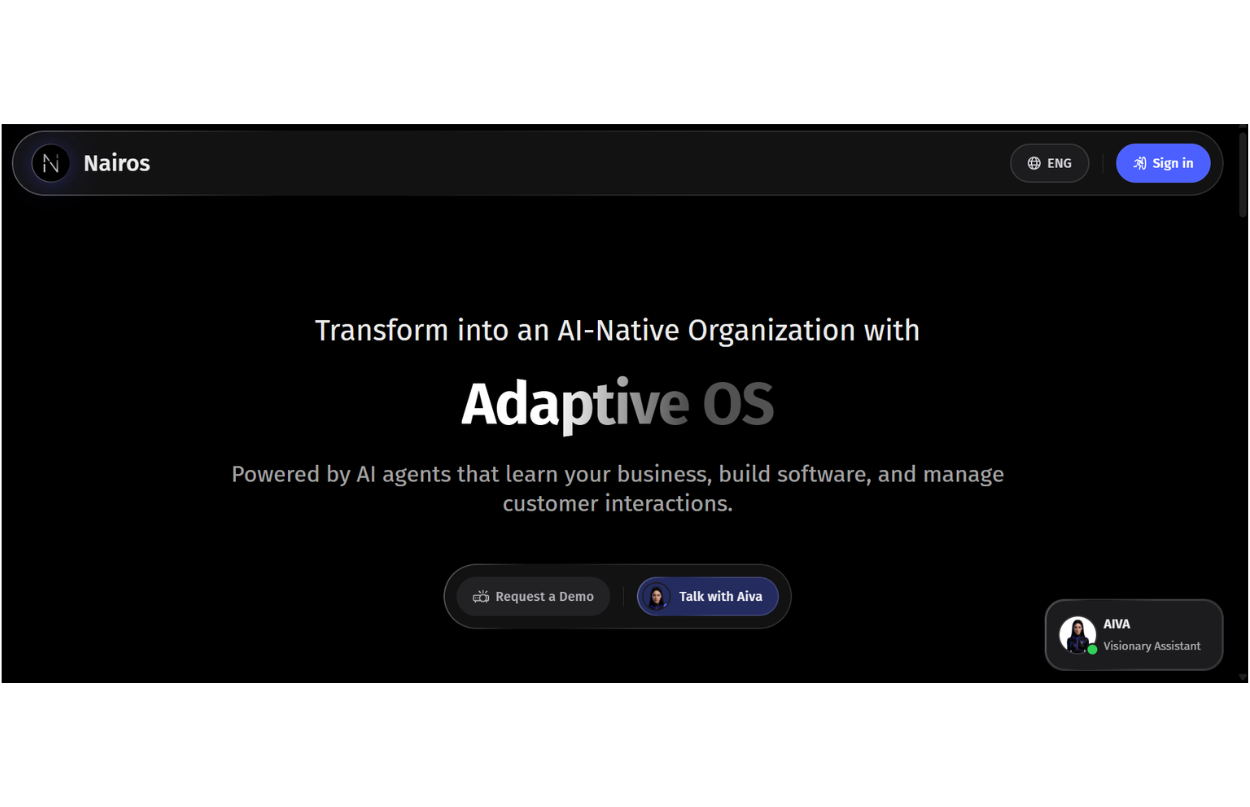 Rather than integrating AI into existing tools, Nairos is built from the ground up for organizations that want to be AI-native. It is not a point solution. It is the operating layer that connects people, processes, and AI agents in one place.
The platform already powers operations across retail, automotive, hospitality, and real estate. It carries enterprise-grade compliance standards, including ISO 27001, SOC 2, and GDPR, and is backed by partnerships with Meta, Google, Microsoft, and Anthropic.
Generic search engines treat queries as strings of words to match. Built specifically for fashion eCommerce, YesPlz AI's hybrid search engine combines semantic search, visual search, and deep fashion tagging. Our search technology understands style, occasion, silhouette, and specifically fashion shopper search intents.
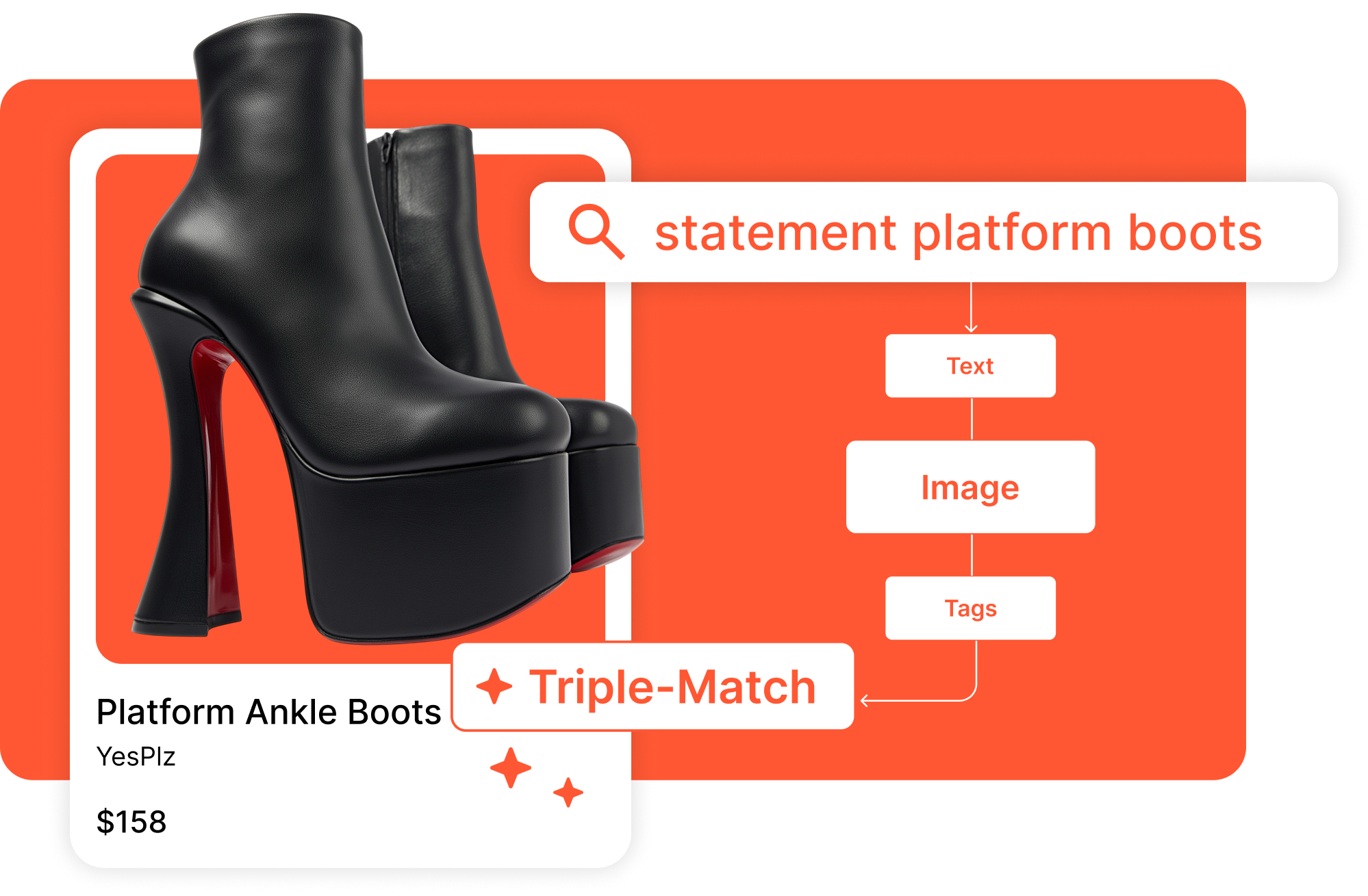 Beyond search, the AI Stylist helps shoppers make style decisions through conversation. Recommendation features suggest outfit pairings automatically. A self-tuning Search Tune Agent monitors every query, fixes what's failing, and keeps up with new fashion terms. We also support agent shopping so that AI assistants can query a retailer's live catalog directly.
Paris is always a signal. The ideas that show up here tend to show up everywhere else a year or two later.
What we saw at NRF Retail's Big Show Europe 2026 was a clear direction. Retail is moving away from generic experiences. Shoppers expect to be understood: their style, their diet, their fit, their habits.
The six retail tech companies in this list are building exactly that. Some are reinventing how people discover products. Others are removing friction at the point of decision. A few are quietly rebuilding the infrastructure that powers it all.
If Paris is any indication, the next wave of retail innovation is already here.

Written by YesPlz.AI
We build the next gen visual search & recommendation for online fashion retailers
