
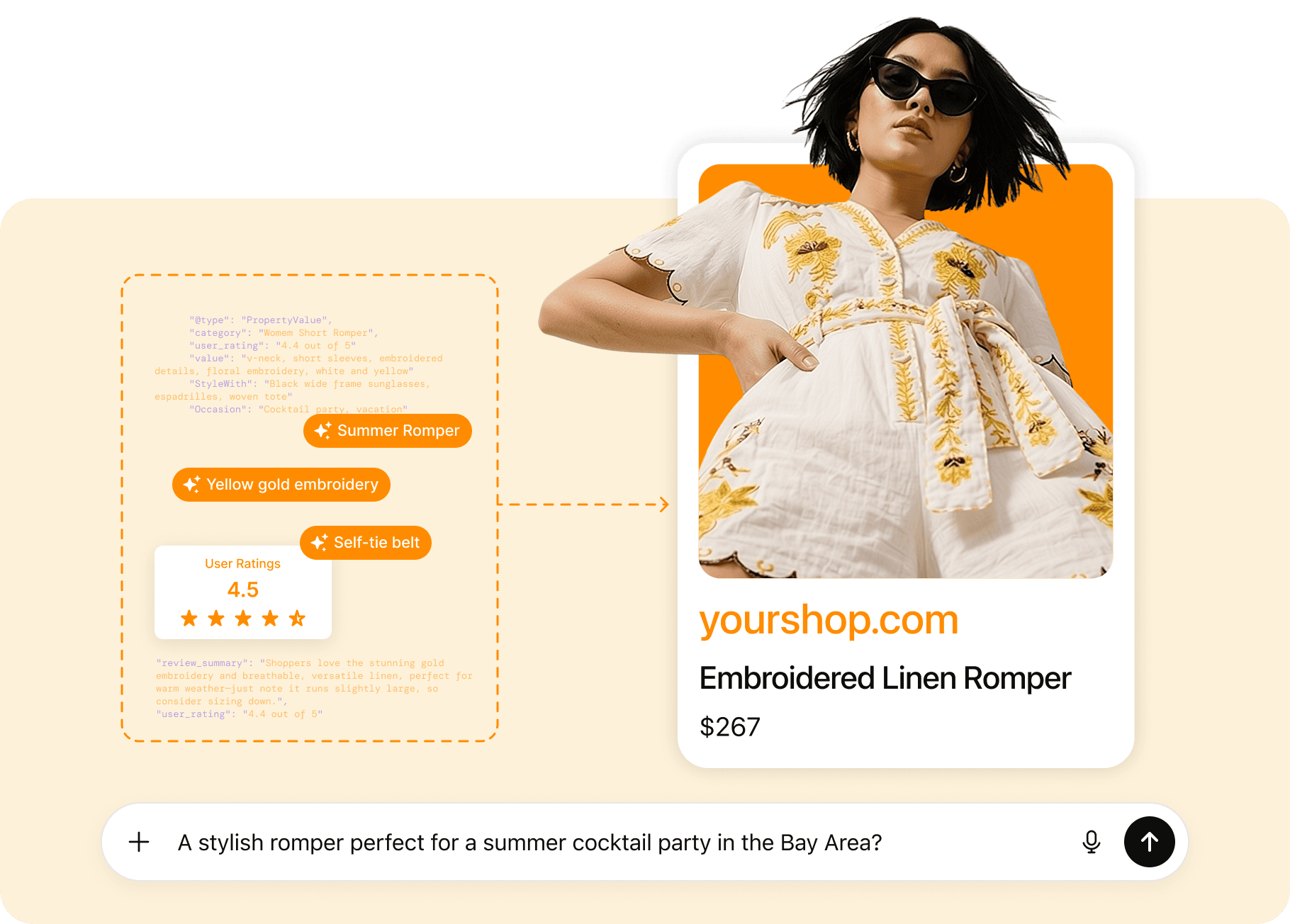
Why YesPlz GEO?
AI Search Visibility Starts with Product Data
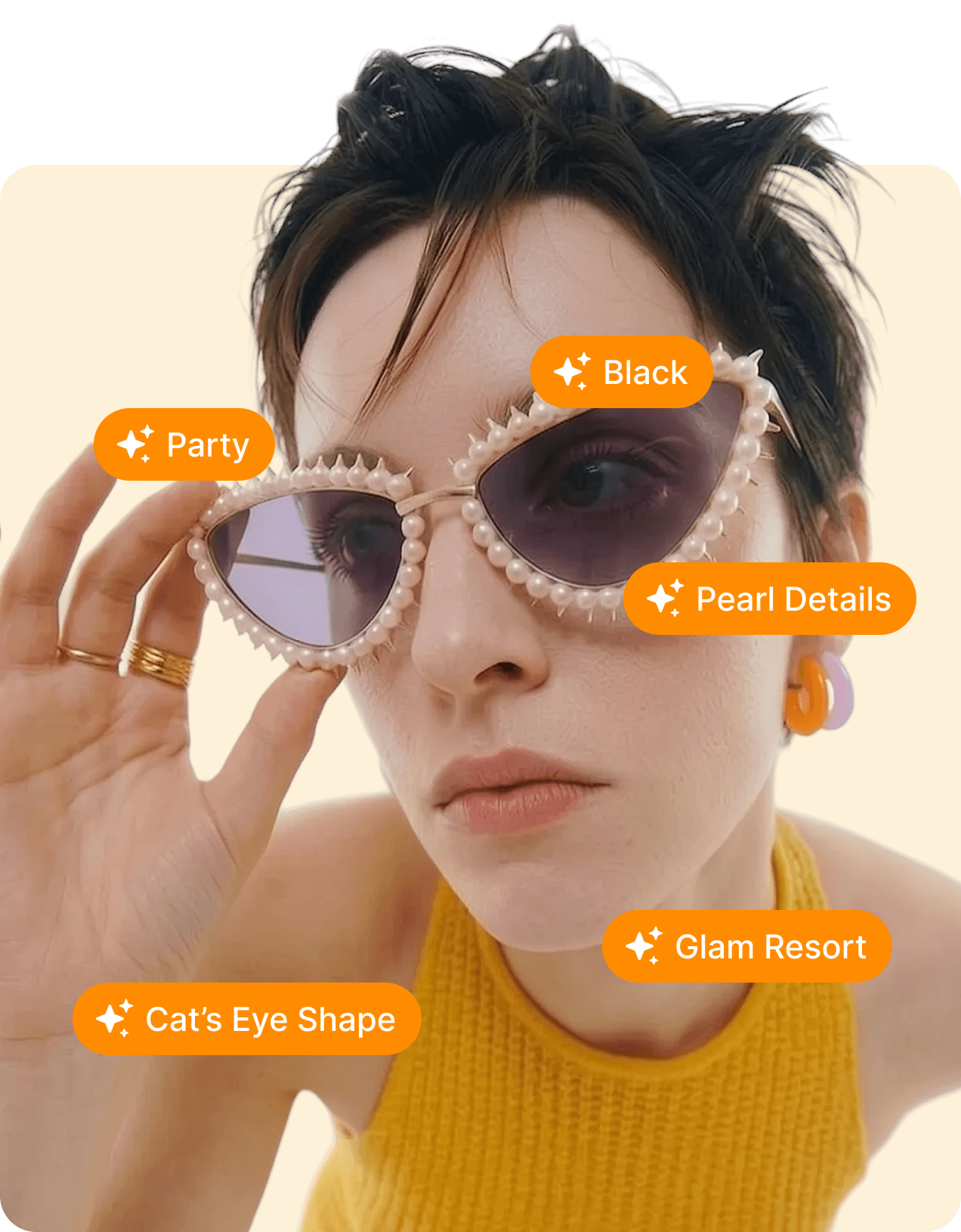
Every SKU tagged for silhouette, neckline, fit, and fabric. AI can't recommend what it can't read.
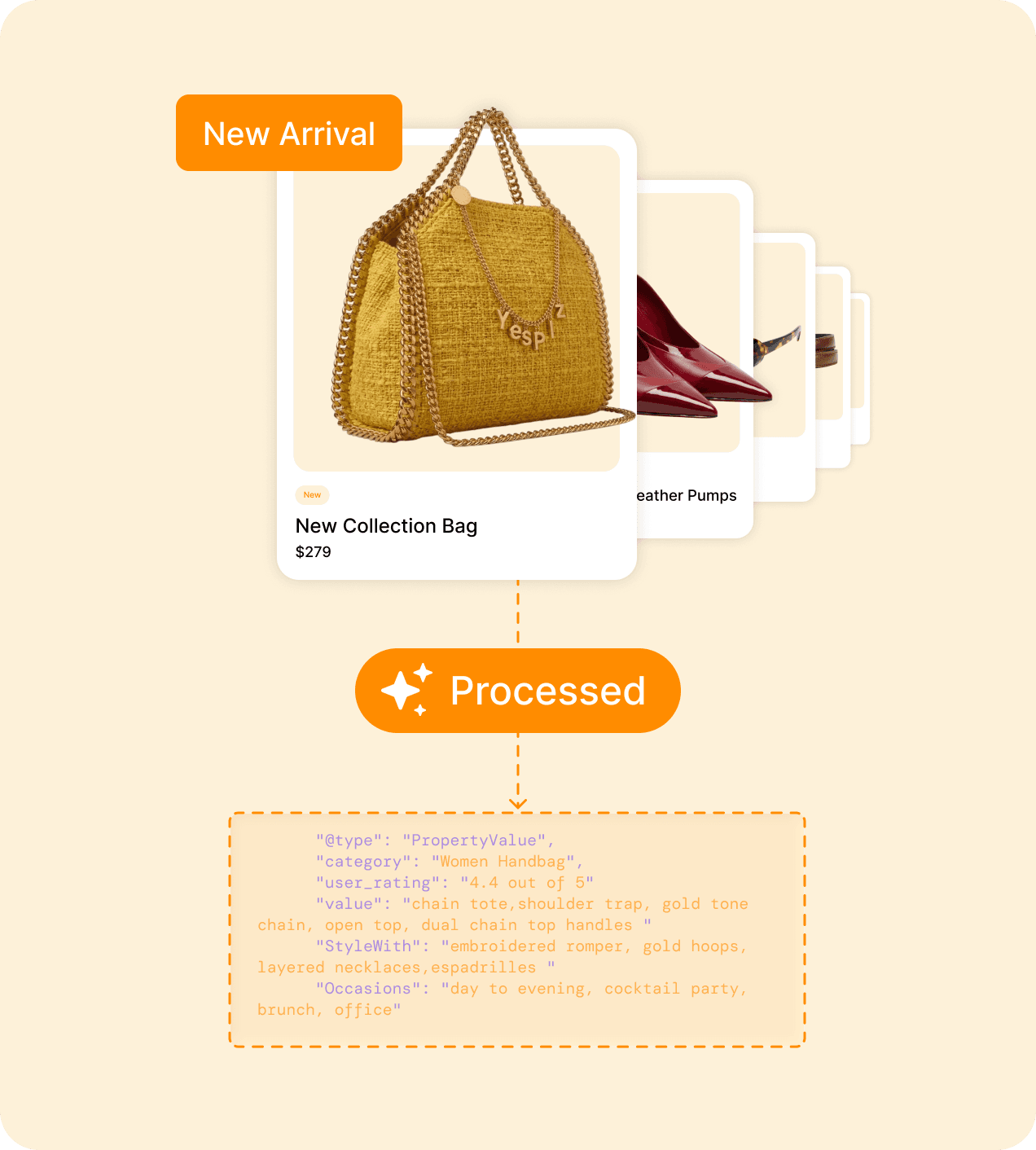
Every New Drop Is Agent-ready on Day One
GEO agencies audit your site once a quarter. Catalogs don't wait. YesPlz regenerates fashion data in real time, so new drops, restocks, and copy changes are indexed before shoppers ask.
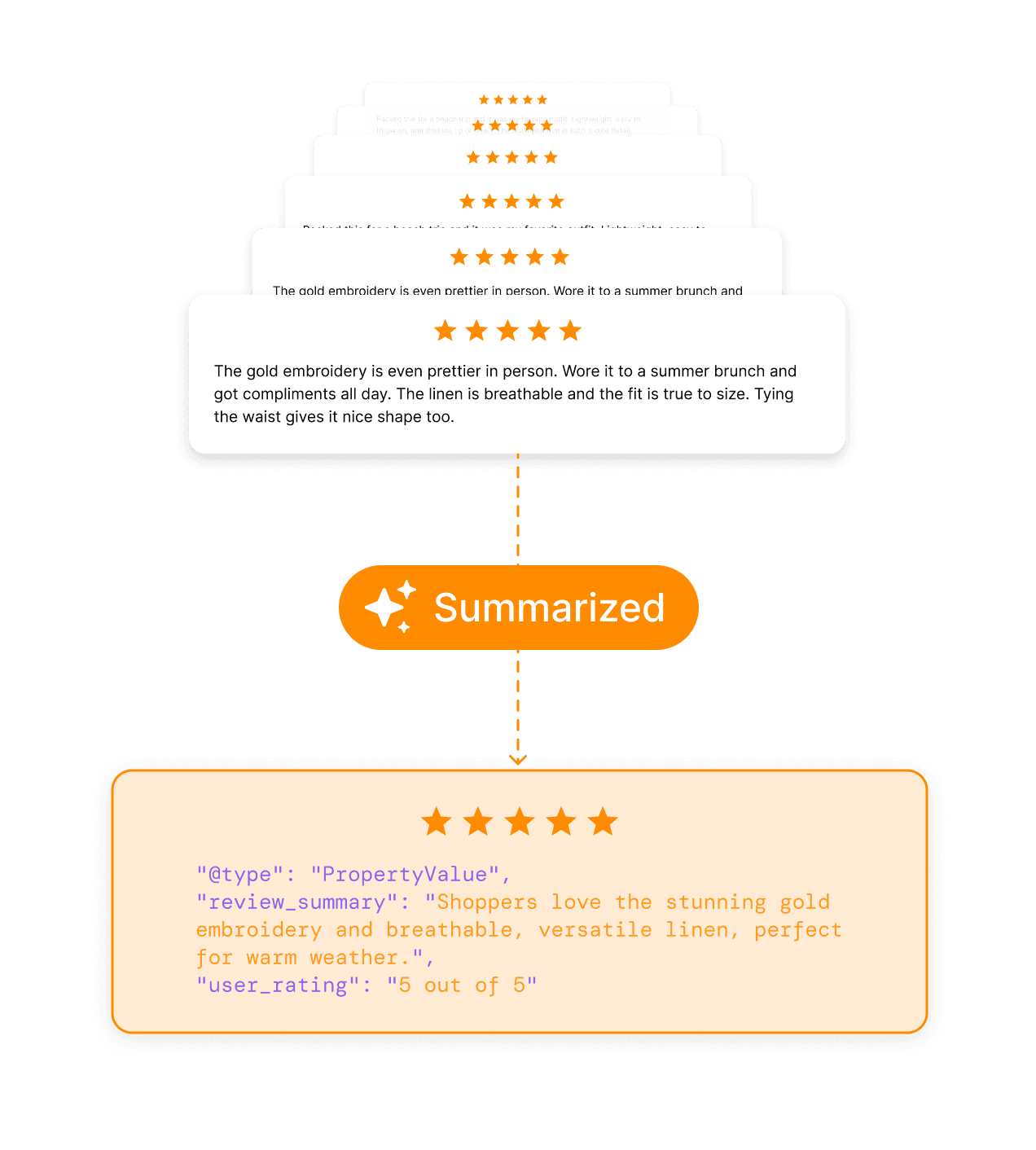
Turn Reviews into AI-Readable Proof
Fit, quality, and real-wear signals distilled per product. The questions shoppers ask AI, answered by your own customers.
Tag the Occasion, Not Just the Product
"Stylish leather jacket for business events under $300" isn't a keyword, it's a moment. YesPlz maps situation so your product appears for it:

LLM Optimization on Autopilot
The Search Tune Agent learns real shopper language from your analytics and writes it into your product data. Visibility compounds every week.
YesPlz vs. Generative Engine Optimization Agencies
YesPlz
GEO Agencies
Product Attribute Depth
Context Mapping
Outfitting Data
Review Signals
Freshness
Live Learning Agent
Generic categories (dress, shoe, bag)
Keyword research
Not covered
Not covered
Quarterly audits, manual updates
Static keyword reports
Silhouette, fabric, fit, color, details, per SKU
Occasion, season, dress code, tied to real shopper moments
Complete the Look graph across your catalog
Fit, feel, and real-wear truths distilled per product
JSON-LD regenerated in real time on every catalog change
Search Tune Agent monitors real shopper queries and writes their language directly into your structured data
Product Attribute Depth
Generic categories (dress, shoe, bag)
Context Mapping
Keyword research
Outfitting Data
Not covered
Review Signals
Not covered
Freshness
Quarterly audits, manual updates
Live Learning Agent
Static keyword reports
Product Attribute Depth
Silhouette, fabric, fit, color, details, per SKU
Context Mapping
Occasion, season, dress code, tied to real shopper moments
Outfitting Data
Complete the Look graph across your catalog
Review Signals
Fit, feel, and real-wear truths distilled per product
Freshness
JSON-LD regenerated in real time on every catalog change
Live Learning Agent
Search Tune Agent monitors real shopper queries and writes their language directly into your structured data
More Reasons to Switch
Powering everything else you need for world-class fashion search.

Auto Synonym Management
Automatic synonym handling ensures "sneakers," "trainers," "kicks" all return perfect results—no manual rules.

AI-tagging Powered Search Filters
AI-powered tagging creates smart filters for style, occasion, color—shoppers find products faster than manual tags.

2 Weeks Integration
Live in 2 weeks—seamless Shopify, Cafe24, or custom stack setup with full support, no dev headaches.
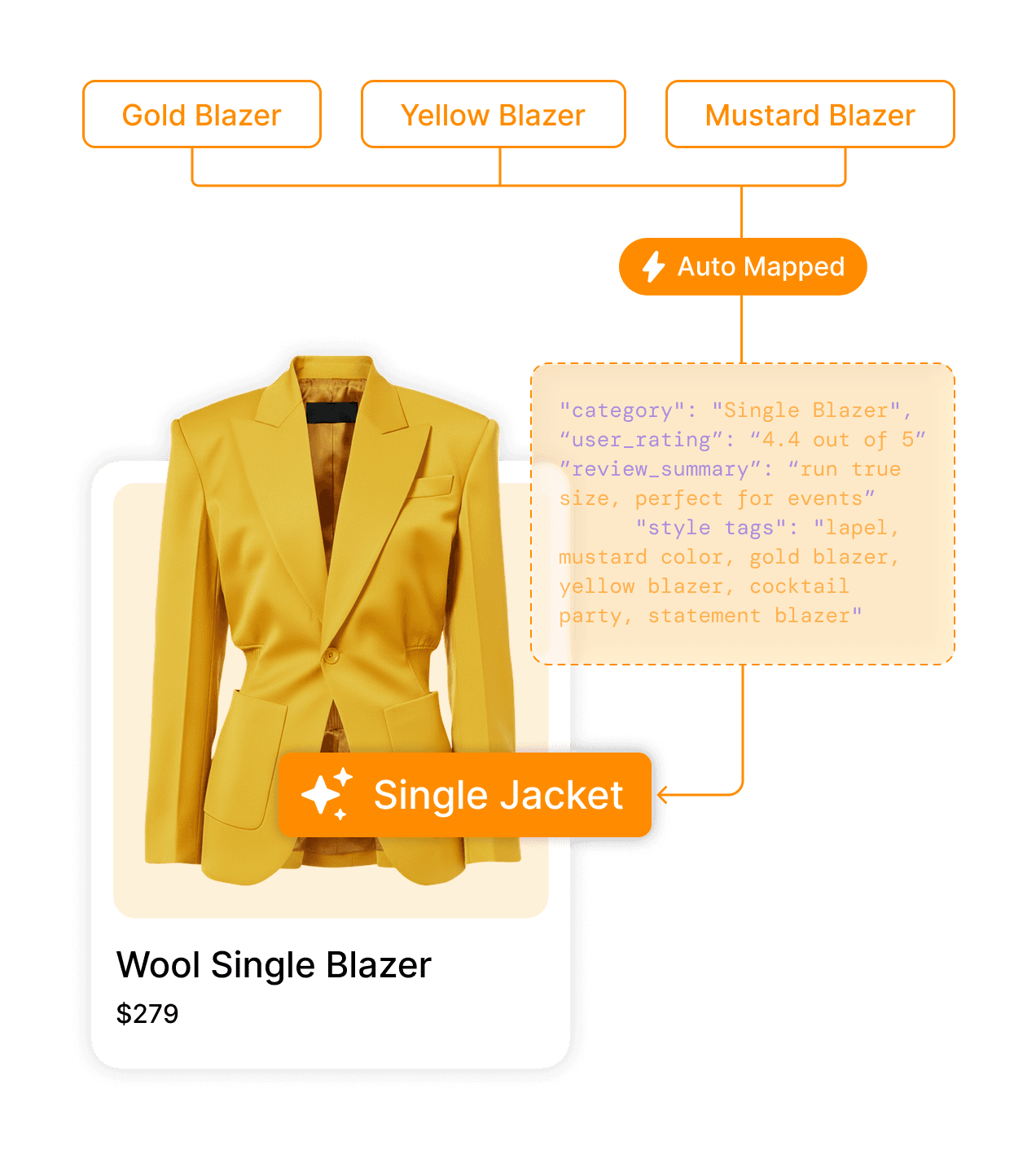
No. The agent auto-maps shopper language to your catalog, so synonyms, color variations, and style terms get added automatically. It works from your existing product data and review content, reducing the manual tagging your merchandising team would otherwise handle.
AI shopping assistants read structured data and keywords to understand and recommend products. By enriching your product metadata with the language shoppers and agents actually use, your catalog becomes more legible to these tools—so you show up when shoppers ask AI for "a mustard cocktail blazer" instead of getting skipped.
No. The enrichment happens in your structured data and metadata—the layer search engines and AI agents read—not in your visible storefront design. Your brand presentation stays exactly as you've built it, while discoverability improves behind the scenes.
It learns the real words your shoppers use to describe products—like "gold," "yellow," or "mustard" for the same blazer—and writes them into your structured data. That means your products match more searches, both on your site and across AI and search engines, without your team manually tagging every variant.
Generative engine optimization (GEO) makes your catalog readable to AI assistants like ChatGPT, Perplexity, and Google's AI Overviews. When a shopper asks for "a mustard blazer for a beach wedding," your product becomes the answer. For fashion brands it works at three layers: deep product attributes like silhouette, fabric, and fit, context mapping for occasion, season, and dress code, and structured data that AI agents can parse. YesPlz automates all three. It tags every SKU at attribute level, maps products to real shopper occasions, and regenerates JSON-LD structured data every time your catalog changes. New drops are agent-ready on day one, with no manual tagging.
No. SEO optimizes your pages to rank in a list of links. GEO optimizes your data to be the answer an AI assistant gives. They share foundations: structured data, authority, and clear product information. But AI engines don't return ten blue links. They return one recommendation, so being "on page one" no longer exists. For fashion brands the practical difference is data depth. A page can rank in Google with thin product data, but an AI assistant can't recommend a dress whose occasion, fit, and fabric it can't read. Think of GEO as the layer on top of SEO that decides whether AI shopping assistants can actually use your catalog.
