AI Tools Powering the Shopping Agent Era
Not you, but your shopping agent will do the research, bargain, review, make the payment, and return it for you. Welcome to the era of agentic AI.

by YesPlz.AIMarch 14, 2026

Not you, but your shopping agent will do the research, bargain, review, make the payment, and return it for you. Welcome to the era of agentic AI.
by YesPlz.AIMarch 14, 2026
You no longer have to visit dozens of stores and compare prices. Soon, your AI shopping agent will do that work for you. If you have been following the AI space lately, you may have heard of OpenClaw. It is a viral open-source personal AI agent that runs on your own machine. Early adopters already use it to automatically send emails, manage calendars, and even check in for flights. Now imagine that same agent helping you shop.
A personal AI shopping agent knows your style, your budget, and what’s already in your wardrobe. It searches for products, compares options, places orders, and even handles returns, all on your behalf.
However, this shift requires changes on the retailer side as well. Retailers also need their own store AI agents. These store agents communicate with shopper agents to handle tasks such as checking prices and size availability, processing payments, and managing returns. Every step of the shopping journey must become agent-ready.
Sounds like science fiction? It’s already beginning to happen. Many AI companies are actively building this infrastructure. The Business of Fashion (BoF) has already mapped out this shift. It defines the full customer journey transition from human-first to agent-first shopping.
In the human-first world, shoppers handle everything themselves. You browse products, compare options, enter payment details, track deliveries, and follow up on refunds. In the agent-first world, shopping agents handle most of that work. You simply define the goal, and the agent executes the task. Here is how that new journey unfolds:
Prompt: The agent proactively suggests purchases based on context. For example, it may recommend seasonal items or remind you about recurring needs.
Search & Compare: You give the agent a mission. It searches across multiple stores, checks your preferences, analyzes reviews, and compares prices.
Recommend: The agent shortlists the best options for your approval. In some cases, it can act automatically based on your pre-approved rules.
Purchase: Payment and delivery details are automatically filled in. The store records the purchase and applies loyalty rewards where relevant.
Track: The agent monitors your delivery and sends updates about shipping progress and arrival status.
Support: If a return is needed, the agent handles the process. It arranges pickup, submits the request, and tracks the refund.
This is what the agent-first shopping looks like. In the next section, you’ll discover AI tools powering shopping agents at every stage.
You are probably familiar with AI tools such as ChatGPT and Gemini. But the AI landscape has evolved quickly. In 2025, major AI platforms began introducing commerce protocols. This is a standardised framework that lets AI agents browse, compare, and purchase products across multiple retailers on a shopper’s behalf.
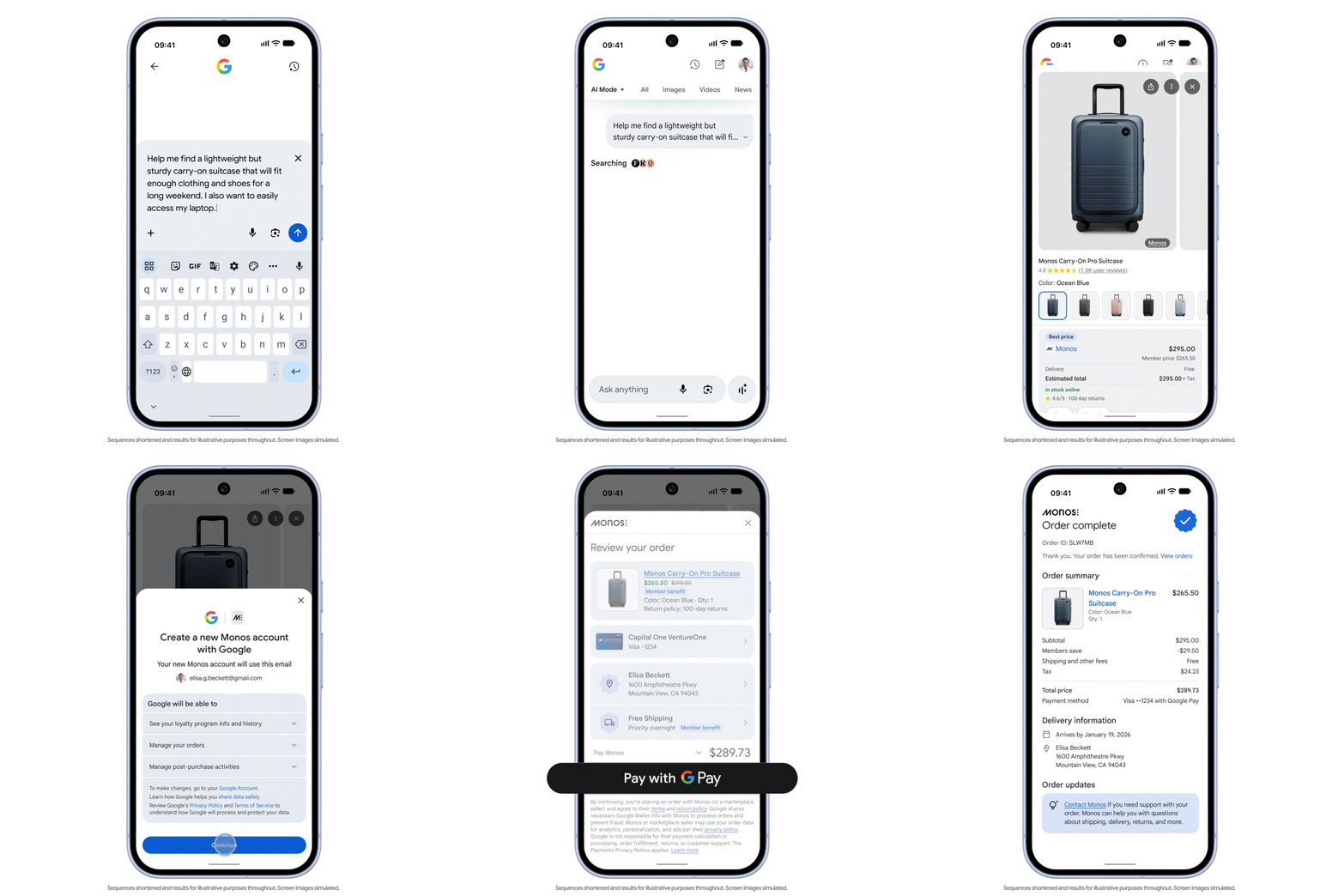
In practice, the interaction no longer looks like a simple back-and-forth chat. Instead, you assign the agent a clear mission. For example:
"Help me find a lightweight but sturdy carry-on pro suitcase that will fit enough clothing and shoes for a long weekend. I also want to easily access my laptop.”
 Stage 2: Search & Compare — Be Discoverable on the AI Shelf
Once the mission is set, shopping agents get to work. A shopper agent communicates directly with each store agent to gather product information. This is where retailers must be ready. Unfortunately, most are not prepared for this shift.
To understand the challenge, imagine a highly experienced salesperson in a physical store. This salesperson understands the products deeply. She knows the price, size, and fit. She can recommend what to wear with a piece, suggest outfits for different occasions, and point out similar items.
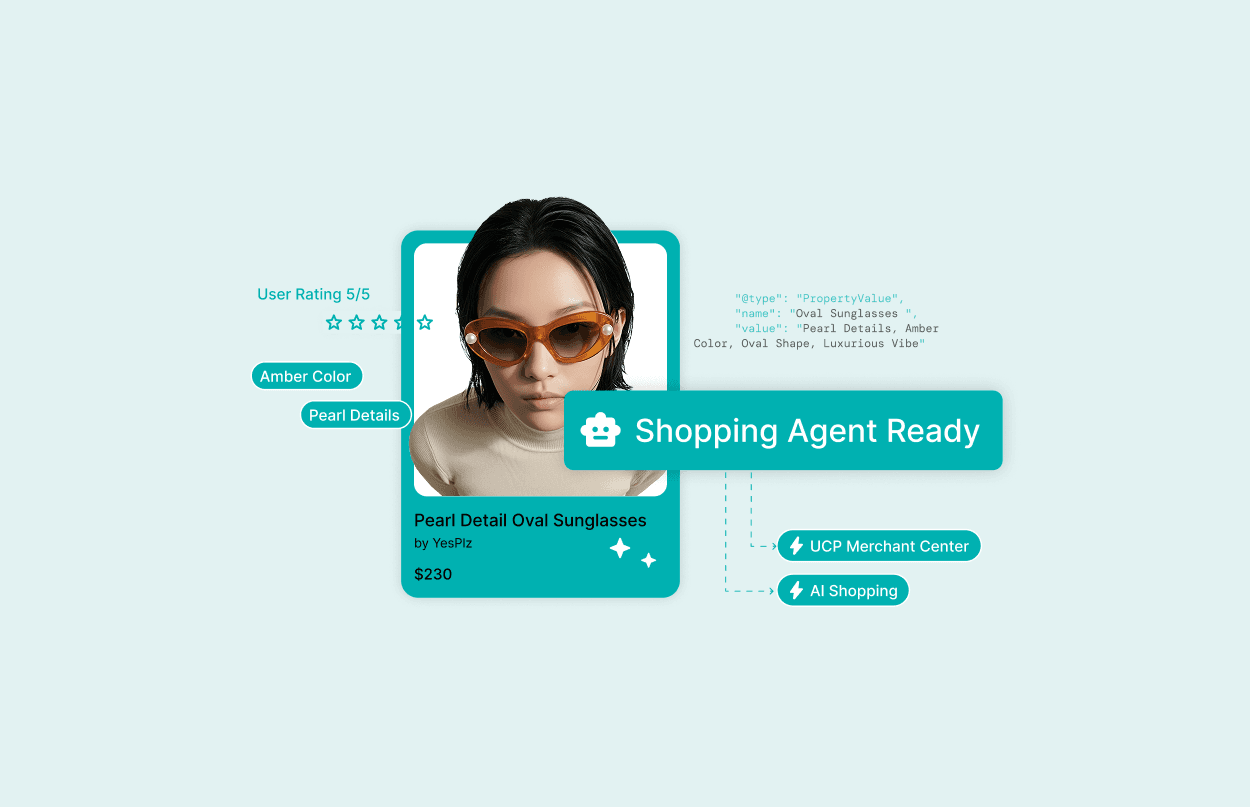
Shopping agents are essentially looking for that same level of knowledge. Yet, they need structured information about products. So, they can make the best recommendations for the person they are shopping for. This means retailers must provide rich, structured product data that AI agents can easily access and interpret. However, most online stores were not built with this in mind. YesPlz AI is built for exactly this challenge. The system enriches fashion product data and transforms traditional catalog information into AI-readable attributes. It can also generate contextual insights, such as occasions to wear an item, styling suggestions, and similar products.
All of this information is structured so that machines can easily understand and process. As a result, shopping agents can more effectively interpret products, compare options, and surface the most relevant recommendations during the search process.
In the human-first model, shoppers complete the checkout themselves. You enter your card details, choose a shipping option, and often hunt for a discount code before placing the order. In the agent-first model, this entire step becomes automated. The AI agent fills in payment and delivery details, applies loyalty benefits, and confirms the purchase on your behalf.
Until recently, this stage was the biggest bottleneck in agentic commerce. AI agents could research and compare products. But once the checkout page appears, control has to return to the human shopper. That barrier is now disappearing.
In 2025, Visa introduced its Trusted Agent Protocol, which enables verified AI agents to complete secure transactions on behalf of shoppers. Mastercard launched Agent Pay. It introduces tokenised agentic credentials to enable AI agents to pay across millions of merchants worldwide.
Both initiatives are being developed in partnership with companies such as OpenAI, Stripe, Microsoft, and Shopify to bring agent-enabled commerce into real-world retail systems. Shoppers still stay in control. They define the rules — spending limits, approved categories, preferred brands. Shopping agents then operate within those boundaries. It is autonomous, but never unchecked.
With AI agents, you no longer need to check emails or track pages yourself. The agent monitors delivery in real time and notifies you the moment something changes. Delivery delays, expected arrival windows, or carrier exceptions are surfaced proactively.
This is one of the clearest immediate wins for agentic AI in retail. WISMO, which stands for “Where Is My Order?", is the most common customer service question in eCommerce. When an AI agent tracks shipments and keeps shoppers informed, many of these inquiries disappear at the source.
Several platforms already support this stage of the journey:
AfterShip offers a robust tracking API with proactive delivery notifications. These updates can be surfaced through AI agent interfaces.
ParcelLab goes further by building AI-powered post-purchase experiences that keep shoppers engaged between order and delivery. The platform helps reduce WISMO inquiries while creating additional brand touchpoints.
Narvar provides retailer-grade branded tracking experiences. Major fashion players use it to deliver consistent, on-brand post-purchase communication at scale.
At this stage, a shopping agent automates many of the repetitive, high-volume tasks that typically consume customer service resources. For example, it can schedule a pickup, generate a return label, track the return shipment, and confirm the refund once the item is received.
Several AI-enabled platforms already support this stage:
Gorgias is the leading AI helpdesk built specifically for eCommerce. The platform handles returns, refunds, and order queries through deep integration with platforms like Shopify and Magento.
Loop Returns is widely used in fashion retail for automated returns and exchanges. It provides self-service workflows that reduce manual support work while improving the customer experience.
Zendesk AI offers enterprise-scale support automation. Its AI capabilities help triage, route, and resolve customer queries across chat, email, and messaging channels.
By automating these processes, retailers can resolve issues faster while reducing operational costs. At the same time, shoppers can enjoy a smoother, less frustrating shopping journey.
The age of AI-assisted shopping is no longer on the horizon. It has already arrived. According to BoF, shopping-related searches on generative AI platforms grew by 4,700% between 2024 and 2025. Nearly a quarter of global consumers now use AI as their primary starting point for product discovery. Even more striking, 85% report higher satisfaction with AI-assisted shopping journeys compared to conventional ones.
But understanding that AI is transforming fashion retail is only half the picture. The more urgent question for fashion brands and retailers is: Which tools are driving this shift, and where do they fit in the customer journey?
While solutions are emerging for every stage of the agentic commerce journey, YesPlz AI is purpose-built for fashion eCommerce. Starting with just a product image and basic catalog information, the platform generates enriched product data, recommends similar or complementary styles, and structures them into AI-readable attributes. As a result, shopping agents can understand, compare, and recommend your products, making your store visible in an agent-first shopping environment.
Download our free checklist to see how agent-ready your fashion store is today. Or book a demo to discover how AI can help make your fashion store agent-ready from day one.

Unlock the proven strategies top fashion brands use to dominate answer engine optimization.
Inside this checklist, you’ll discover actionable tips and must-have optimizations to boost your product page visibility!

Written by YesPlz.AI
We build the next gen visual search & recommendation for online fashion retailers
