How AI Styles Outfits for Every Occasion
Customer acquisition costs are rising. Complete the Look turns one-item interest into multi-item orders. Here's how AI styling makes it happen.

by YesPlz.AIApril 9, 2026
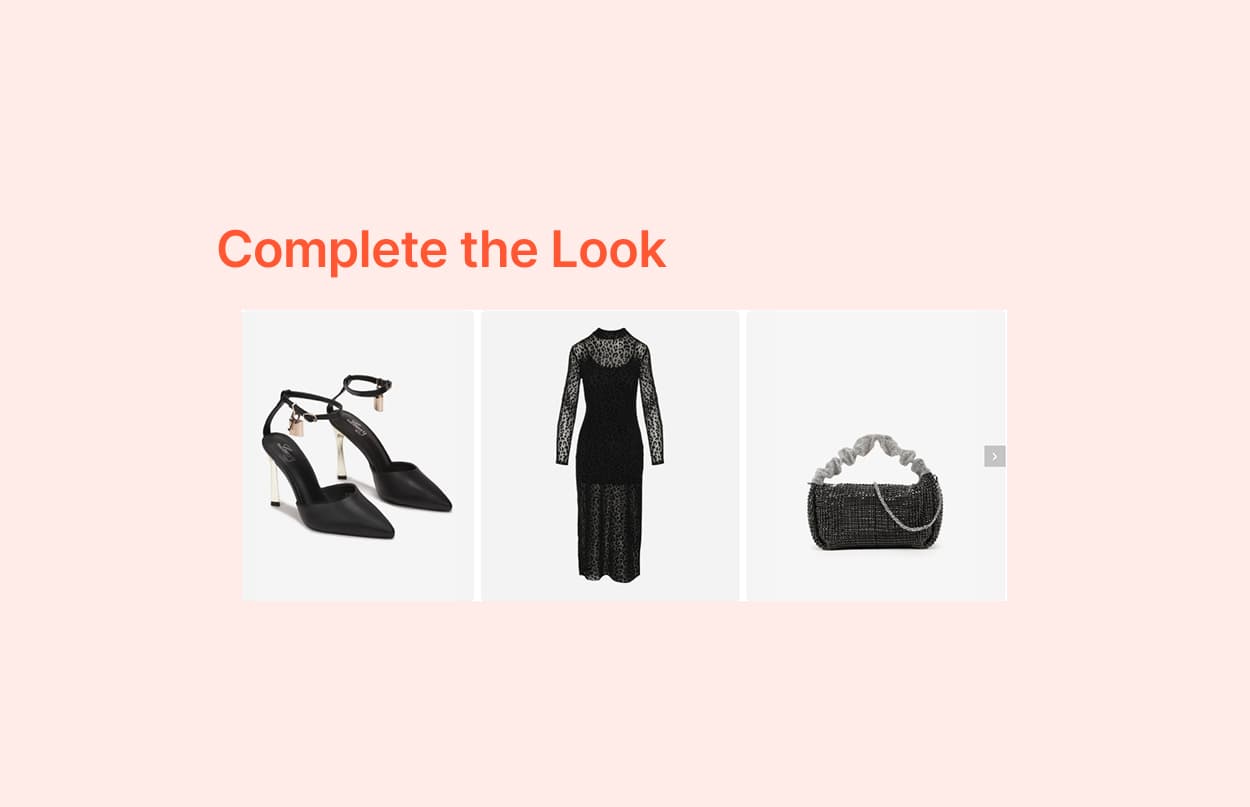

Customer acquisition costs are rising. Complete the Look turns one-item interest into multi-item orders. Here's how AI styling makes it happen.
by YesPlz.AIApril 9, 2026
You worked hard to get shoppers to your site. You ran the ads. You paid for the clicks. And it worked. A shopper is on your product page, looking at a blazer. Then, she buys it and leaves. It is a successful transaction. But, wait…
Here's the painful part. Average customer acquisition costs (CAC) in fashion are now running $90 to $120. And that number has risen more than 60% over the last five years. That means your return on ad spend (ROAS) is under pressure.
The Complete the Look module doesn't solve your acquisition problem. But it does something just as important. It makes each acquired shopper worth more. It turns a one-item interest into a multi-item order.
This module lifts average order value, keeps shoppers on your site longer, and reduces the decision fatigue that sends them clicking elsewhere. It is one of the highest-leverage cross-sell opportunities in fashion retail. However, most brands still aren't doing it well.
Here's why, and what it actually takes to get the Complete the Look recommendations done right.
Let's start with the math. Say you have a catalog of 5,000 products. But that doesn't mean 5,000 outfit recommendations. It means tens of thousands.
For example, a single blazer doesn't live in one outfit. It lives in many. A navy blazer might be styled for the office with tailored trousers and loafers. It gets restyled for a weekend brunch with straight-leg jeans and white sneakers. Then again, for an evening out in a silk blouse and heeled boots.
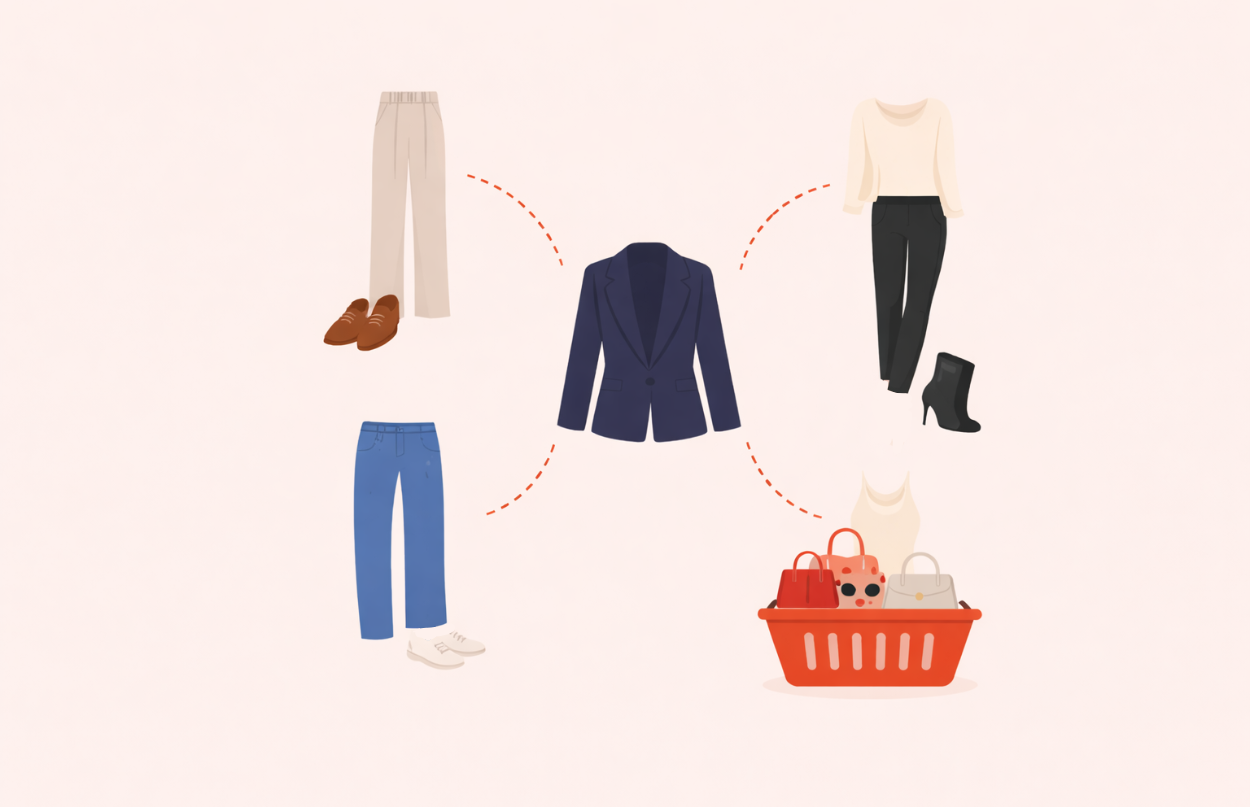 That's three outfit recommendations for one product. Multiply that across seasonal drops and new arrivals, and you start to see the real scale of the challenge. So how did fashion brands handle this before AI styling?
A team of stylists will sit with the lookbook, study the season's editorial direction, and carefully pull together items from the catalog. They understand the brand's aesthetic language. They know which silhouettes complement each other, which colors clash, and what their target customer will actually wear. The output is on-brand, thoughtful, and inspiring.
But this process is quite slow…
The stylist team can handle the hero products: bestsellers, new arrivals, and campaign pieces. But the long tail of the catalog? The thousands of items that aren’t featured in any lookbook? Those are often left without any outfit recommendations.
As you can see, this human approach doesn't scale. And the problem compounds with every new drop. So many brands look for a technology shortcut.
The answer, for a while, is rule-based engines. Their logic seems reasonable. If the product is a white shirt, surface dark trousers. If it's a midi dress, recommend heels. Define the rules and automate the pairing; that's how these rule-based engines work.
But the problem is that fashion doesn't follow simple logic. In this industry, occasions, vibes, fabrics, specific shades, and other elements matter. A rule-based engine doesn't know that the mustard wide-leg trousers need different Complete the Look recommendations from the navy ones.
Besides, rules require someone to write and update them frequently, especially in fashion, as changes always happen. A new season brings new silhouettes, new color palettes, and new categories. The rules that worked for last spring's collection can produce awkward results for this autumn's.
So, rule-based outfit styling is technically complete but feels uninspired. And, uninspiring recommendations don't convert. Or worse, they train shoppers to ignore the outfit recommendations module entirely.
The difference with AI styling isn't speed, though speed is part of it. The more interesting part is its quality. It has been trained on millions of fashion data points to understand:
What goes together and what doesn't
How occasion and vibe change the equation
What color harmonies work across different product categories
How silhouettes interact
etc.
AI styling doesn't apply rules when building Complete the Look recommendations. It applies its specific fashion understanding. Hand the AI a product image, and it identifies garment type, color family, styling context, intended vibe, etc. It then goes into your product catalog and finds items that perfectly combine with it. Not because a rule said so, but because it understands what makes a good outfit.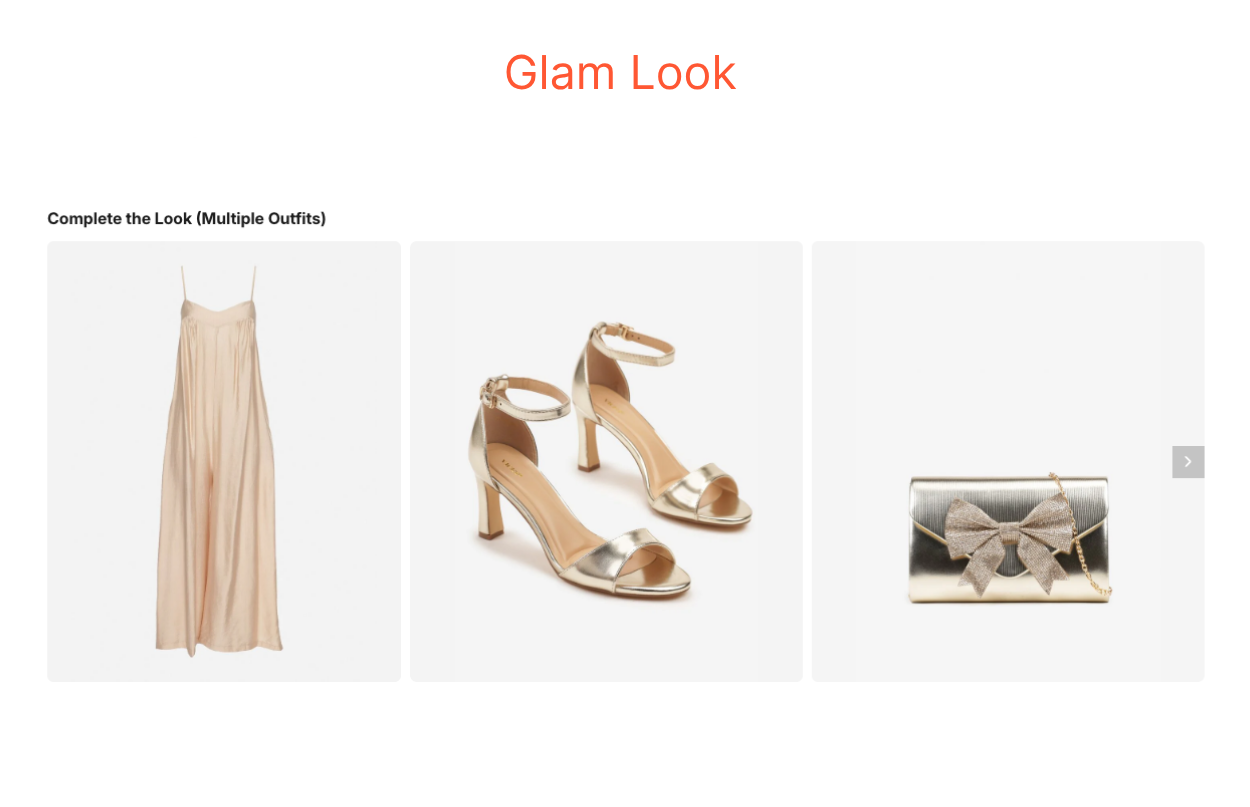 Take the gold strappy heels in the image above, for example. The AI reads its metallic finish, slim heel, and ankle strap, then labels its vibe as glam. It identifies them as elegant, dressy, and occasion-ready. From there, the AI builds the full look. A gold satin slip dress. A gold embellished bow clutch. Three pieces that belong together, pulled straight from a product catalog.
Compared with rule-based recommendations, AI styling feels curated and personalized. Shoppers notice the difference, and they engage differently. Research shows that outfit and style recommendations are among the top features shoppers interact with most. More than 65% of shoppers say it is the feature they engage with the most on product pages.
For a brand managing thousands of SKUs, the AI styling workflow below replaces what would otherwise require months of manual work and ongoing headcount to maintain it.
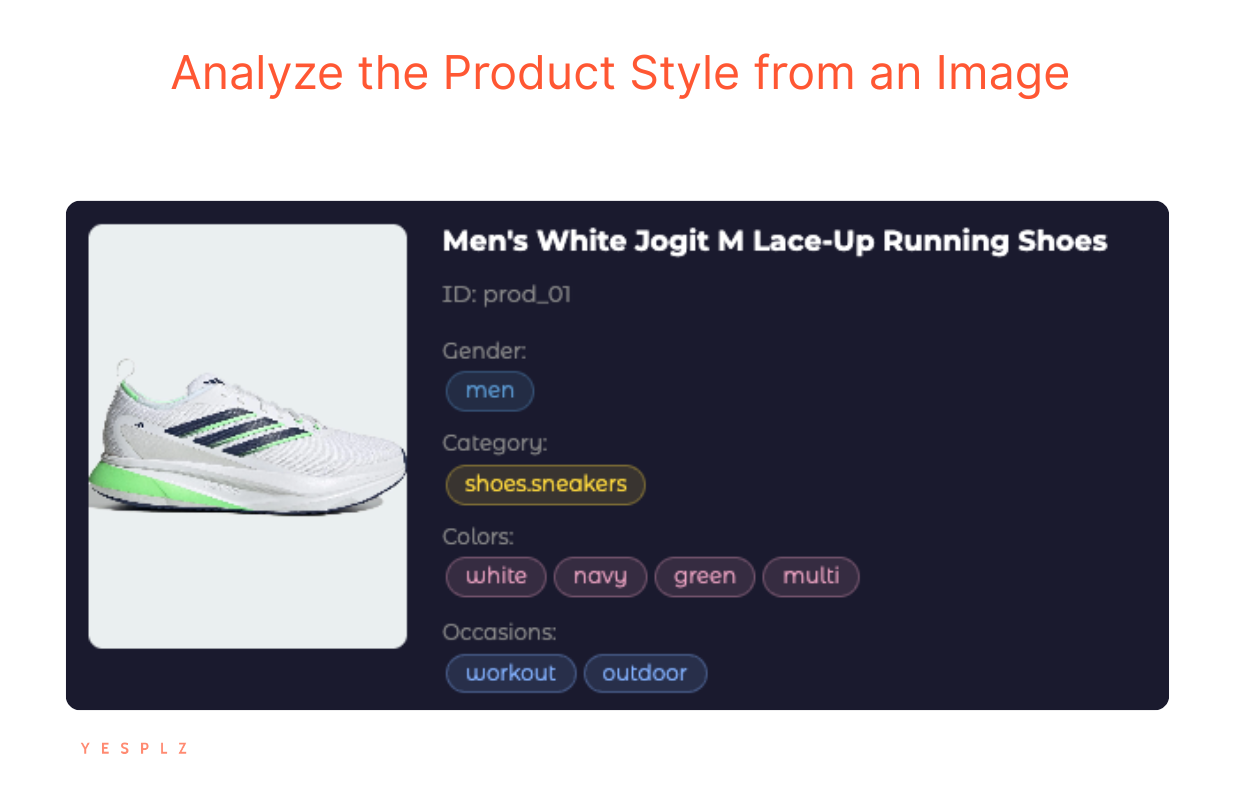
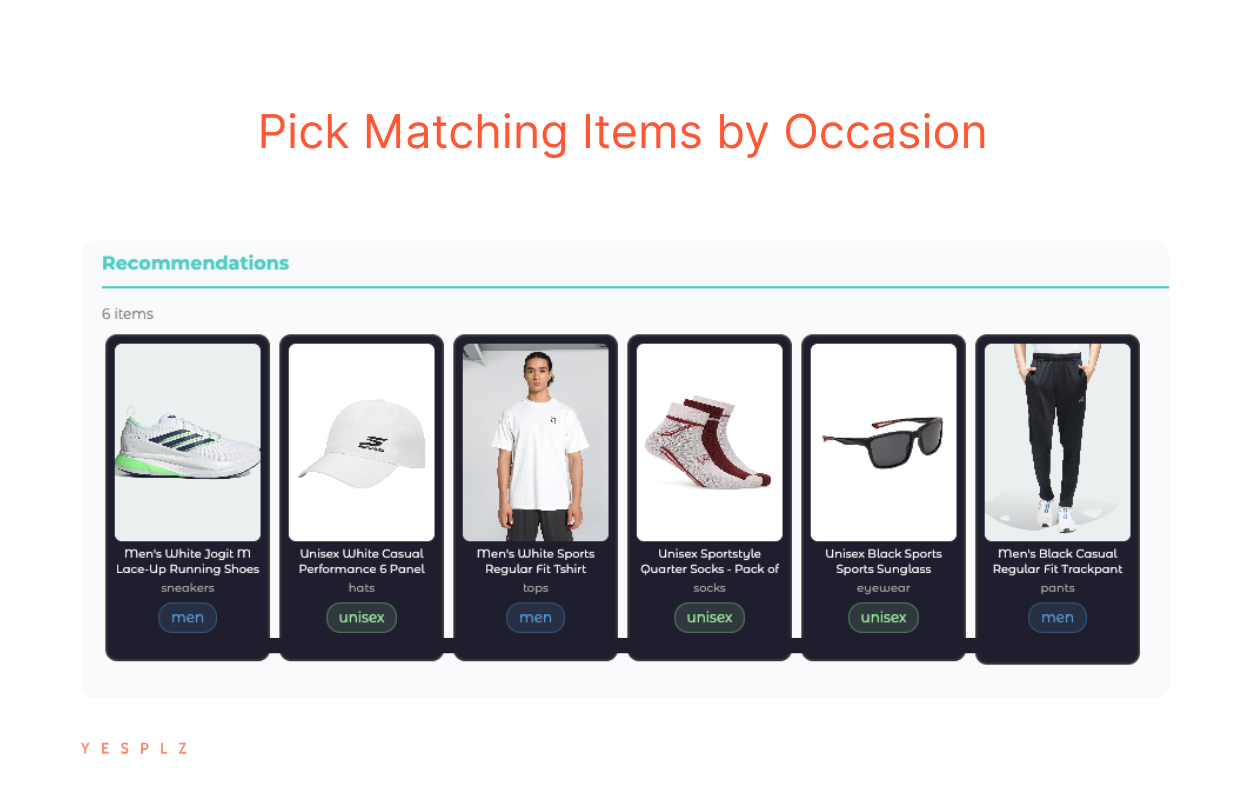
The AI identifies category, color, gender, occasion, vibe, etc. In the image below, a pair of white lace-up running shoes gets the following tags:
Gender: Men
Category: Sneakers
Colors: White, navy, green, multi
Occasions: Workout, outdoor
These automated fashion tags become the foundation for intelligent Complete the Look recommendations later.
It finds related products by occasion. For instance, it surfaces a performance cap, sports socks, black sunglasses, a white T-shirt, and black track pants to combine with the lace-up running shoes. This is a complete, cohesive activewear look pulled entirely from the catalog.
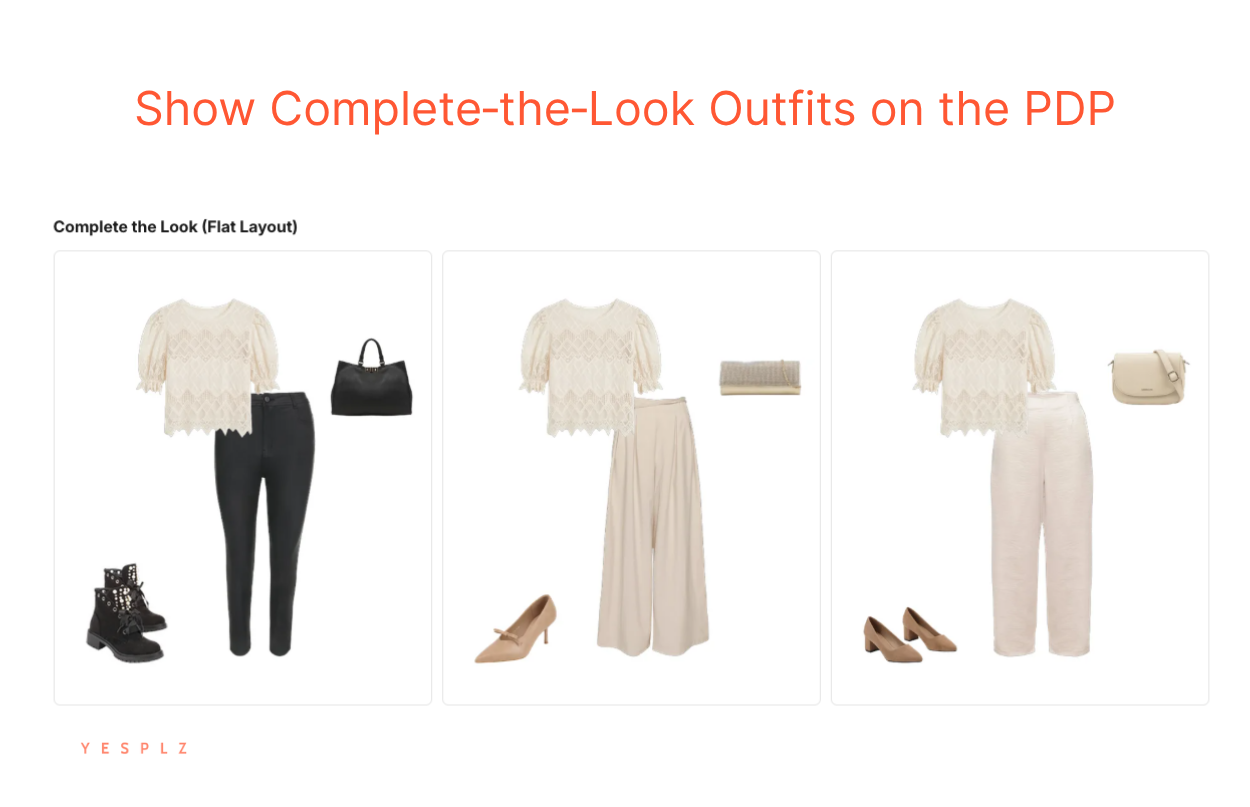
The AI understands that one product doesn't get one outfit. It gets several, each for a different occasion or styling direction. A cream lace crop top gets a bold, edgy look with black coated jeans, combat boots, and a structured tote. Then a soft daytime look with wide-leg trousers and kitten heels. Then a casual-chic version with cream wide-leg pants and a crossbody bag.
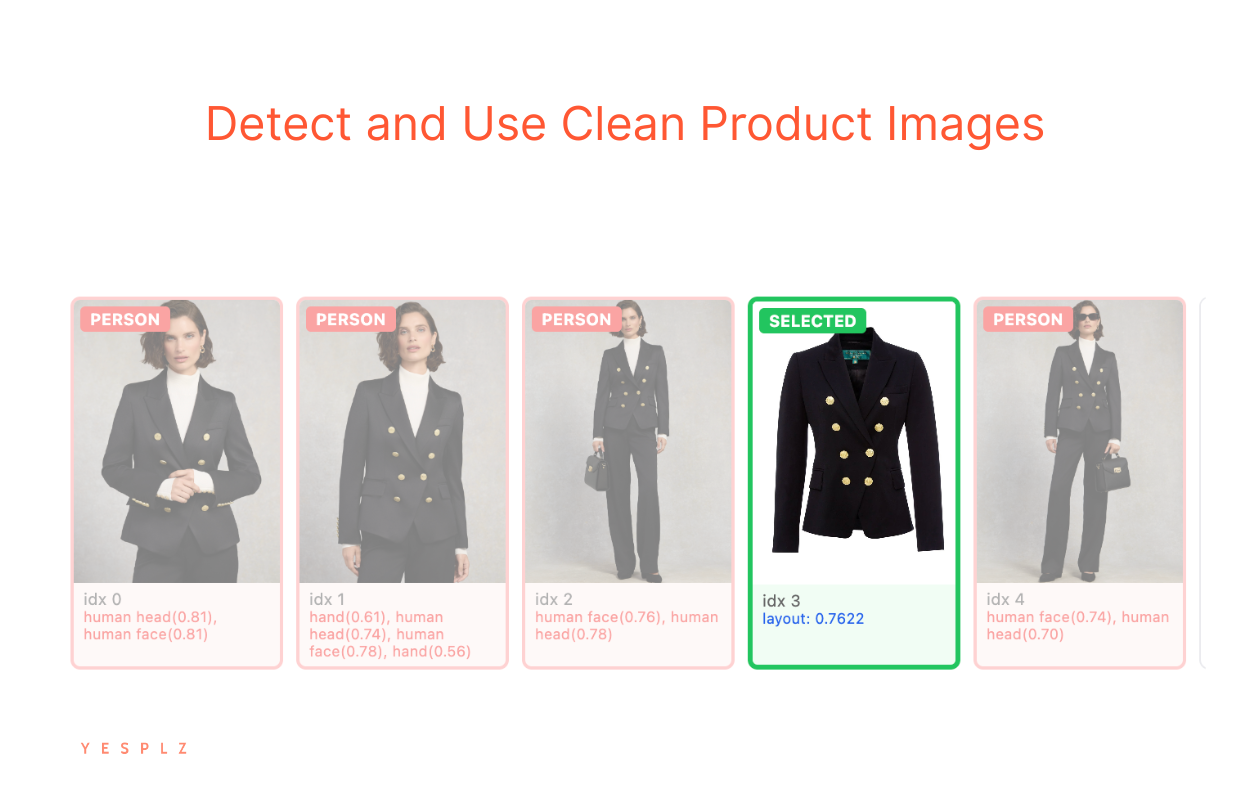
A single SKU can have five or more photos — model shots, detail crops, flat lays. The AI scores every image, flags those containing human faces or hands, and selects the isolated product shot with the highest layout score. The result: every recommendation tile shows a clean, consistent product image without manual curation.
Shoppers land on a product page and see fully styled looks, labeled by vibe. Each different occasion features a different Complete the Look recommendation. The shopper doesn't have to imagine how it all fits together. It's already done.
The most common objection to AI-generated styling is loss of control.
“What if the AI puts together outfits that don't reflect our brand identity? What if it misses the mark on what our customer actually wears?”
These are fair concerns. And they're exactly why the YesPlz AI Complete the Look Management Console exists. Our AI doesn't publish outfit recommendations directly to your site. Everything goes through your team first.
Open the console, and you see every outfit the AI has built. Each look shows the hero product alongside its recommended pieces, labeled by category: tops, pants, shoes, bags, etc. You can always modify or swap out individual items without rebuilding the outfit from scratch. Every edit, every swap, every flag is a signal fed back into the system. It learns your brand's aesthetic preferences.
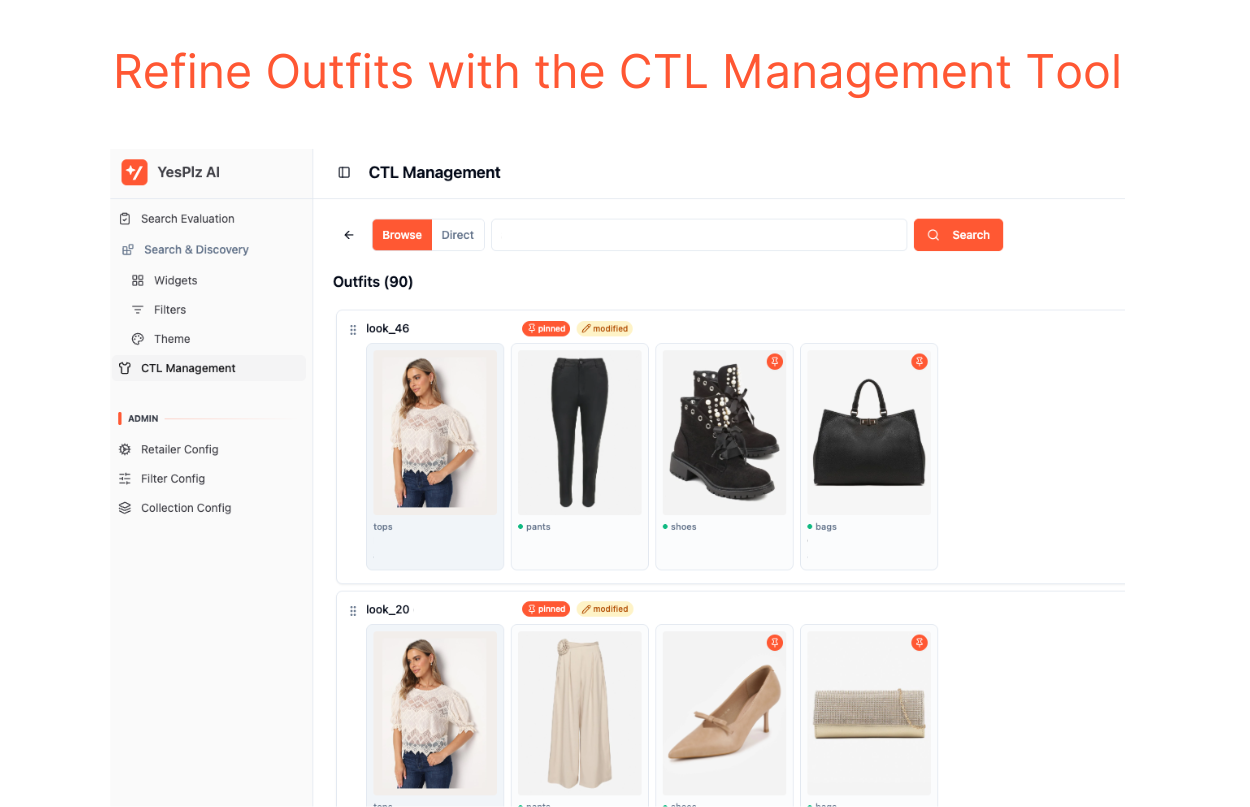 The only thing that changes is where you spend your time. Instead of your stylist team building every outfit from scratch, they're reviewing, refining, and approving. The creative judgment stays with your team. But the volume problem gets solved by AI. And the long tail of your catalog — those thousands of products that previously had no outfit recommendations at all — finally gets covered.
Brands running AI-powered Complete the Look see measurable lifts across several KPIs:
Higher units per transaction: When shoppers see a fully styled outfit, they buy more items per visit.
Increased time on site: A shopper who's browsing outfits, exploring different styling directions, and visualizing how items work together stays on your site longer.
Lower return rates: One of the reasons shoppers return online fashion purchases is that the item didn't work with anything they already owned. When shoppers buy a full outfit together, they have the full context. The pieces are already styled.
Reduced reliance on discount-led conversion: Brands that lack compelling outfit styling often fall back on discounts to push shoppers over the line. Complete the Look recommendations create a reason to buy that isn't price — it's inspiration, completeness, confidence.
AI styling works best when there's a scale problem to solve. If any of these sound familiar, it was built for you.
Fashion eCommerce managers who own cross-sell KPIs but don't have styling resources to hit them.
Merchandisers responsible for product discovery with a catalog that's already outgrown manual workflows.
Growth-stage DTC brands that need outfit recommendations live across their catalog now, not after a six-month implementation.
Teams that want AI to handle the volume, but need to stay in control of brand voice and quality.
Want to see how AI styling works for your catalog? Book a demo with YesPlz AI and watch your full catalog come to life with intelligent, on-brand outfit recommendations.

Written by YesPlz.AI
We build the next gen visual search & recommendation for online fashion retailers
