Fashion eCommerce Software: The 5 Layers You Actually Need
Discover the 5 layers of a fashion eCommerce stack, where retailers lose sales, and how the right software turns product data into a competitive edge

by YesPlz.AIAugust 7, 2026

Discover the 5 layers of a fashion eCommerce stack, where retailers lose sales, and how the right software turns product data into a competitive edge
by YesPlz.AIAugust 7, 2026
Go ahead and type ‘barrel jeans’ into your site's search bar. What do you see? A no-results page? Or a collection of items that don't quite match? If either of those describes your experience, you're not alone.
‘Barrel jeans’ is a relatively new search term for many fashion retailers, even though the silhouette itself has been around for decades. These items have a distinctive shape. They're wider around the hips and knees, then narrow at the ankles, creating a curved silhouette.
The silhouette first gained popularity in the 1920s, inspired by riding pants and workwear. It returned to the fashion spotlight in 2023 when designer Pieter Mulier introduced barrel pants in Alaïa's Fall collection.
Soon after, the trend exploded on TikTok, driving a surge in online searches that retailers weren't prepared for. Many of those retailers had the right products in their catalog. Shoppers just couldn't find them.
These products were missing tags or weren't described in language that matched how shoppers searched. The catalog existed, but the connection between shopper intent and product data didn't.
This is the core challenge of fashion retail: trends move faster than taxonomies. A silhouette gets a new name on social media. However, generic eCommerce software isn't built for this.
In most retail categories, the product defines the search. A shopper buying a book types the title. A shopper buying a smartphone filters by screen size and storage. There's a specific specification to search against, and general eCommerce software handles that just fine.
Fashion doesn’t work that way. There's no spec sheet. Fashion is self-expression, and what shoppers want shifts with the occasion, the season, and the trend of the week. Even the words they use change constantly. A shopper looking for barrel jeans might also search for:
Wide hip jeans
Curved leg denim
Balloon jeans
Relaxed tapered jeans
These all describe the same silhouette. But if your product data only uses one of these terms, or none of them, you're leaving sales on the table every time a new variation trends.
That's a gap general software was never built to close. And it's not a platform problem, either. Whether you're using Shopify, Salesforce, or something else, no platform understands fashion out of the box, and switching won't change that.
What does fix it is software built specifically for fashion — tools like AI-powered product tagging and smarter search that understand how fashion shoppers think and shop, and that work within the stack you already have.
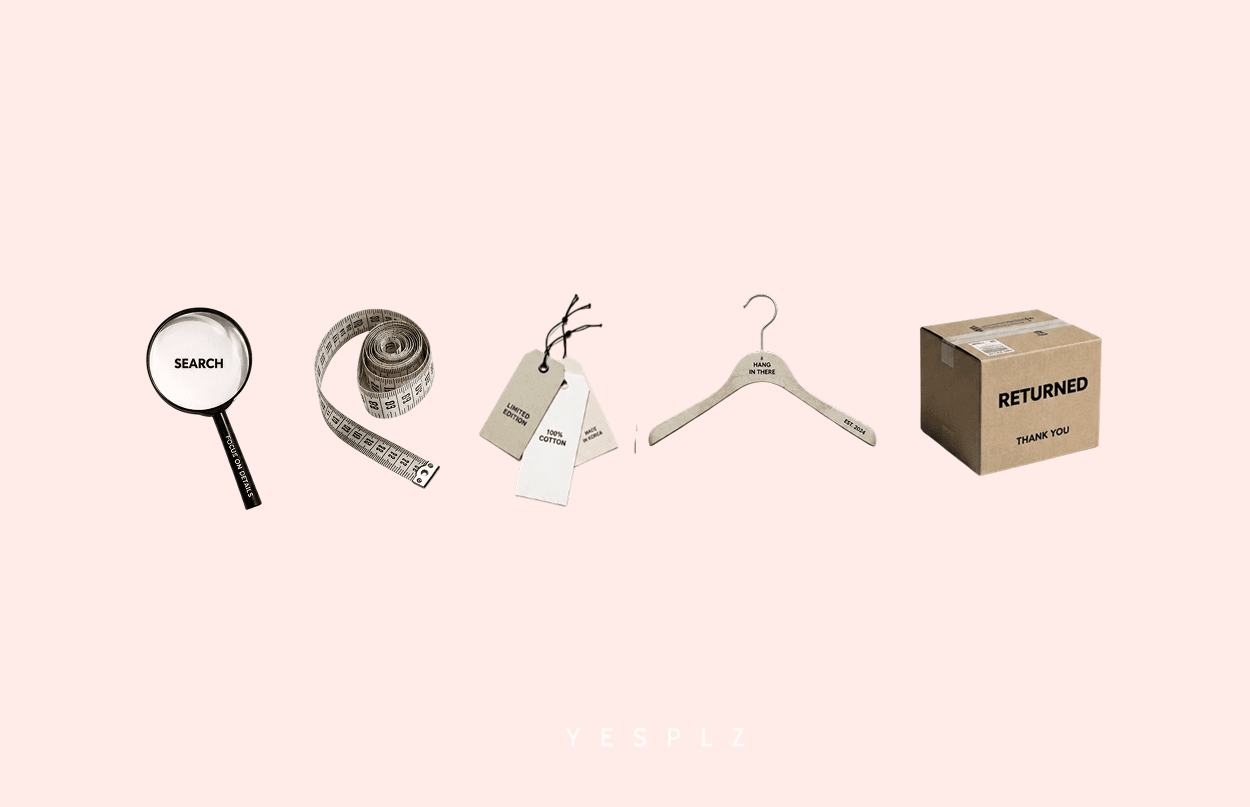
Every eCommerce business, regardless of size or platform, relies on the same five foundational layers. Most retailers already have tools covering each of these layers. Shopify, Salesforce, and similar platforms handle them well.
So, this section isn't about replacing what's working. We just point out that two of these layers are where fashion retailers consistently struggle. Fashion eCommerce software works across these two layers specifically. It helps enrich your product data so that search and discovery can do their job. You keep your existing platform; just make it significantly smarter.
Traffic is where everything begins. Without visitors, even the most well-merchandised store generates nothing.
For fashion retailers, traffic comes from multiple sources: organic search (SEO), paid advertising, social media, email campaigns, and increasingly, influencer and creator-driven content. Each channel brings a different kind of shopper with varying levels of intent.
Most eCommerce platforms already include built-in tools to support this layer. Shopify has its SEO settings and email marketing integrations. Salesforce connects with Marketing Cloud for paid and email campaigns.
These tools are robust, reliable, and already part of what you're paying for. So before looking elsewhere, make sure you're getting the most out of what you already have.
Search and discovery is where shopper intent meets your catalog. It's the moment a visitor arrives with something specific in mind and your store either delivers or disappoints.
For most general retail categories, this layer works well enough. Shoppers search for a product name, for example, ‘iMac M4 pink’. The catalog then returns matches, and the transaction moves forward.
However, fashion is a totally different story. Consider the two high-volume search queries ‘office siren’ and ‘barrel jeans’. Is there any product in your catalog titled this way? Many retailers carry these exact styles. But if nothing in the product title and description mentions these words, the search definitely returned nothing.
These two examples illustrate the same underlying problem: fashion shoppers search in the language of trends, aesthetics, and silhouettes, not just the exact product name. Unfortunately, generic search tools have no framework for interpreting these styles and translating them into relevant results.
This is exactly the gap fashion eCommerce software is built to close.
This layer is where your team shapes the shopping experience: building collections, curating edits, sorting product grids, and planning campaigns that move inventory and tell a brand story.
Most eCommerce platforms support this layer well. Shopify's collection rules and product pinning, Salesforce's Einstein product recommendations, Bloomreach, Nosto, and Searchspring all give merchandising teams real leverage over how products are ranked, sorted, and surfaced.
Before investing in new tools, it's worth auditing what your current platform already offers. Many retailers are sitting on powerful merchandising features they've never fully activated.
But if your merchandisers are spending their week manually pinning products to compensate for poor search results, that isn't merchandising. That's compensating for bad discovery. The goal is to free your merchandising team to do creative, strategic work.
This is the transactional layer where intent becomes revenue. It covers everything from the moment a shopper clicks "add to cart" to the moment an order is fulfilled, and in fashion, often returned.
Most eCommerce platforms handle this layer robustly. Shopify Payments, Salesforce's order management, and third-party integrations give retailers a mature, well-supported toolkit.
As with Layers 1 and 3, the advice here is the same: audit what your existing platform already offers before spending on additional tools. Most retailers have more capability in this layer than they realize.
If you've been reading through these layers and noticing a pattern, here it is. The search bar returns nothing for ‘barrel jeans.’ The merchandiser spends their week manually pinning products. They're the same problem, showing up in two different places. Both trace back to product data.
Product data is the foundation every other layer is built on. When it's thin, vague, or out of step with how shoppers actually search, the entire stack suffers. This is where fashion eCommerce software makes its most fundamental impact.
Enrich the product data that every other layer depends on — with trend-aware tags, silhouette descriptors, and detailed attributes that power everything. Get the product data right, and the rest of the stack works the way it was designed to.
Every layer of your eCommerce stack has a job to do. Traffic brings shoppers in. Search and discovery connect intent to product. Merchandising shapes the experience. Purchase and return close the transaction. But all of it depends on one thing: product data that's rich enough, accurate enough, and fashion-forward enough to make the rest work.
Most fashion retailers already have the right platforms in place. The gap is the data those tools are working with. Enriching your product data doesn't require rebuilding your stack. It requires closing the distance between how your catalog describes products and how your shoppers actually search for them.
If you'd like to see what that looks like in practice, we're happy to walk you through it.

Written by YesPlz.AI
We build the next gen visual search & recommendation for online fashion retailers
