4 Steps to Find the Right AI Tools for Fashion Product Discovery
Struggling to choose the right AI tools for your fashion brand? Follow these 4 practical steps to find and deploy AI tools that actually convert shoppers.

by YesPlz.AIJune 16, 2026
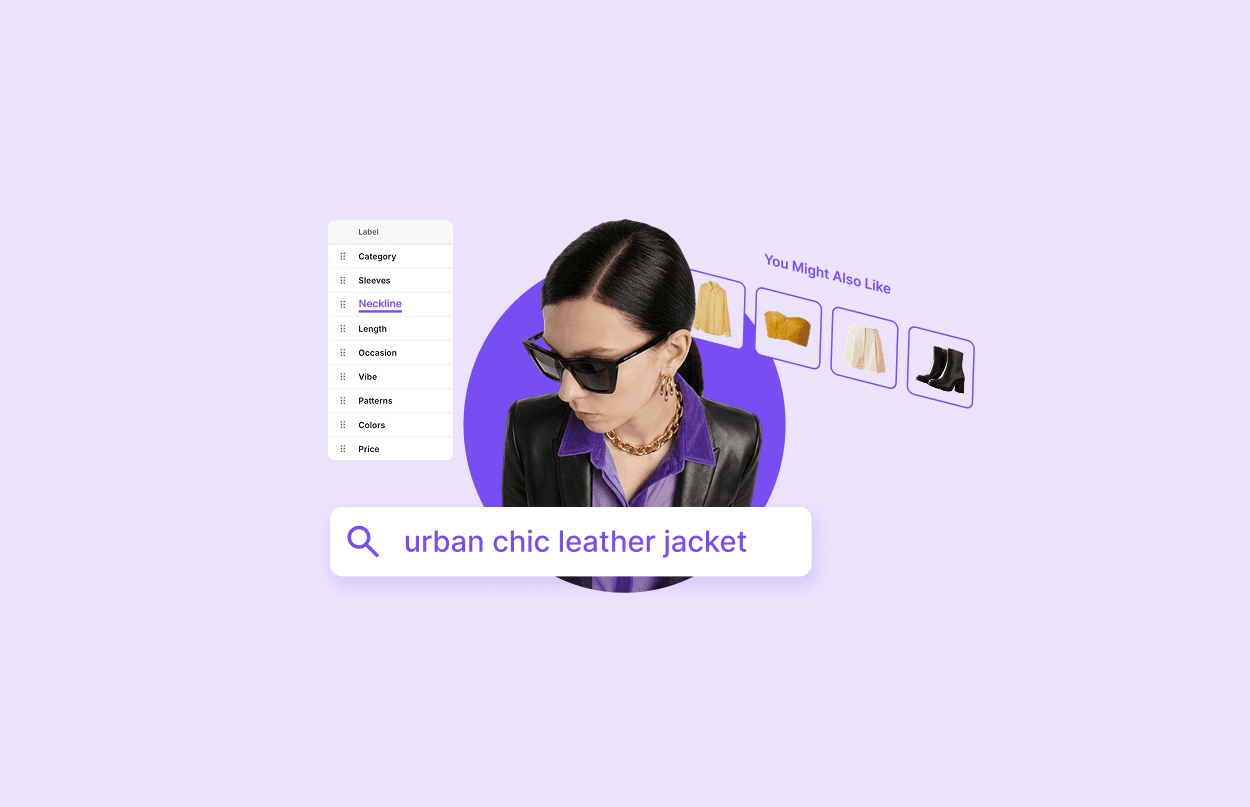

Struggling to choose the right AI tools for your fashion brand? Follow these 4 practical steps to find and deploy AI tools that actually convert shoppers.
by YesPlz.AIJune 16, 2026
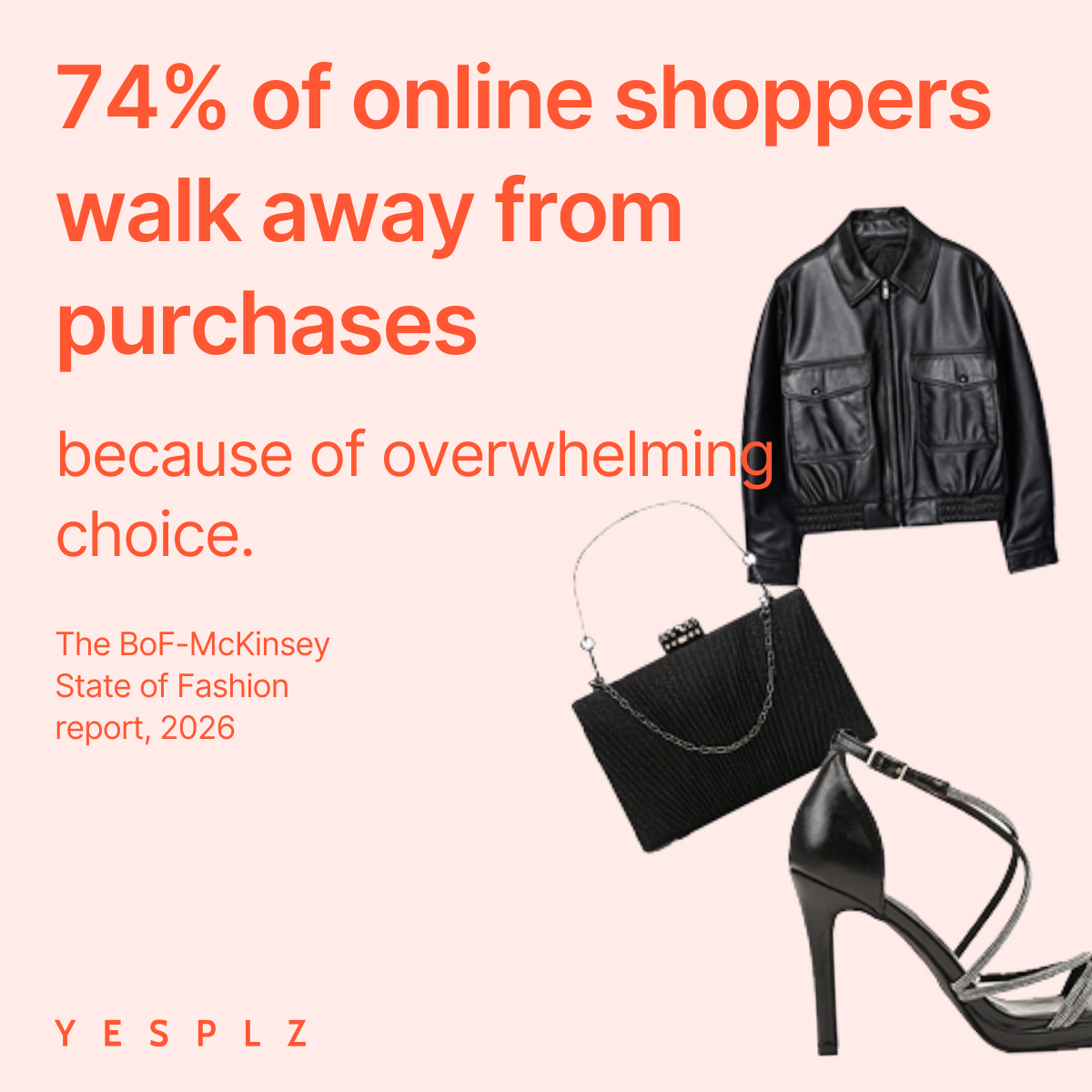
According to the BoF-McKinsey State of Fashion report, 74% of online shoppers walk away from purchases because of overwhelming choice. 82% surveyed by Google would find it helpful for AI to reduce their shopping research time.
 However, most fashion retailers are still relying on outdated search, generic filters, and recommendation engines from a decade ago. Many teams jump to AI solutions before they've clearly identified the problem. Then, end up with expensive tools that don't move the needle.
This guide gives you a practical 4-step framework for choosing the right AI tools for fashion product discovery:
Not every part of fashion eCommerce benefits equally from AI. Demand forecasting, supply chain optimization, and model generation are all valuable. But when fashion executives were asked where AI delivers the most potential, one use case came out on top by a clear margin.
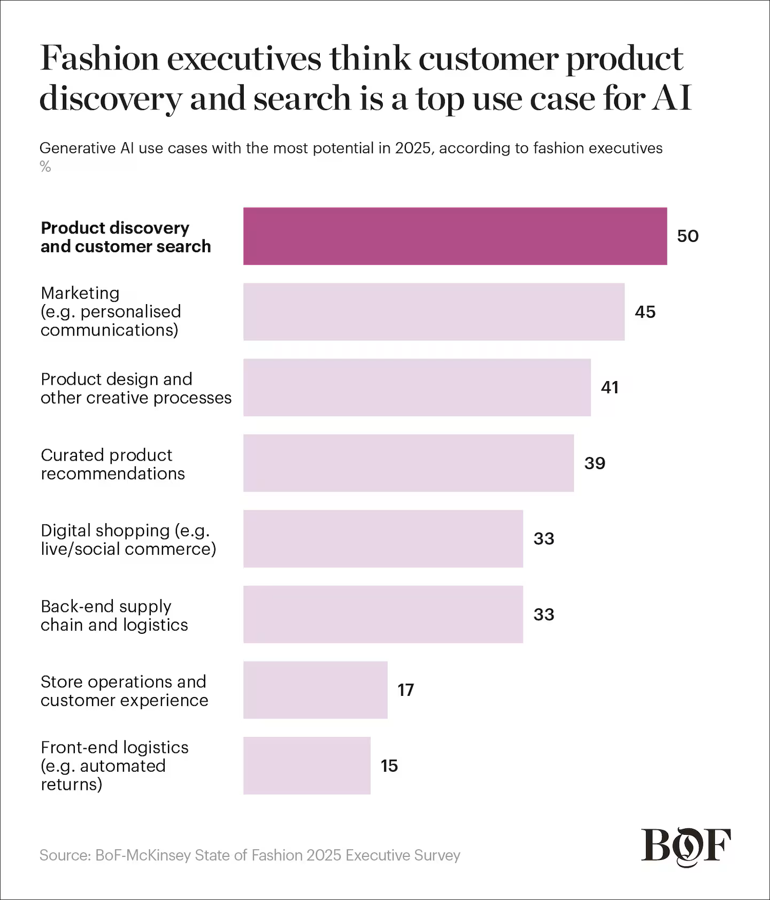 The data is clear: product discovery and search ranks #1, cited by 50% of fashion executives. It is followed by marketing (45%), product design (41%), curated recommendations (39%).
This isn't surprising. Fashion shoppers are overwhelmed with choice, which negatively impacts engagement and conversion rates. AI-powered product discovery is where that problem gets solved.
In the next section, you’ll discover how to select the right AI tools so you don’t waste your budget on ones that don't fit.
Each online fashion store has its own problem. Some struggle with on-site search, others with filters or recommendations. These four steps help you identify which layer is costing you conversions and in what order to fix them.
Before you evaluate a single vendor or sit through a demo, you need to know where your discovery experience is breaking down. Product discovery is a chain of five distinct layers. Work through each layer below and ask yourself: Is this where my shoppers are leaking?
Symptom:
High search exit rate
Low search-to-purchase conversion
Frequent no results pages
Root cause: Most on-site search engines in fashion eCommerce work by matching words in a shopper's query to words in your product data (including titles, descriptions, and tags).
Example: Your catalog describes a dress as ‘floral midi.’ A shopper searches for ‘summer garden party dress.’ Although both phrases describe the same product, the search engine can't make the connection because none of the keywords match.
Solution: Provide deep, fashion-specific tagging so your catalog can speak the same language as your shoppers.
Symptom:
Organic traffic is declining despite solid SEO
Low visibility on AI platforms such as ChatGPT and Perplexity
Root cause: SEO optimizes for traditional search engines like Google or Bing. But AI-powered search engines work differently. They pull answers from sources that are well-structured and rich in context.
Example: A shopper asks ChatGPT: ‘Suggest me the best lightweight linen blazers in a neutral color under $200?’ Your store carries exactly that. But if your product pages have poorly structured product data, they don't appear in the answer.
Solution: Optimize your product pages for GEO and AEO. Structure product catalog with deep, descriptive tagging so AI systems can read, understand, and recommend your products.
 #3 Filters: Are Your Shoppers Drowning in Generic Options?
High filter engagement but low filter-to-cart conversion
High bounce rate after filtering
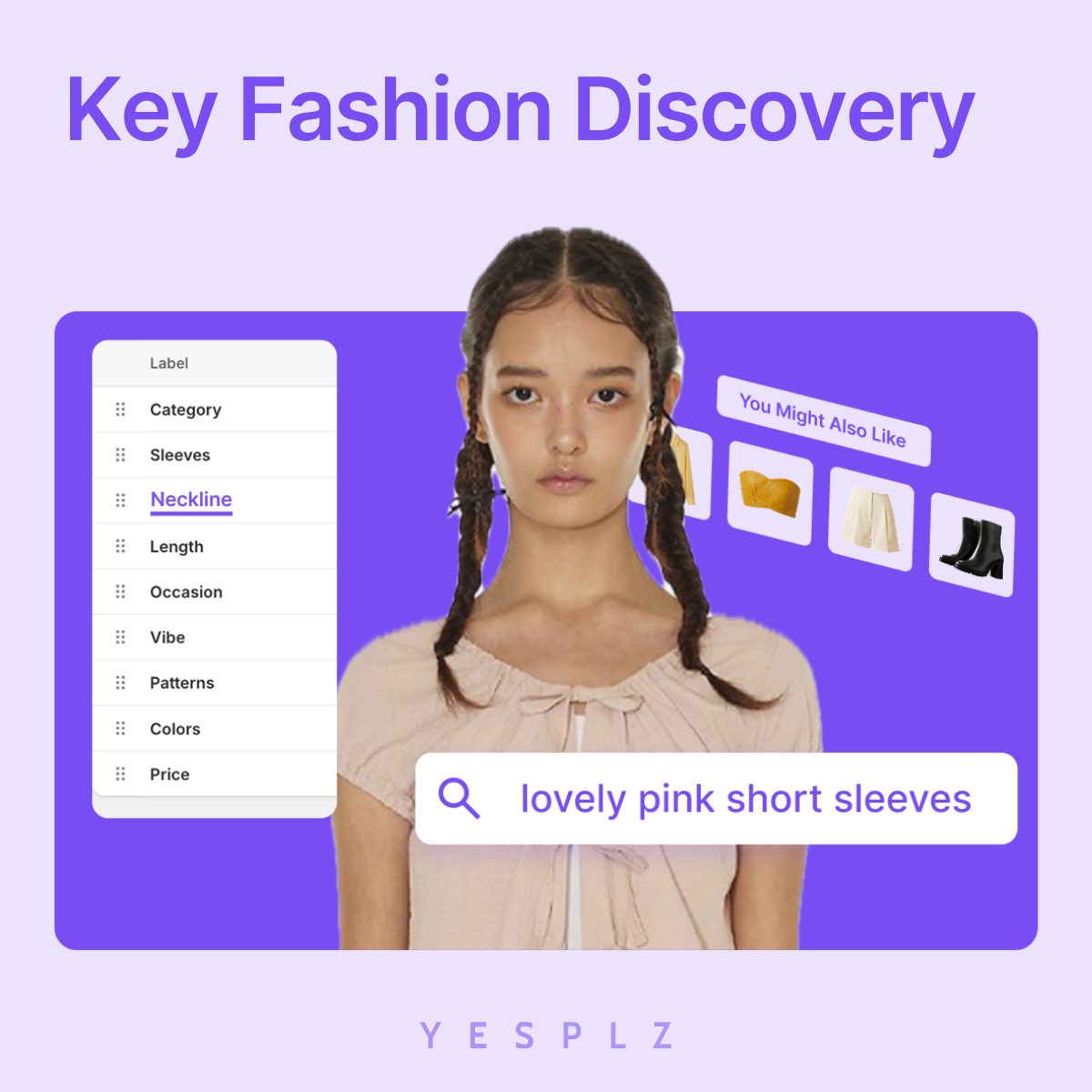
Root cause: Most fashion filters are built around general inventory attributes: size, color, price, and brand. These are useful for warehouse management, not for shoppers. Fashion shoppers don't browse by SKU logic. They browse by fashion-specific attributes like silhouette, neckline, sleeve length, vibe, mood, and occasion.
Example: A shopper is looking for ‘a modest, flowy dress with long sleeves in an earthy tone for a fall outdoor wedding.’ Your filters offer: size, color, price, and brand. None of those filter combinations gets her to the right product, even if it exists in your catalog.
Solution: Feature fashion-specific filters built around how shoppers think about style, vibe, mood, and occasion. So, shoppers can navigate your catalog the way they naturally think about clothes.
Symptom:
Low click-through rate on recommended products
Low cross-sell conversion
Poor repeat purchase rate
Root cause: Most recommendation engines serve the same generic suggestions to every shopper: bestsellers, trending items, or new arrivals. Shoppers see the same products regardless of their style preferences, browsing behavior, or purchase history.
Example: A shopper frequently clicks on bohemian dresses, flowy tops, and earthy tones on your store. Your recommendation engine displays the same bestselling items every other shopper sees: a structured blazer, a little black dress, a pair of skinny jeans. Nothing reflects her style.
Solution: Invest in AI-powered personalized recommendations that learn each shopper's individual taste and serve relevant suggestions that feel curated.
Symptom:
High volume of ‘help me find’ support queries
Low chatbot-to-purchase conversion
Shoppers dropping off after chatbot interactions
Root cause: Most chatbots in fashion eCommerce are built for customer service, such as handling order tracking and returns. They are not built for product discovery.
Example: A shopper opens your chatbot and types ‘what should I wear to a beach wedding?’ A generic chatbot either returns irrelevant results or fails to answer entirely. It has no understanding of style, occasion, or personal taste.
Solution: Replace your generic chatbot with an AI stylist. This is a conversational discovery tool trained on fashion data that understands style intent.
Once you know where your product discovery experience is breaking down, you can start evaluating AI tools for fashion with a clear filter. The most common mistake retailers make at this stage is defaulting to general-purpose AI platforms.
General AI tools are trained on broad internet data. They can handle basic queries reasonably well. But what they can't do is understand the visual and contextual nuances of fashion search. These require AI trained specifically on fashion data. When you're evaluating vendors, the fashion-specific questions should be your first filter.
 Your Fashion AI Tool Selection Checklist
Before you book demos or request pricing, use these four questions to qualify any vendor:
Is it trained on fashion-specific data?
Does it integrate with your stack?
Can you access a real demo with your own catalog?
Do they have case studies with specific statistics?
With your discovery gap identified and vendor checklist in hand, here's how the five problems map to their AI tools for fashion.
Product Discovery Problem | AI Solution | What It Does |
Ineffective on-site search | Text and visual search combination to understand shopper intent | |
Low AI visibility | AEO Optimization | Deep product tagging that makes your catalog AI-readable and citable |
Generic filters | Fashion-Specific Filters | Style-aware filtering by silhouette, occasion, mood, and details |
Non-personalized recommendations | Complete the Look recommendations And, many other types of outfit recommendations, such as You Might Also Like, Favorite Brands, etc. | Different types of outfit suggestions based on your catalog |
Generic chatbot | Conversational discovery tool that understands style intent and guides shoppers to the right products |
A focused pilot does three things:
Surface any issues before they become full-scale problems
Generate the KPI data you need to justify wider investment internally
Give a calibration period to tune the AI to your specific catalog, shopper language, and brand voice
So, how can you run a clean pilot?
Pick a category, not the whole catalog. It gives you a controlled environment to isolate the AI's impact from other variables.
The metrics you care about depend on which layer you're fixing:
On-site Search: Search exit rate, search-to-purchase conversion, zero-results rate
AI Visibility: Products appear in AI-generated answers, organic click-through rates from AI-driven results
Filters: Filter engagement rate, filter-to-purchase conversion
Recommendations: Click-through rate, cross-sell average order value lift
Chatbot: Chatbot-to-purchase conversion, number of products clicked per session, drop-off rate after chatbot interaction
Shorter than two weeks, and you don't have enough data to distinguish signal from noise.
How long did the technical setup actually take? Did the vendor show up with support? Or did your developers have to spend several weeks decoding API documentation?
Once your focused pilot shows results, gradually expand to more categories. Identify:
Which filters drove conversions
Which search queries underperformed
Which recommendation types got the most clicks
Then, use what you've learned to configure the AI for each new category. At the same time, start connecting your discovery data to the rest of your stack.
The right AI tool for your fashion store isn't the most powerful one on the market. It's the one that's trained on fashion data, fits your stack, and solves the specific discovery problem that's costing you conversions right now.
If you're not sure which discovery gap to tackle first, YesPlz's product discovery suite covers all five layers: hybrid AI search, GEO optimization, fashion-specific filters, personalized recommendations, and AI stylist.
Want to see how they perform on your catalog? Please feel free to schedule a demo with us.

Written by YesPlz.AI
We build the next gen visual search & recommendation for online fashion retailers
