Build a Fashion Site Search with a 3-Layer Stack
Your fashion site search isn't failing because of the search engine. Learn how the three-layer stack fixes relevance at the root.

by YesPlz.AISeptember 30, 2026
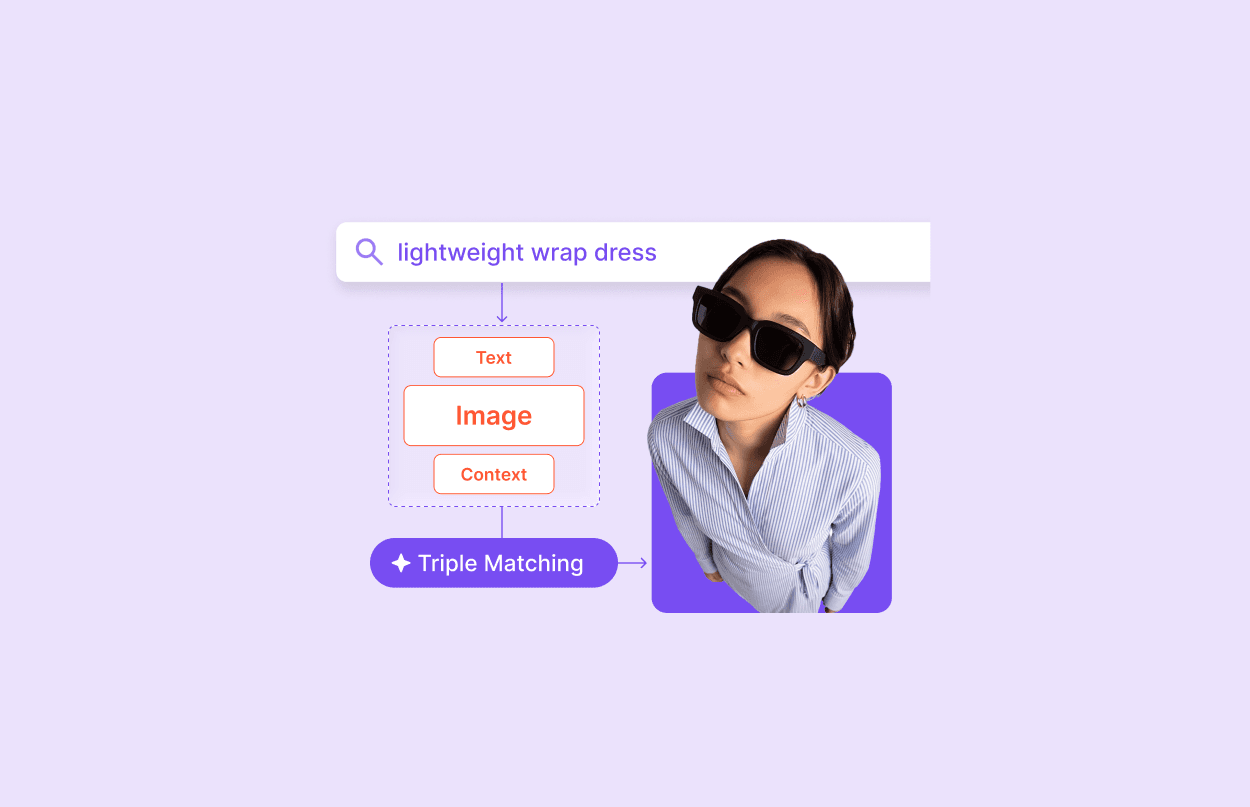

Your fashion site search isn't failing because of the search engine. Learn how the three-layer stack fixes relevance at the root.
by YesPlz.AISeptember 30, 2026
Why a New Search Engine Doesn't Fix Bad Results
What's Inside an Excellent Fashion Site Search Stack
Before Replacing Your Current Search Engine, Do This
Generic Search Engine vs. Fashion Site Search
A Query Test That Exposes Where Your Fashion Site Search Breaks
Go to your site and type "little black dress" or “LBD” into the search bar. What came back?
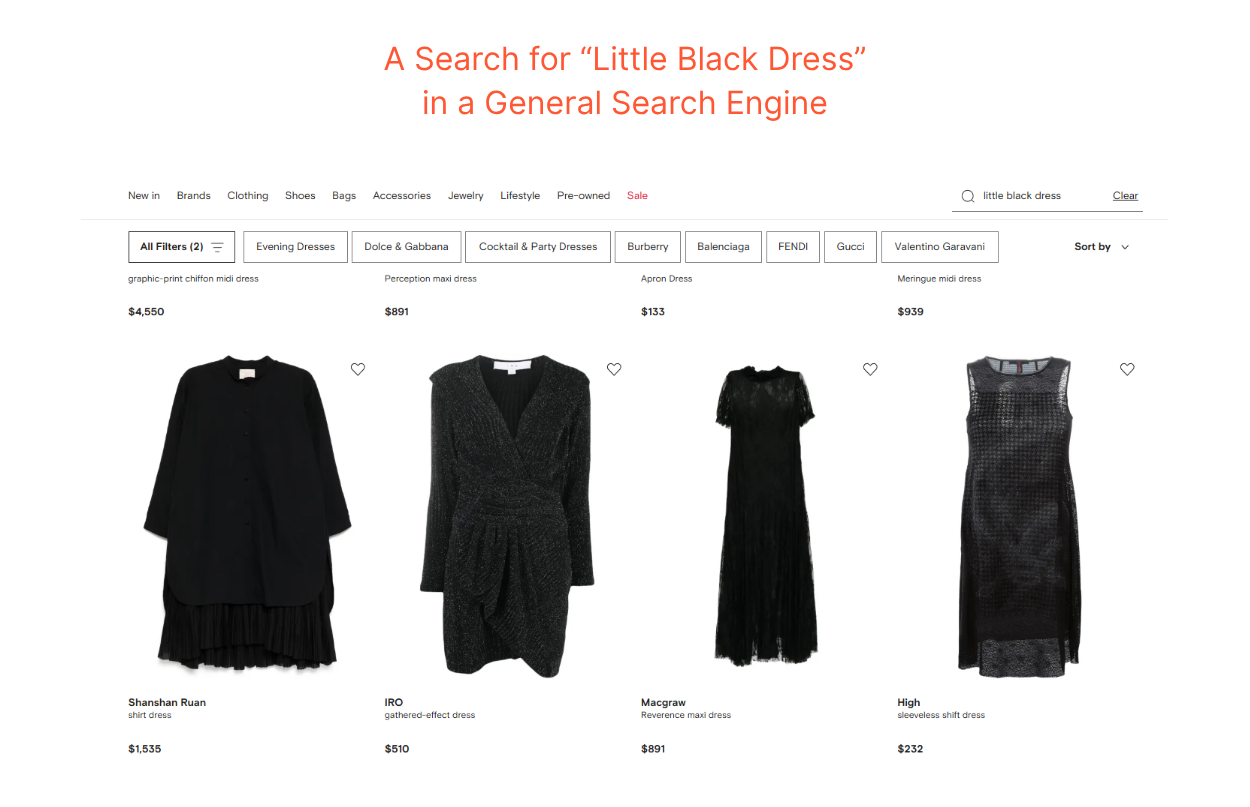 Does your search stack understand what "little" means here?
It doesn't refer to size. Shoppers aren't filtering for XS.
The little black dress (LBD) is a specific fashion concept: a short, versatile dress that moves from day to evening. Coco Chanel popularized it in 1926. Every shopper using this term to search knows what it means. Yet, most retail search stacks don't.
This query is the clearest diagnosis of your current fashion site search health. If your stack can't interpret "little" as a style cue rather than a size filter, it's missing the foundational layer that makes fashion search work. And replacing the search engine won't fix it.
When you notice the drop in conversions, you might audit search logs and conclude your current search engine is broken. So you want to switch — from Shopify to Algolia, from Algolia to Klevu, from Klevu to something with "AI" in the name. But then… the search results are still barely better. That's because the search engine itself wasn't the problem.
The problem lies in your product data. Any search engine can only find what it's given. In other words, the output is only as good as its input. If your product title just says "Black Dress," no retrieval system on earth knows that's a sleeveless midi with a fitted silhouette suited for evening wear. The engine was downstream of the real problem: the data it had to work with.
A well-built fashion site search has three layers that need to happen in order. First, your catalog needs to speak fashion. Second, your stack needs to understand how shoppers search. Third, the engine retrieves and ranks.
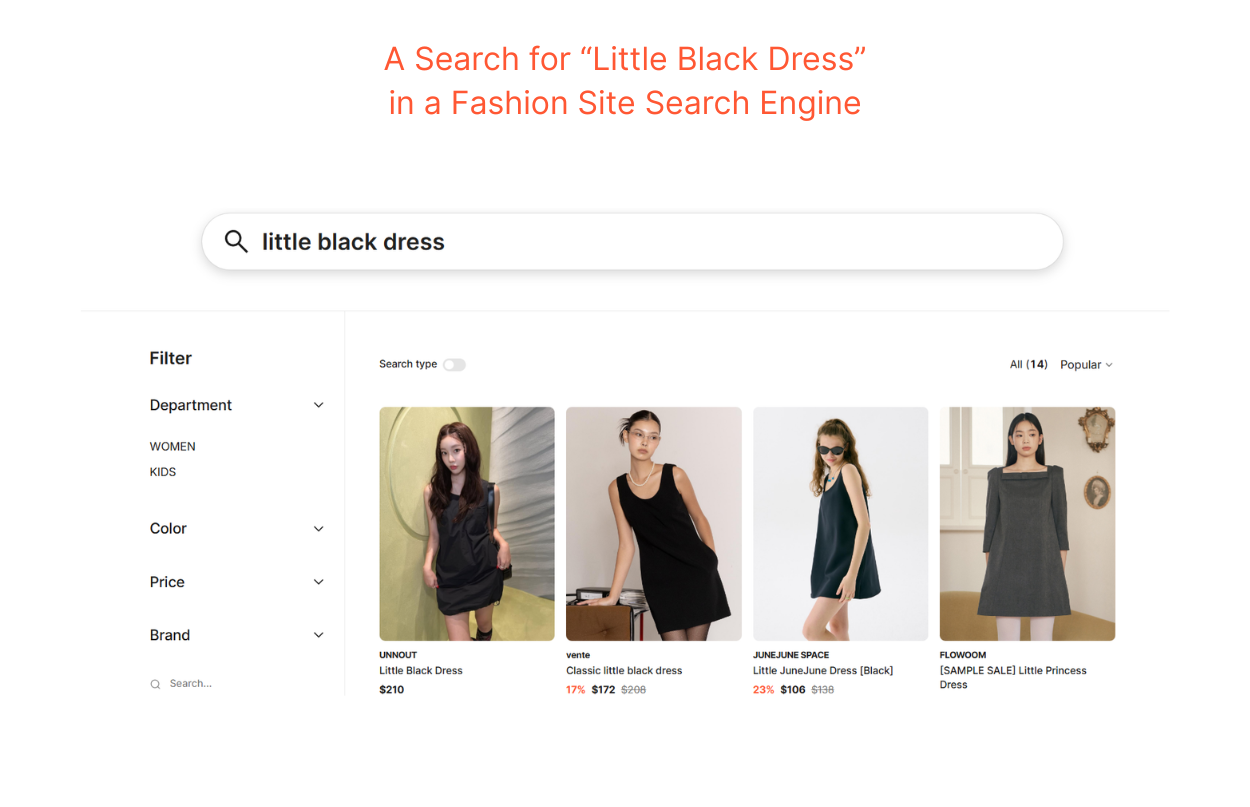 Layer 1: Tagging - Your Catalog Data is the Problem
Fashion tagging enriches every product in your catalog with structured attributes. With it, a black dress is not just "Women's Dress, Black, Size S-XL." It becomes mini length, collared neckline, long sleeve, solid pattern, fitted waist, work/night out occasion, chic/minimal vibe, etc.
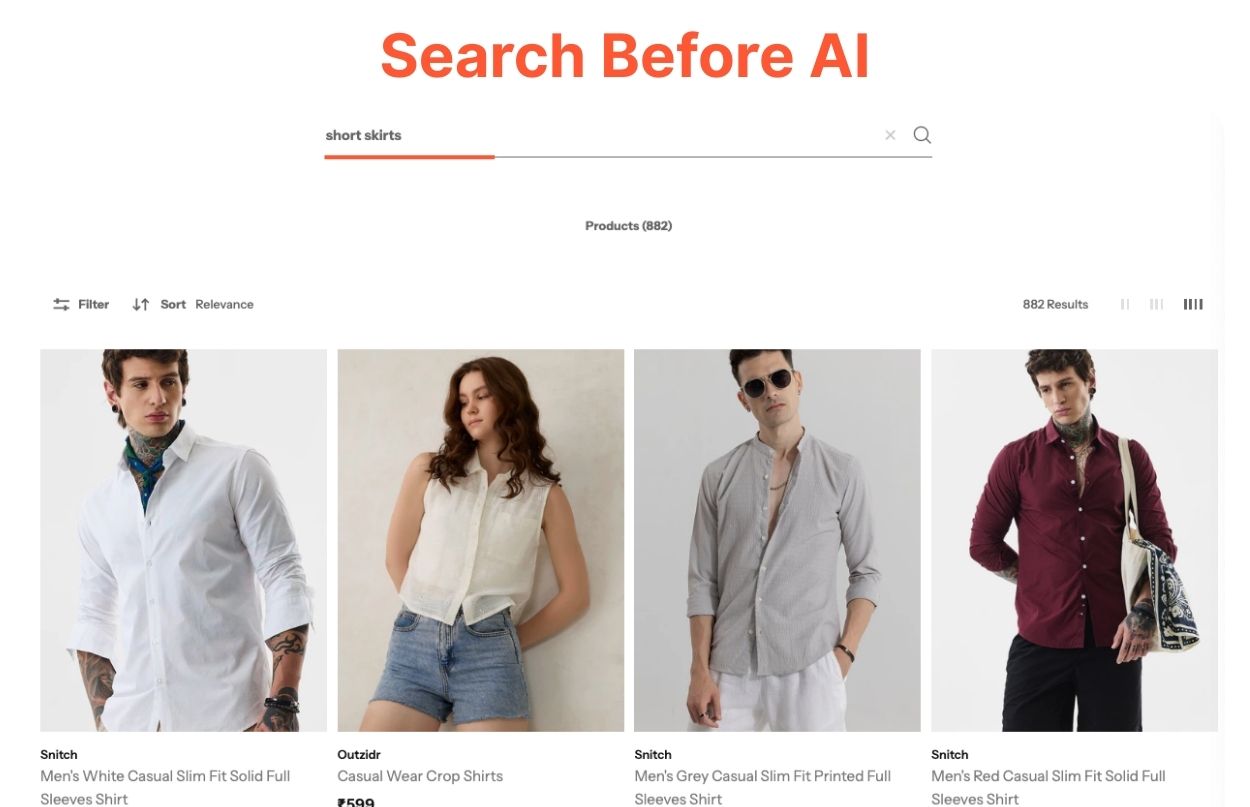
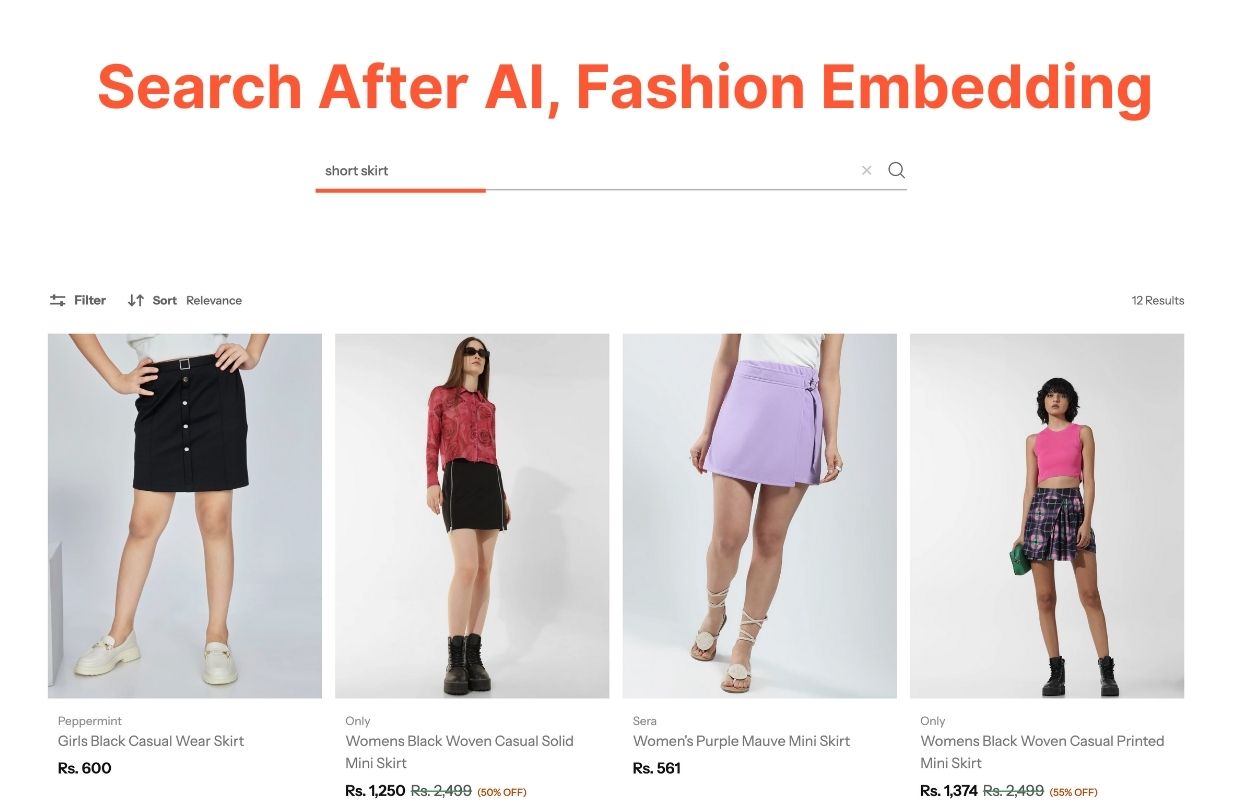
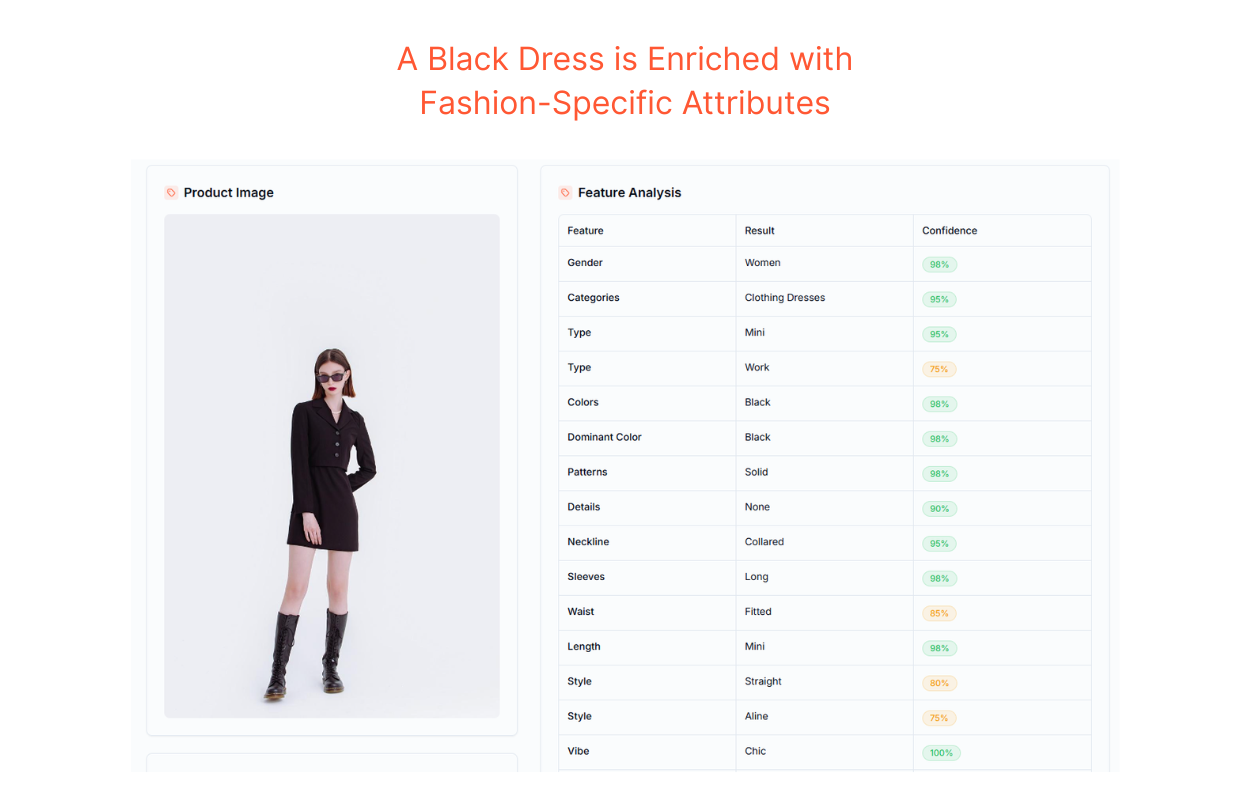 When a product is fully tagged like this, your fashion site search can display relevant results for attribute modifier queries like “long sleeve tops” or “short skirts”. On the other hand, the engine has no structured field to match against. So it either returns everything or nothing.
How to tell if yours is missing: Run these queries on your site and check the results. If "long sleeve tops" returns sleeveless ones, your tagging layer needs improvement.
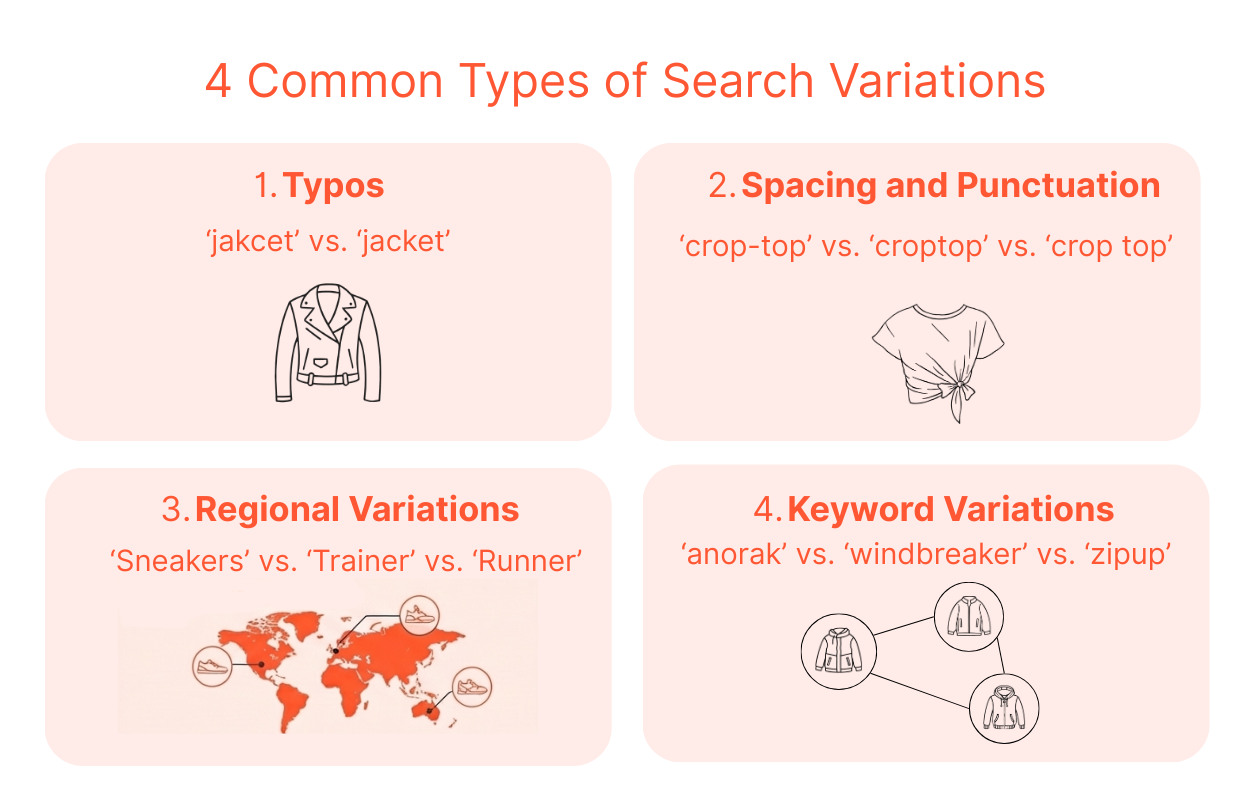
The first layer, structured fashion tags, handles specific-attribute queries well. But shoppers don't always search the same way. Depending on their location, culture, and personality, they search in various ways. For example, "old money," "something beachy," "effortless summer look," or "that quiet luxury look." No tagging taxonomy covers every variation of how fashion terms evolve.
 That's the job of the second layer: fashion embeddings. It handles the semantic queries the tagging taxonomy didn't anticipate because it is trained on fashion data. This is also what powers visual search. When a shopper uploads a photo of a fashion item, a fashion embedding maps that image to the same vector space as your products and finds the closest matches by silhouette, color, and style.
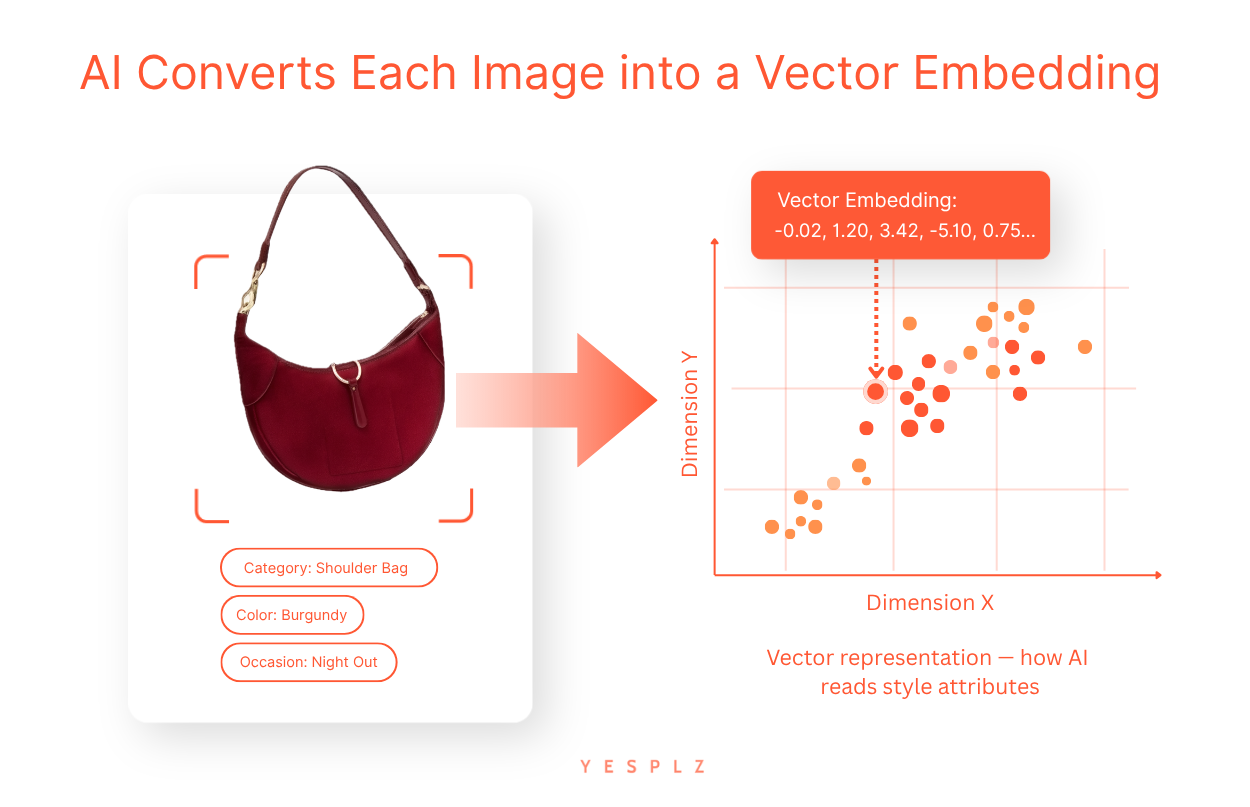 How to tell if yours is missing: Test semantic or long-tail queries on your site. If they return zero results or clearly wrong categories, invest in a fashion embedding model.
Every retailer uses a different eCommerce site search engine. It helps handle retrieval, ranking, typo tolerance, stemming, synonym expansion, filters, and faceted navigation. However, the search engine is just not sufficient on its own. With a well-tagged, well-embedded catalog, the engine you already own returns dramatically better results.
How to tell if the search engine is the problem (and not Layer 1 or 2): If basic category queries like “pants” and typo queries like "dreses" don't return relevant results, the engine itself may need attention. But if those pass, look upstream.
The most expensive mistake in eCommerce search relevance is treating this as an engine problem first. Don't replace your current search engine. Try to fix the data first. Here's the sequencing that will save your time and money.
This is the highest-yield, lowest-disruption move. Enrich your catalog with structured fashion attributes and feed them into your existing engine. Attribute modifier queries start working. Filter accuracy improves immediately.
Once your structured data is clean, add a fashion-trained vector model for semantic and visual search. This handles the long-tail queries your taxonomy can't anticipate.
Only after the first two layers are in place can you accurately diagnose whether the engine itself is the constraint. Usually it isn't. When it is — when retrieval speed, scalability, or feature gaps are the actual bottleneck — then switching makes sense.
Zilo, an Indian fashion retailer, ran a head-to-head benchmark: 17 fashion search scenarios, tested against Shopify Search and YesPlz Hybrid Search. Basic category queries ("dresses," "tops") and typo queries ("dreses," "jeens") passed on both.
The gap only opens where fashion language starts. Specifically, YesPlz AI Search passed all 17. Shopify Search failed on 6.
 The failures didn't scatter randomly. They clustered in exactly two places:
Attribute modifier queries: Long sleeve top (only one relevant result), short skirts (wrong categories returned), white tank tops (poor relevance)
Long-tail/semantic queries: Boho dresses (zero results), little black dress (no results), formal dresses (only two relevant results)
Read the full Zilo case study.
 A Query Test That Exposes Where Your Fashion Site Search Breaks
Want to discover where your fashion site search breaks? Use this query test that Zilo mapped to seven query types. Run one or two queries from each category against your own site in an afternoon.
Query Type | What It Tests | Example Queries |
Gender + Category | Basic taxonomy and gender-gating | women's blazers men's chinos |
Category only | Core category retrieval | dresses outerwear |
Stemming | Engine's linguistic normalization | dress vs dresses jean vs jeans |
Typo tolerance | Engine's error correction | dreses jakcets |
Attribute modifiers | Tagging layer completeness | long sleeve tops white tank tops |
Product type | Structured attribute depth | midi dress wrap top |
Long-tail/semantic | Embedding layer and semantic coverage | boho dresses little black dress |
Score each query: did the results match the search intent? The first four types should pass on almost any modern engine. If they don't, your fashion site search engine needs attention. If types five, six, and seven fail, your tagging and embedding layers are the gap.
This checklist works for a merchandiser running it manually. It also works as a QA framework before any catalog update or engine migration.
Each layer of your fashion site search stack carries a different build cost. Here's an honest breakdown of what's realistic for most retail teams, and where the shortcut is worth taking.
Building a fashion attribute taxonomy from scratch and training a model to apply it consistently is a multi-year, multi-million-dollar project. The training data requirements alone — hundreds of thousands of tagged fashion images, reviewed by domain experts — are beyond most retail engineering budgets. Purpose-built AI tagging vendors apply structured fashion attributes at catalog scale, usually in weeks. This is rarely worth building in-house.
Training a fashion-domain embedding also requires a large, high-quality fashion dataset that most retailers simply don't have. Generic embeddings are available, but as shown above, they don't understand fashion semantics. For most retailers, buying access to a pre-trained fashion embedding is the pragmatic path.
Algolia, Elasticsearch, and similar engines are well-supported and flexible. If your team has the engineering bandwidth and your catalog scale is manageable, running your own engine is a legitimate choice. The key is feeding it clean data from layers one and two.
By now, you know where your stack is breaking. You've run the query test that exposes where your fashion site search breaks. You know whether your tagging layer is missing, whether your embedding understands fashion language, whether the engine is the constraint.
Most retailers who do this audit find the same thing: the engine is fine, but the product data isn't. Start there. Fix the layer that's failing. The engine you already own will surprise you.
One more thing worth knowing: search quality doesn't stay static. As your catalog turns over each season, gaps open quietly. A query that worked in spring fails in fall. Most teams don't catch it until conversions drop.
YesPlz builds a Search Tune Agent on top of the three-layer stack for exactly this reason. It monitors live query logs, identifies high-volume queries losing clicks, and surfaces specific fixes — synonym gaps, tagging misses, boost adjustments — before they become revenue problems.

Written by YesPlz.AI
We build the next gen visual search & recommendation for online fashion retailers
