What a Fashion MCP Server Does
A fashion MCP connects your catalog to AI shopping agents. But connection doesn't guarantee results. Here's what these agents need from your data.

by YesPlz.AISeptember 22, 2026
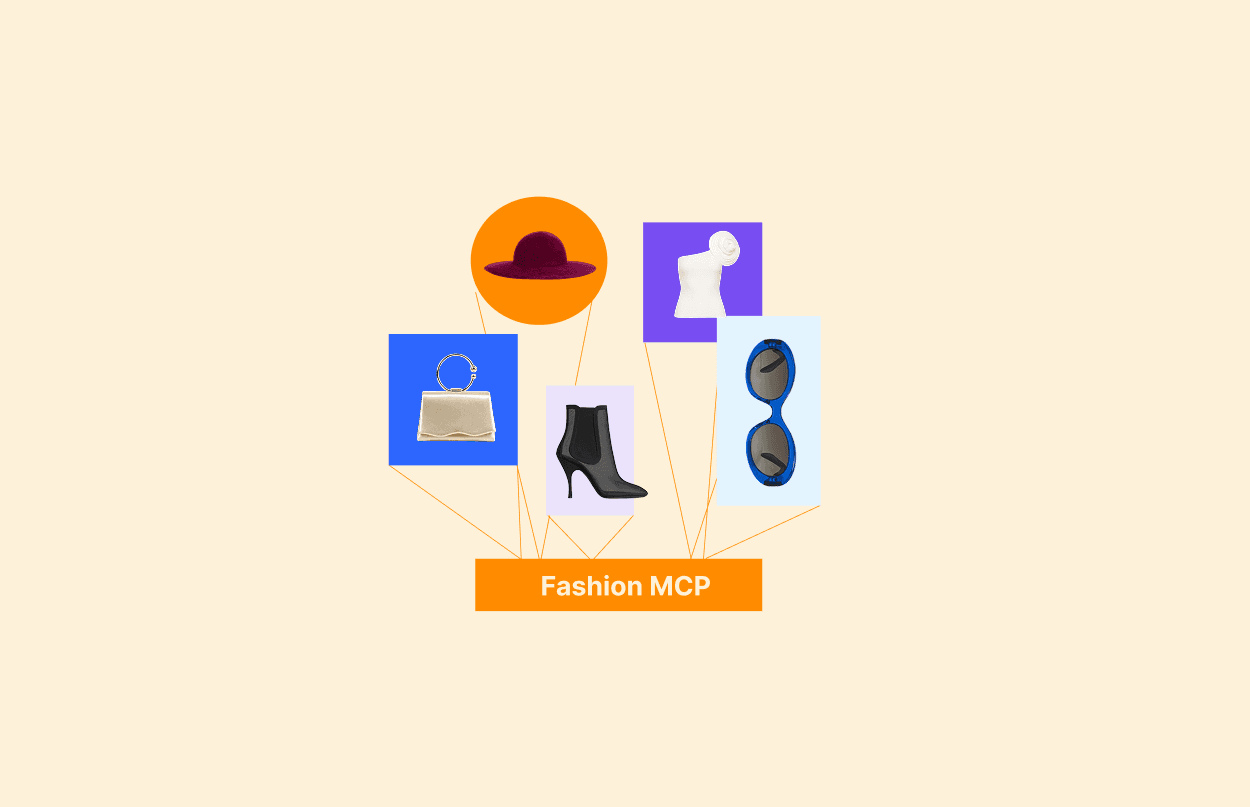

A fashion MCP connects your catalog to AI shopping agents. But connection doesn't guarantee results. Here's what these agents need from your data.
by YesPlz.AISeptember 22, 2026
MCP is having a moment. Every retailer, every platform, every AI vendor is talking about agent connectivity. But being connected isn’t the same as being found. If you're not sure what we are talking about, start with what a fashion MCP server is.
The short version is that it gives AI shopping agents a live, queryable connection to your product catalog. But connecting your catalog is only step one. What agents find when they get there decides whether your products show up.
AI shopping agents rely on structured data to understand each product and decide what to recommend. If your product data is thin, incomplete, or missing the right fields, your products are less likely to surface.
The numbers from Mapp Fashion Knowledge prove this point. Out of 400 major fashion brands analyzed across seven markets, only 57 had any ChatGPT citations in their referral data.
Imagine a shopper opens ChatGPT and types: "I need a dress for my friend's outdoor wedding in September, flowy, under $200."
ChatGPT's shopping agent doesn't pass this query directly into your search bar. It breaks it down into structured fields it can query against: occasion, silhouette, price ceiling, season. Then it looks for products that meet all of those criteria.
Your products have basic information like price, color, and size. And AI agents receive all of that accurately. But without an occasion field and a silhouette tag, these agents have nothing to match the most important parts of the query against. So, it might ignore your products and move on to your competitors’ catalogs.
The wedding guest dress example is just one case. Fashion shoppers ask AI agents dozens of variations of the same kinds of questions every day. And the pattern is always the same: agents need specific structured data, a catalog doesn't have it, as a result, relevant products don't show up.
So, what does an AI shopping agent need from your catalog?
The answer becomes clear when you look at questions shoppers commonly ask. These four come up constantly. Each one reveals a different layer of data that most fashion catalogs are missing.
For an AI agent, this query requires four filters to work at once: occasion, price ceiling, live inventory, and a confirmed shipping deadline. Most catalogs handle price and stock reasonably well.
But occasion and shipping timelines are rarely structured fields. So what happens? The agent either returns dresses under $200 that aren't suitable for a wedding. Or it returns nothing because it cannot confirm Friday delivery.
This question exposes a blind spot many fashion retailers have: pairing data. When a product page references what each item pairs with, AI agents can recommend complete outfits.
An agent can pull multiple SKUs from your catalog into a single recommendation, thereby increasing average order value. Without that data, the agent cannot answer this question correctly.
This query needs two things working together: visual similarity and a queryable fabric attribute. Visual similarity helps match on shape and aesthetic. Fabric filters return every linen product.
This is the most common question in fashion. It is also the one least likely to have a structured field in your catalog. Size charts exist on most product pages, but as images or PDFs, not queryable fields. Without machine-readable fit signal, AI shopping agents have to guess.
A fashion MCP worth connecting to is one built around how shoppers search. There are two layers, but most catalogs have only the first one.
Price, color, fabric, live inventory, size availability, etc., that are accurate and queryable in real time. These are table stakes. Most catalogs have them.
This is where most catalogs break down. The attributes fashion AI agents care about most include size mapped to body measurements, silhouette, pattern, vibe, occasion, etc. Missing any of these reduces the queries a catalog can match.
Want to see what this looks like in practice? We built a working shopping app on a fashion MCP catalog in three steps — no code, no dev team. It shows exactly what an agent can do when the data is there.

Written by YesPlz.AI
We build the next gen visual search & recommendation for online fashion retailers
