Fashion Retail Technology: What Pays Off, What’s Hype
Not every fashion retail technology is worth your budget. From AI search to virtual try-on, see which boost conversions, which are maturing, and which to skip.

by YesPlz.AINovember 22, 2026
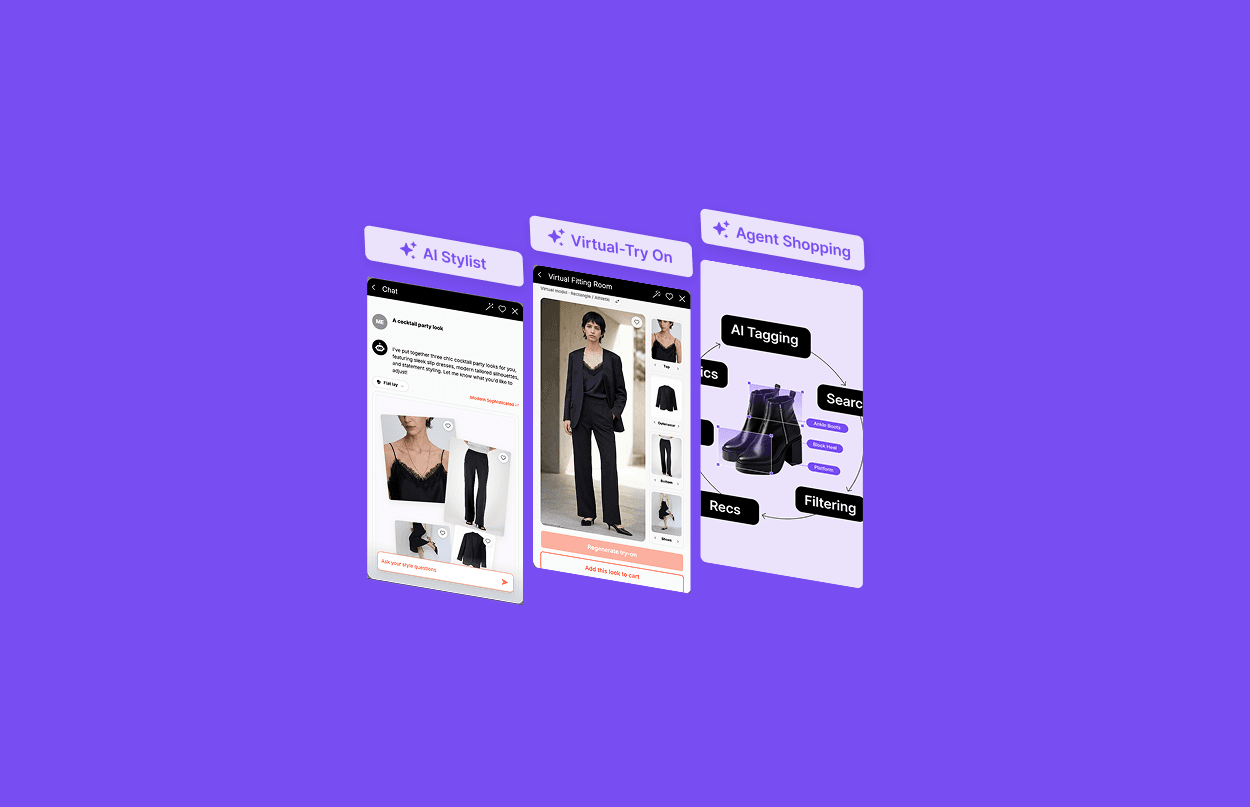

Not every fashion retail technology is worth your budget. From AI search to virtual try-on, see which boost conversions, which are maturing, and which to skip.
by YesPlz.AINovember 22, 2026
Fashion retail technology now touches every stage of selling fashion, from managing product data to processing payments. With so many tools available, all-in-one platforms may seem like the easiest way to bring everything together.
But convenience often comes at a cost. For retailers with limited budgets, investing in an extensive tech stack can mean paying for features you rarely use. Meanwhile, the feature you need most gets only a shallow version.
So, which fashion retail technologies are actually worth investing in? This guide explores the key technologies reshaping the industry, with examples of retailers applying them to their eCommerce.
Along the way, you’ll discover where technology can deliver the greatest returns, which innovations are still evolving, and what’s mostly hype.
Fashion retail technology refers to the software, hardware, and data systems retailers use to manage and sell products, market their brands, and run daily operations.
It spans everything from product data management and search to checkout, inventory, and fulfillment.
In fashion, it also includes technologies for sizing, styling, imagery, and design, helping retailers guide shoppers toward the right products, reduce returns, and keep inventory accurate across channels.
Fashion retail technology is evolving as AI changes not only how people discover fashion products, but also how they buy them. It also gives fashion teams new ways to create and customize digital shopping experiences.
Three key movements stand out:
AI is becoming a new channel for product discovery.
AI agents are increasingly taking on shopping tasks on shoppers' behalf.
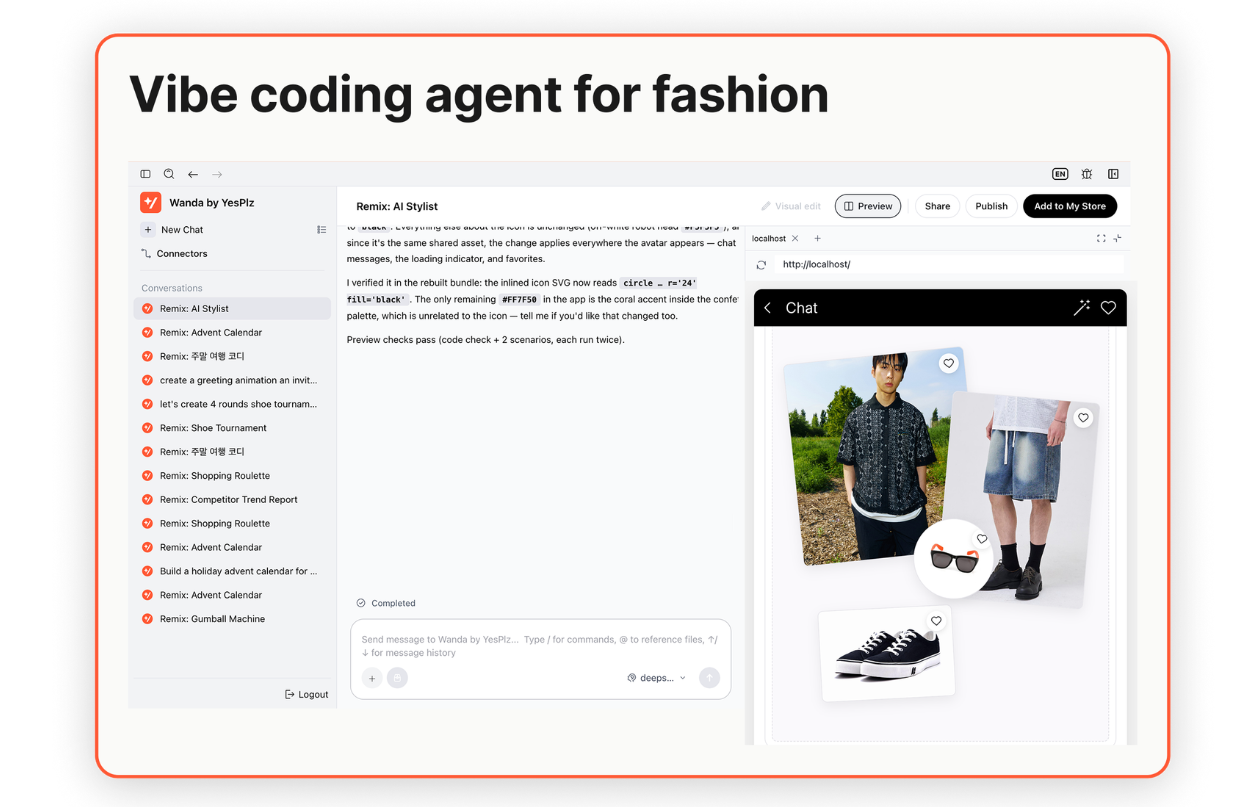
Vibe coding is allowing fashion teams to build and customize shopping experiences using AI, without coding or design skills.
OpenAI launched Instant Checkout in September 2025 but discontinued it in March 2026.
The original checkout experience lacked the flexibility retailers wanted. So, retailers can now use their own payment systems while ChatGPT focuses on helping shoppers discover products.
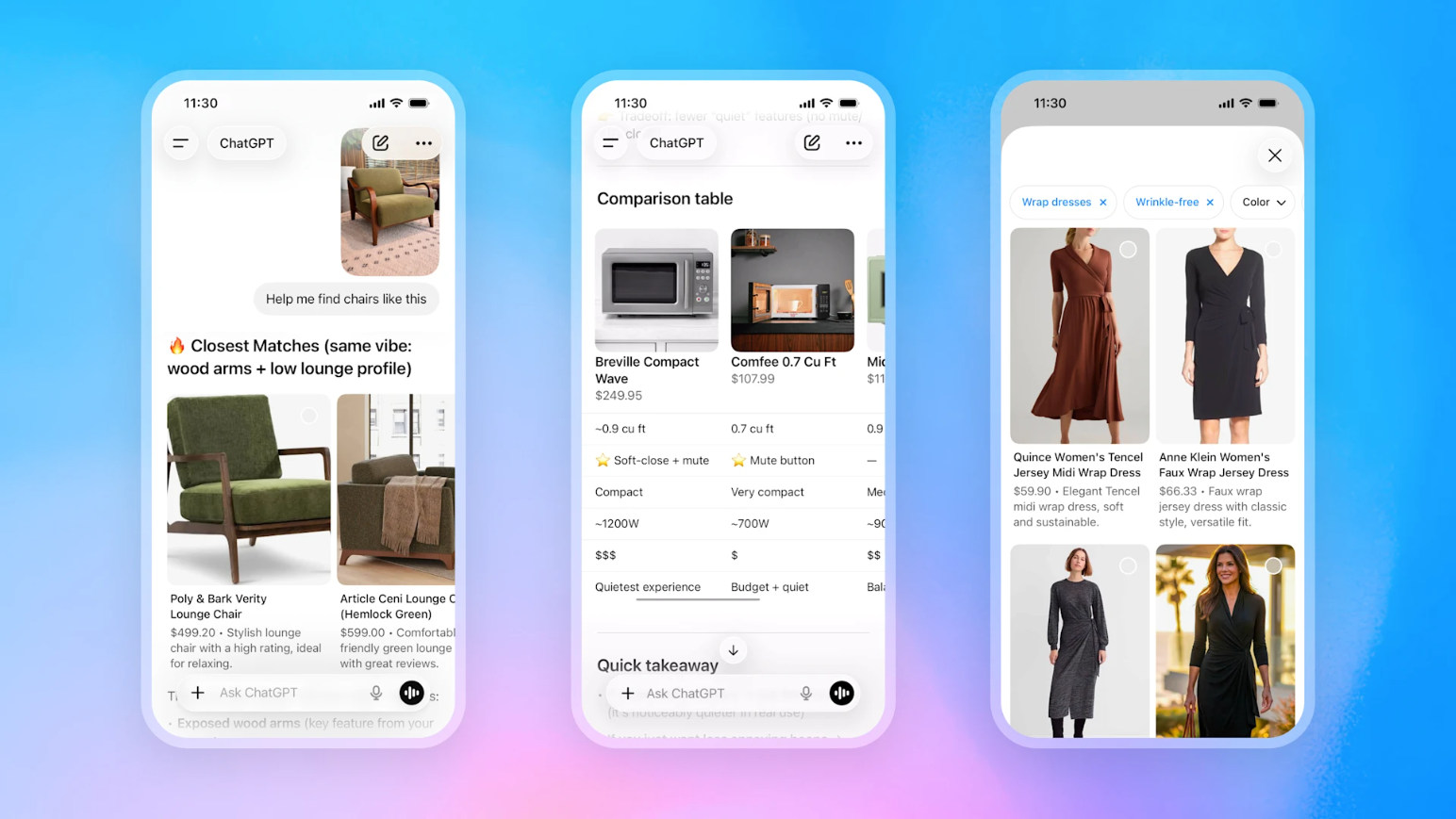 ChatGPT is also expanding its advertising capabilities. Ads testing began in the US on February 9, 2026, and a self-serve Ads Manager is now in beta.
In June 2026, product feeds, previously associated with Instant Checkout, also moved into Ads Manager. This lets retailers create ads directly from their product catalogs.
Takeaways:
Shopping is shifting from selling directly inside ChatGPT to getting discovered by ChatGPT. For retailers, this makes product catalog quality increasingly important.
Accurate, detailed, and well-structured product data can help fashion items appear in more relevant shopping experiences, giving retailers another opportunity to reach potential customers.
AI is already sending people to retail websites. And those visitors are showing strong buying intent.
AI-driven traffic to U.S. retail sites grew 393% year over year in Q1 2026. By March, AI-referred visits converted 42% better than non-AI traffic and generated 37% more revenue per visit.
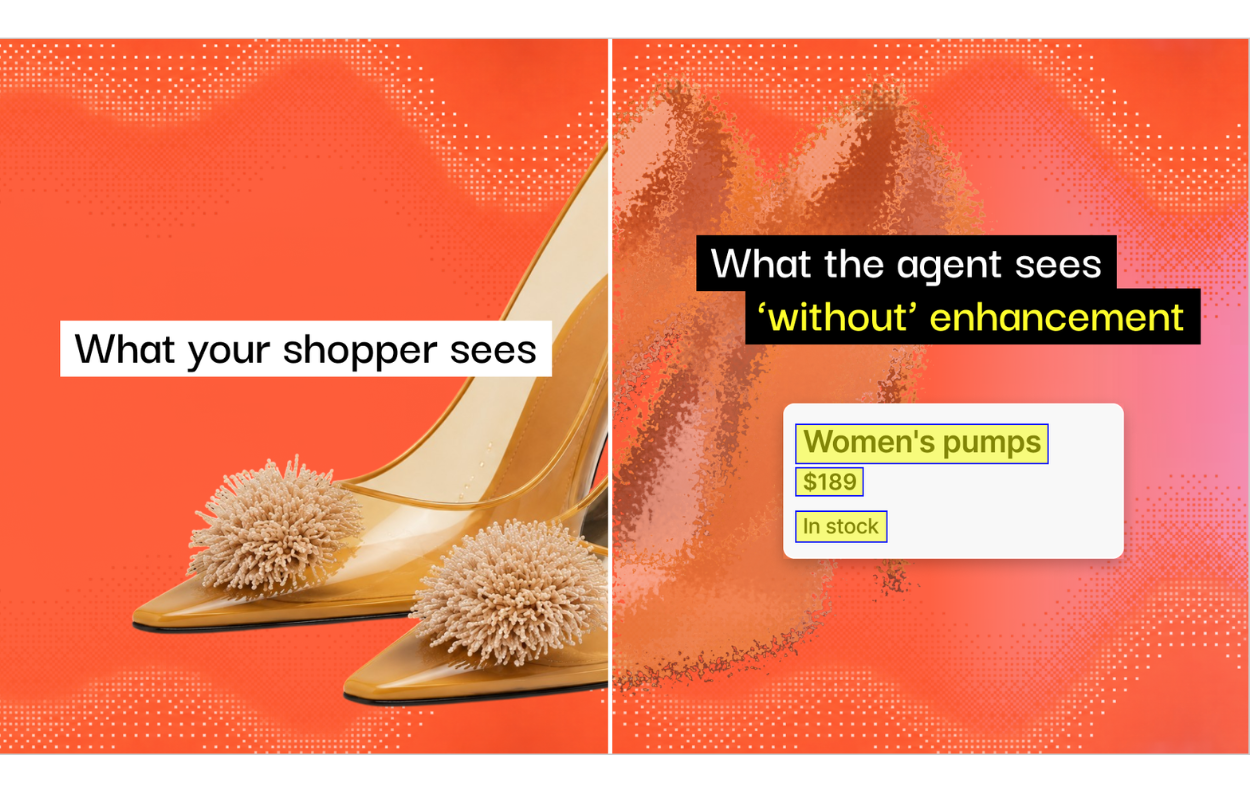
MCP (Model Context Protocol) is behind this growth. This open standard lets AI agents connect to external tools and data.
Think of it as a bridge that helps AI agents connect to retailers' systems, search catalogs, check information, and potentially help shoppers complete purchases.
 Takeaways:
AI shopping is becoming more than product recommendation. AI agents can increasingly help shoppers move from finding a product to purchasing it. Retailers need to make their catalogs and commerce systems accessible to AI agents.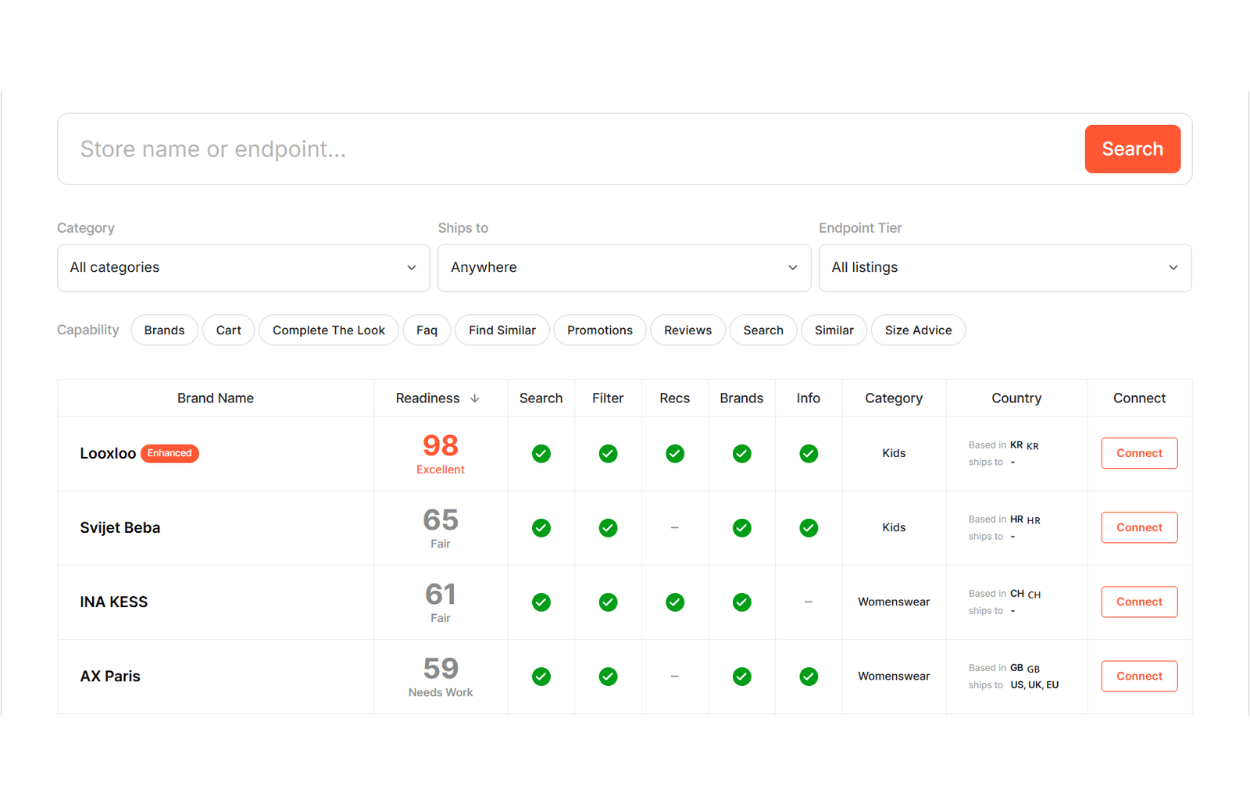
AI isn't just changing how shoppers discover and buy fashion. It's also changing how fashion teams create online shopping experiences.
Vibe coding is behind this shift. You describe the shopping experience you want for your online store in plain language, and AI builds it. You don't need coding or design skills.
Some vibe coding agents focus on content and design. For instance, they help fashion retailers generate product copy, campaign visuals, and design concepts from a single prompt.
Others are built for the people who run the store. Wanda by YesPlz is one of them. eCommerce managers and merchandisers can ask Wanda to:
Build a search or product discovery app
Curate a collection
Analyze a competitor's assortment
Put together a weekly trading report
Fashion teams can test and launch their own ideas, then publish the final output straight to the storefront.
Takeaways:
Vibe coding gives merchandisers and eCommerce managers more speed and independence. However, results depend on the data behind the agent. Clean, attribute-rich catalogs and real sales data help AI deliver outputs that match how products perform.
Fashion retailers were investing in technology long before the latest AI wave. According to McKinsey and The Business of Fashion, fashion companies invested an average of 1.6–1.8% of their revenue in technology in 2021. That figure was projected to reach 3.0–3.5% by 2030, reflecting the growing role of technology in the industry.
But with so many technologies competing for attention, retailers don't need to adopt everything at once. The table below summarizes the key fashion retail technologies, what they do, and examples of retailers already applying them.
Technology | What it does | Retailers applying the tech |
Product data enrichment | Adds detailed product attributes to make items easier to search, filter, and recommend | W Concept (US, Japan, China), Zilo (India), Aza Group (Poland), Looxloo (Korea) |
AI search & discovery | Understands shoppers' intent rather than relying only on exact keywords | W Concept (US, Japan, China), Zilo (India), Aza Group (Poland), Looxloo (Korea) |
Virtual try-on | Visualizes how a garment, accessory, or look might appear on a shopper or a virtual model | ASOS, Zara |
AI stylists / AI assistants | Provides outfit advice and conversational product discovery like human stylists | J.Crew, Ralph Lauren, Zalando, Mango, W Concept (US, Japan, China) |
AI-generated model imagery | Creates or adapts fashion images using AI, reducing the need for traditional photoshoots | Zalando, Mango, H&M |
Size & fit recommendation | Suggests the best size based on measurements, purchase history, or fit preferences | Zalando |
Item-level RFID | Real-time store stock accuracy | Zara, Uniqlo, Decathlon, Macy’s, Walmart |
Not every technology delivers the same return on investment. For retailers with limited budgets, the priority should be the ones that address existing business challenges and reduce operational costs.
Two fashion retail technologies stand out for their potential to deliver measurable results: AI-powered search and discovery and AI-generated fashion imagery.
Text-based search often struggles when shoppers don't know the exact name of the product they're looking for. A shopper searching for ‘a minimalist outfit for work’ may expect a combination of pieces in neutral colors, clean silhouettes, and simple designs.
Keyword-based search may miss these attributes entirely. Meanwhile, AI search can interpret more natural language, understand product attributes, and connect shoppers with more relevant items.
With AI search and discovery, two improvements matter most: relevance and conversion. Shoppers see products that better match what they mean. They can also reach the right item faster.
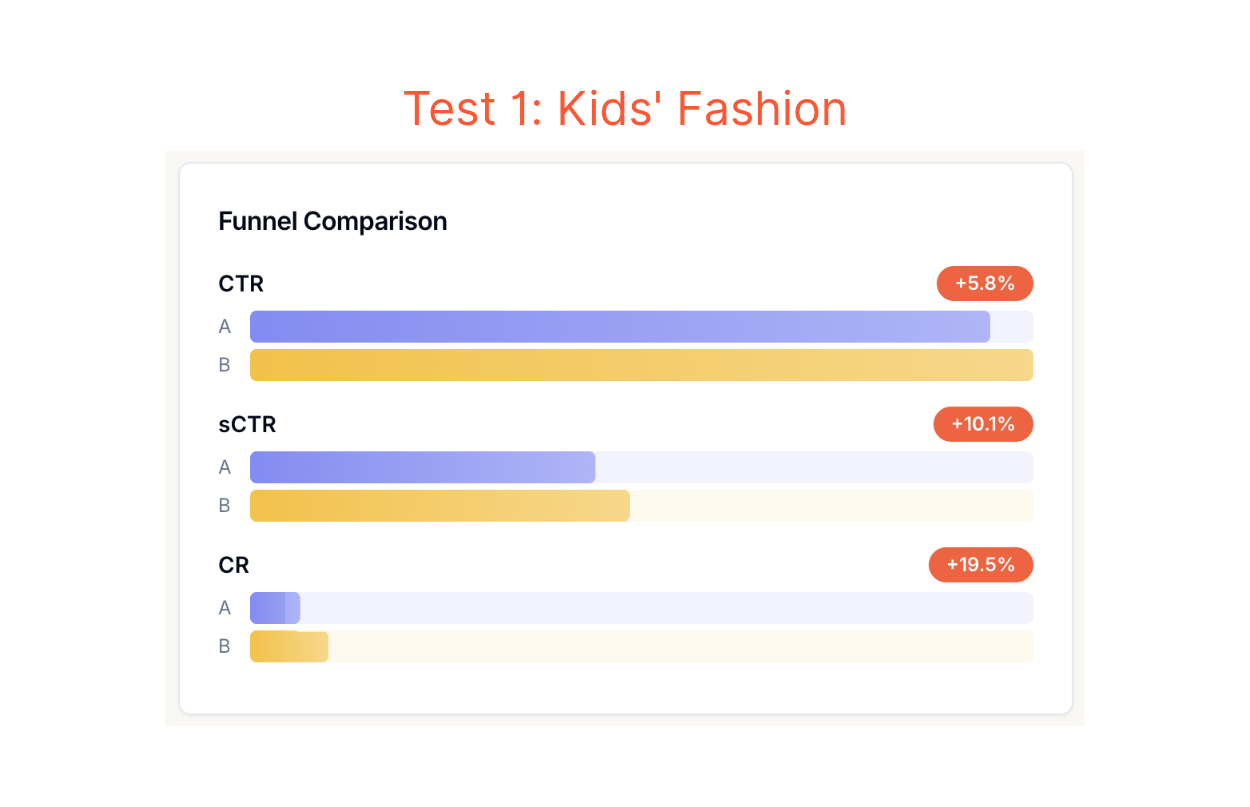
In our recent A/B tests, our AI learning-to-rank model increased search conversion rates by 19.5% for a kids' fashion retailer and 39.3% for a casual apparel retailer.
 AI-Generated Model Imagery: Faster and Cheaper Visuals
Fashion retailers need a constant supply of visual content to launch products, refresh campaigns, respond to trends, and support different markets.
Traditional photoshoots can be expensive and slow, especially when retailers need multiple models, locations, styling variations, and image formats.
AI offers another way to produce or adapt fashion imagery. Retailers can use it to create campaign visuals, place products in different settings, generate model imagery, or localize content for different audiences.
Zalando provides a notable example. The company reported that AI reduced image production time from 6-8 weeks to 3-4 days and cut costs by 90%. The retailer used AI-generated imagery to respond more quickly to fashion trends and produce campaign content at scale.
For retailers with large catalogs or frequent campaign updates, the benefit is clear: more content, shorter production cycles, and lower costs.
Some fashion retail technologies are still evolving, with new capabilities emerging as AI advances.
While they offer promising opportunities to improve online shopping experiences, they're not yet mature enough for retailers to rely on entirely.
It's worth exploring their potential while keeping an eye on how the technology develops.
Virtual try-on lets shoppers visualize clothing, accessories, or entire looks before buying.
Depending on the technology, it may overlay an item on a photo, generate an image of the shopper wearing it, or show how it looks on a virtual model.
Retailers such as ASOS and Zara have experimented with AI-powered visual experiences. Other brands are exploring virtual fitting tools to make online shopping more interactive.
The appeal is obvious: shoppers may feel more confident when they can visualize an item instead of relying on product photos alone. But visualizing a garment is not the same as knowing how it fits.
AI stylists and shopping assistants help shoppers find products through conversations.
Instead of browsing dozens of categories, shoppers might ask for an outfit for an occasion. Then, they receive recommendations based on their preferences.
Fashion retailers such as Zalando, Mango, Ralph Lauren, and J.Crew have explored AI styling experiences. These tools could make shopping more convenient, especially for those who need inspiration.
An AI stylist also helps retailers recommend complementary products. It encourages shoppers to discover items they wouldn't have found through traditional browsing.
However, as a relatively new fashion retail technology, AI styling still needs to earn shoppers' trust before they feel comfortable relying on it for personalized shopping advice.
The biggest mistake is investing in too much technology without a clear business problem to solve.
An all-in-one platform may sound efficient. But fashion retail has specialized needs in each of these areas.
Size recommendations, search, demand forecasting, and inventory management solve different problems. A specialized solution may be sufficient for a retailer with straightforward needs.
Don't pay for breadth when you need depth. If your budget is limited, identify the one or two problems costing your business the most and invest in solving those first.
Technology should earn its place in your stack through measurable business impact, not the number of features it offers.
The strongest returns often come from getting the fundamentals right: clean, attribute-rich product data and accurate inventory.
Before investing in showpiece fashion retail technology, fix the catalog. Then build on that foundation with tools that solve specific business problems and deliver measurable results.

Written by YesPlz.AI
We build the next gen visual search & recommendation for online fashion retailers
