Your First 90-Day eCommerce Search Strategy as a Search Leader
New to a search leadership role? Here's an eCommerce search strategy for your first 90 days: measure 4 key metrics, fix cheap failures, deliver results.

by YesPlz.AIOctober 5, 2026


New to a search leadership role? Here's an eCommerce search strategy for your first 90 days: measure 4 key metrics, fix cheap failures, deliver results.
by YesPlz.AIOctober 5, 2026
When you step into a new search leadership role, the pressure to move fast is immediate. The exec who hired you wants to see momentum. The team is watching to understand your priorities. And somewhere in the backlog, there's probably a half-finished project from whoever was in the seat before you.
The instinct is to build something new, such as replacing the current search engine and picking a new vendor. Something visible that signals you're making progress. But that instinct, followed too quickly, is what gets search leaders into trouble.
The leaders who make the strongest first impression aren't the ones who ship the fastest. They're the ones who understand the problem deeply before they touch anything, and then fix the right things in the right order.
A solid eCommerce search strategy for your first quarter comes down to three moves:
1st month: Measure important metrics
2nd month: Fix the cheapest failures
3rd month: Prove the impact with a real test
Here's how to do it.
Before you change anything, you need to understand what you're working with. Most eCommerce teams track overall conversion rate and assume that tells them enough about search. However, conversion rate is a lagging indicator. It confirms that something went wrong, but gives you no useful signal about where.
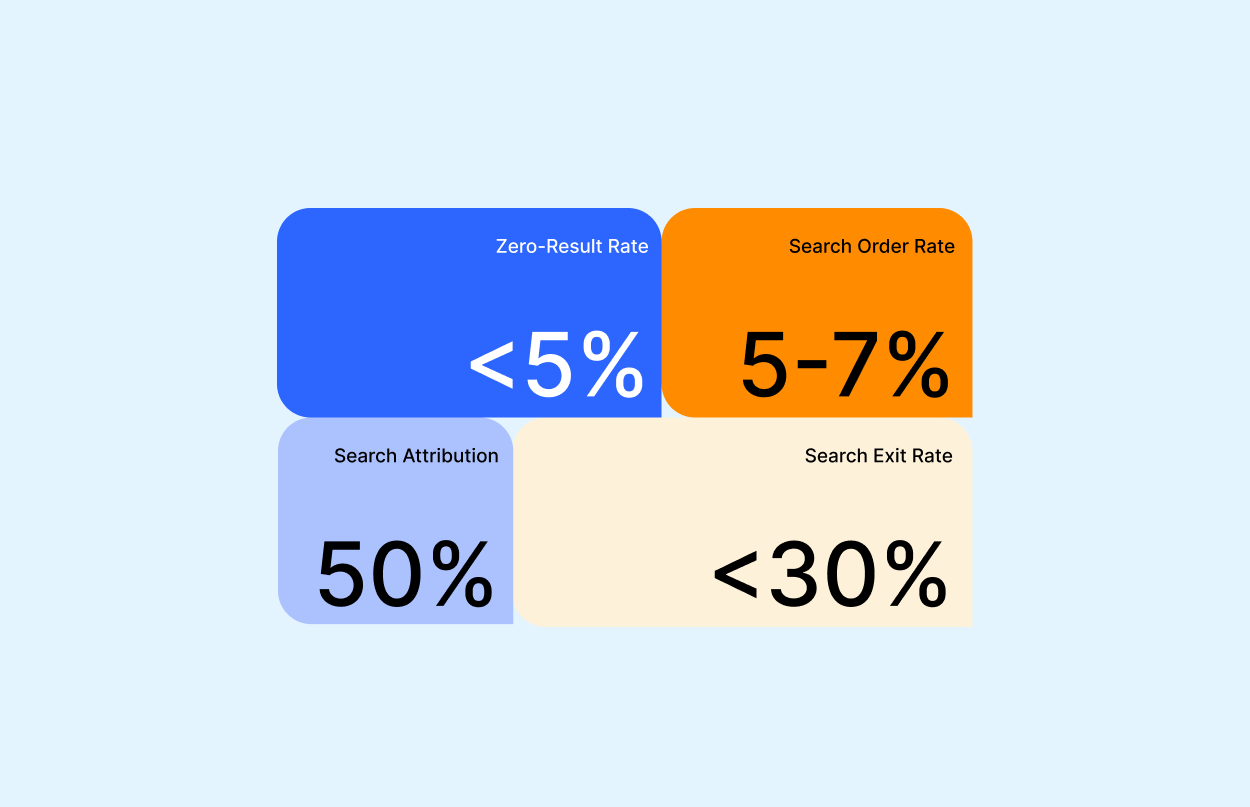
The search metrics eCommerce teams rarely pull together in one place are the four numbers that explain what's happening underneath, including:
Zero-result rate: % of queries that return no products
Search exit rate: % of shoppers who leave immediately after searching
Search-to-order rate: % of search sessions that end in purchase
Search attribution: % of total revenue from search sessions
These four numbers are your baseline. If you can't produce all four in week one, that's already a useful finding. It tells you how little visibility your team has had into search performance.
 2 Query Lists to Measure Your Fashion Site Search's Health
Alongside those four metrics, pull two query lists:
Top 100 queries by volume: The queries your shoppers search for most often
Top 100 queries by search failure rate: The queries that return bad results, zero results, or consistently send people away from your site
Spend month one building both lists and mapping them against your four health numbers. By the end of week four, you'll have a clear picture of where your eCommerce site search is bleeding revenue and roughly what it's costing. You won't fix anything yet, but you'll have the evidence you need to fix the right things next.
Now, you already have your baseline. You know where your search is failing. Now you fix the unglamorous stuff, and it will move revenue faster than anything else you could do.
When we say "cheap fixes," we mean changes that require no engineering sprint, no new vendor contract, and no re-platforming decision. These are things your team can ship in days.
Start with zero-result rate. In fashion eCommerce, the industry average sits at 10.7%. That means roughly one in ten searches returns nothing. Good synonym handling, fixing common misspellings, and resolving category ambiguity will close most of that gap without touching your search infrastructure.
After zero results, go back to the search failure rate list you built in month one. Pick the ten highest-impact failing queries and fix those specifically. Don't try to address all 100 at once. Focus on the ones that will generate the clearest signal for your month-three test.
Month three is about one thing: a number your exec can believe. So, set up a proper A/B test site search experiment.
Define your hypothesis clearly before you start: if we fix these ten failing queries and improve synonym coverage, we expect the zero-result rate to drop and the search-to-order rate to improve. Then measure it.
Three to four weeks of clean data is enough. By the end of month three, you'll be able to walk into the room with the exec who approved your role and lay out exactly where you started, what you changed, and what the data showed.
That's what a strong first quarter looks like. And it's the foundation for everything that comes next, including the vendor evaluation and the longer-term roadmap.
The most common mistake new search leaders make is treating the current search engine as the problem. The search results are bad, the platform feels outdated, so replacing the search vendor feels like the bold move.
But a vendor migration typically takes months from kickoff to production. By the time the migration is done, you've been in the role for months. And the only concrete thing you have to show is a new contract, not a revenue number.
Your current vendor, however imperfect, can almost certainly be optimized enough to generate a real win in the first quarter. Start there. The migration conversation belongs in month four, when you're sitting across from your exec with a tested result in hand, not in month one when you're still learning the catalog.
As a new search leader, you have a quarter to demonstrate that hiring you was the right call. Search leaders who struggle in the first quarter usually fail because they picked the wrong problems to solve first. In most cases, the data already knows what's wrong. The first quarter is just about finally looking at it.
The teams that do it well start with the data, fix what's broken, and show a real result before the quarter is over. If you're stepping into a new search role and want to know where your search stands, we can help you run the month-one audit — query lists, health metrics, and failure patterns included. Book a demo with us to get started.

Written by YesPlz.AI
We build the next gen visual search & recommendation for online fashion retailers
